Local News
New technical theatre pathways course helps RIT students discover behind-the-scenes performing arts opportunities

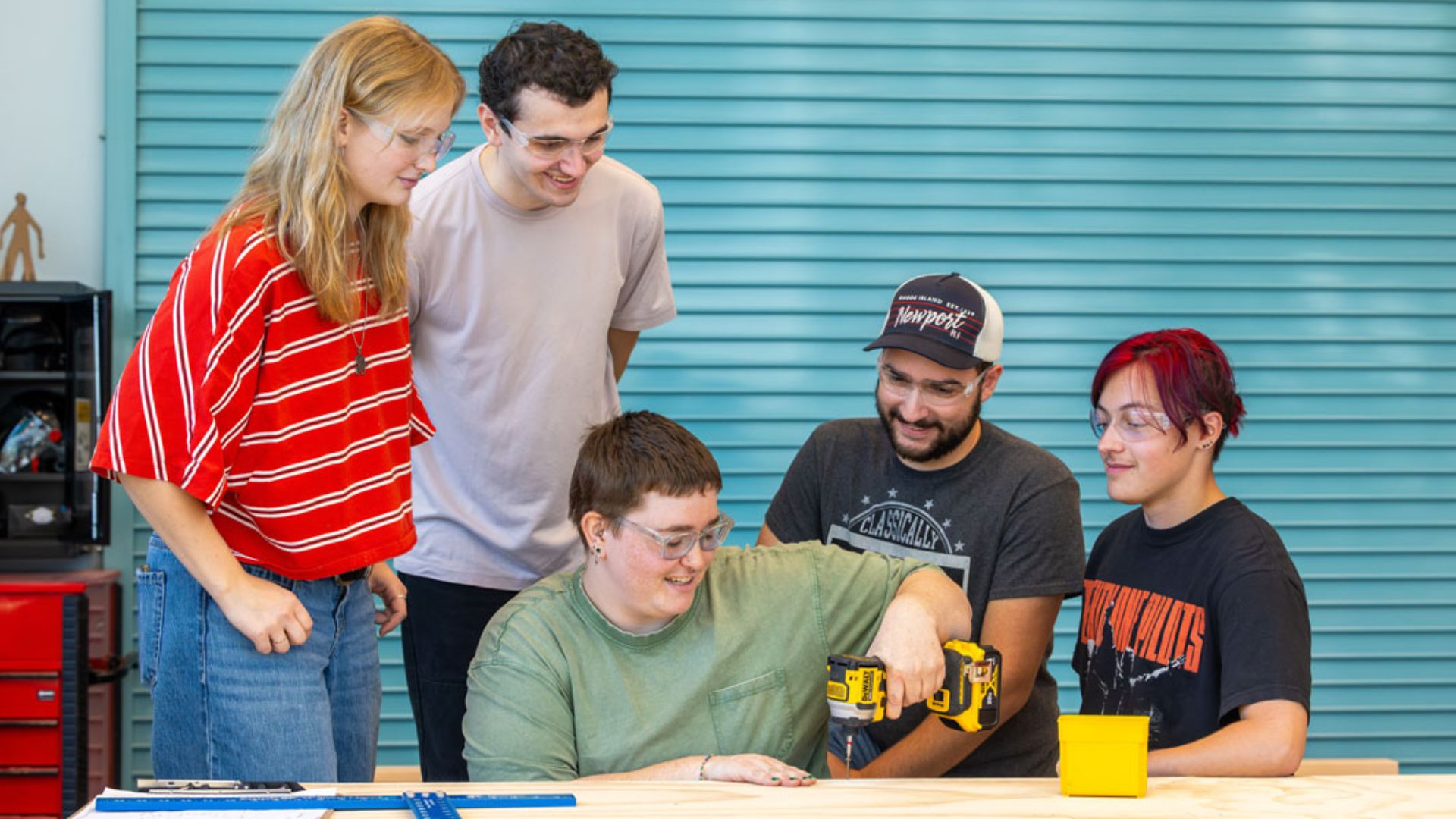
Rochester, New York – At Rochester Institute of Technology, putting on a play or musical involves far more people than the performers who appear under the stage lights. Behind every production is a large network of technical specialists, designers and other professionals whose work can be easy to overlook.
A new course at RIT is giving students a closer look at those behind-the-scenes opportunities and helping them understand how they can become part of the university’s performing arts community.
Technical Theatre Pathways, offered through RIT’s School of Performing Arts, was created to introduce students to the many technical positions and areas of work that support theater and other performances. Rather than focusing on a single specialty, the course gives students a broad introduction to the spaces, people and roles that make productions possible.
The course is taught by Andy Head, interim director of RIT’s School of Performing Arts. He said the large number of opportunities available on campus can sometimes make it difficult for students, particularly those who are new to RIT, to figure out where they might fit.
“Our performing arts community is wonderfully complex, but sometimes it can be difficult to navigate, especially for newer students who are interested in more technical roles,” said Andy Head, the course instructor and interim director of RIT’s School of Performing Arts. “This course introduces students to all the performing arts venues and tech-focused performing arts leaders, as well as the wide range of topics and roles available to them within the community.”
That variety is one of the central ideas behind the course. Students are not simply introduced to theater in general. Each week, they visit a different performing arts space on campus and learn about the work that takes place there.
The tours also give students a chance to discover technical jobs that they may not have encountered before. Theater productions require lighting, costumes and stage management, but the work extends into many more specialized areas.
During the semester, students meet theater professionals working in fields such as lighting, dramaturgy, costume design, and consent and intimacy coordination. By seeing these roles in practice, students can get a better sense of what each position involves and how they might become involved themselves.
The course also encourages students to move beyond the classroom.
As part of the experience, students are required to attend at least three productions held on campus. They will also take part in a field trip to GEVA Theatre, giving them an opportunity to see another professional performing arts environment.
For Head, the goal is not simply to expose students to different jobs. He wants the course to help them take a next step.
Read also: Town of Penfield to host third annual Community Health and Wellness Fair on October 9
“I view this course as a steppingstone. My hope is that, by the end of the semester, these students feel like they are part of RIT’s performing arts community, and that they know how to go forward and what their next step can look like,” Head said.
Although Technical Theatre Pathways was designed mainly with first-year students in mind, it is open to any RIT student who is interested. The current class reflects the university’s broad range of academic programs, with students representing all nine colleges at RIT.
For some students, the course provides a way to reconnect with an interest they already developed before coming to college.
Seb Funk, a first-year student majoring in ASL-English Interpretation and a Performing Arts Scholar, had already enjoyed participating in theater during high school. At RIT, however, he needed to find his way around a much larger and more varied performing arts community.
The university’s combination of technical education, performing arts and opportunities through the National Technical Institute for the Deaf was an important part of what attracted him to RIT.
“Seeing that there is an entire theater and department at NTID where Deaf, Hard-of-Hearing, and hearing students can work and perform together was extremely exciting given my major. I’m really looking forward to learning more about that and working in Panara Theatre,” said Funk, from Annapolis, Md.
Funk’s experience highlights one of the distinctive aspects of RIT’s performing arts environment. Students from different academic backgrounds can find opportunities to work together, including in productions involving Deaf, Hard-of-Hearing and hearing performers and students.
For other students, the course is revealing opportunities they did not know existed, even after spending several years at RIT.
Matteo Cavallaro, a fourth-year mechatronics engineering technology major, has been involved in the university’s performing arts community since his first year. He is a member of the RIT Players and also participates in the Performing Arts Scholars program.
With several years of experience already behind him, Cavallaro might seem like someone who would know most of the available opportunities. Instead, the course has shown him that there was still plenty to discover.
“This has been a good way to make sure I see all the different performing arts spaces on campus before I graduate,” said Cavallaro. “I think this course is great for first-year students. If they had this class during my first year, I definitely think it would have changed my trajectory.”
Read also: Henrietta Fire District schedules public hearing on proposed 2027 budget for October 20
That perspective is one reason the course can be useful beyond the students who are completely new to theater. A student may already have experience performing, working backstage or participating in a campus arts organization while still being unaware of other possible roles.
By combining tours, conversations with professionals, attendance at productions and an outside theater visit, Technical Theatre Pathways gives students several ways to explore those possibilities.
The course also reflects the wide range of interests found among RIT students. An engineering technology student, an ASL-English Interpretation major and students from other academic disciplines can all approach the performing arts from different directions.
For students who are interested in technical theater but do not know where to begin, that broad introduction may be especially useful. Instead of expecting students to identify a specialty on their own, the course allows them to see different areas firsthand before deciding what they want to pursue.
RIT students interested in learning more about opportunities in the performing arts can explore the university’s performing arts community and its various programs. Prospective students and families interested in the Performing Arts Scholars program can also find information about the scholarship and how to apply.
The larger message behind Technical Theatre Pathways is simple: theater at RIT is not limited to the people on stage. There are many jobs, skills and creative roles involved in bringing a production together, and the new course is designed to help students discover those opportunities while becoming more familiar with the people and places that make the university’s performing arts community work.


-
 Local News1 year ago
Monroe County announces legal proceedings against properties listed in official public notice of foreclosure
-

 Local News2 years ago
New ALDI store close to Rochester to begin construction in late 2025 or early 2026
-

 Local News1 year ago
County Executive Adam Bello and members of the county legislature celebrate exceptional young leaders and advocates at the 2025 Monroe County Youth Awards
-

 Local News1 year ago
The 2025 Public Market Food Truck Rodeo series will begin this Wednesday with live music by the Royal Bromleys