Local News
New pediatric trauma facility designed to match the skill and precision of life-saving medical teams

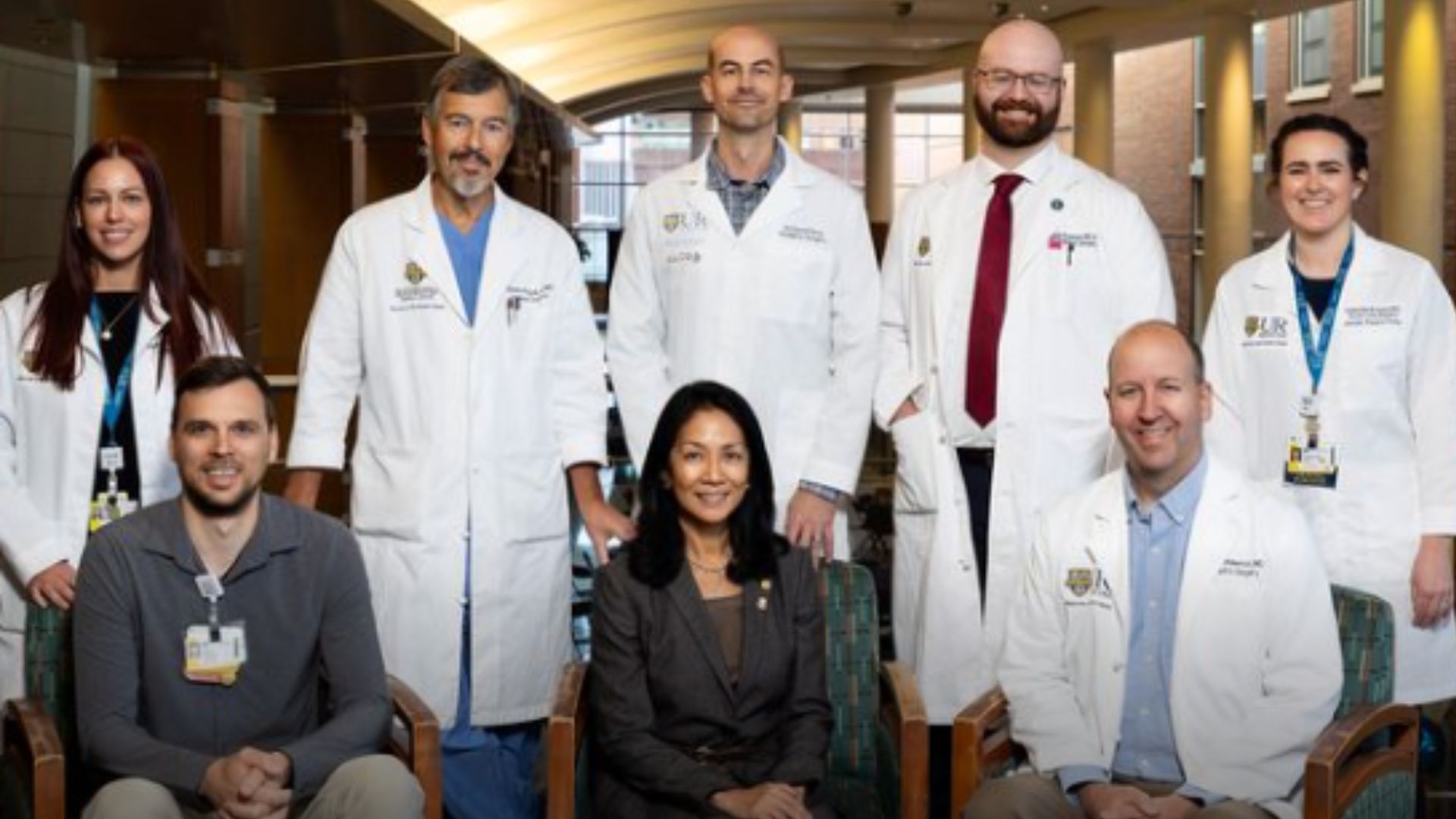
Rochester, New York – On a quiet Sunday morning in August 2023, Craig and Amy Calvert were sitting at their kitchen table when the phone rang. The screen showed the name “Penn,” their 15-year-old son. He had stayed home from church that morning, choosing instead to head out on a long bike ride through the rolling back roads of Ontario County.
Penn was never one to do anything halfway. He rode farther than most people thought reasonable, pushed harder than expected, and set goals that seemed unrealistic until he quietly met them. “He’s a balloon let loose in the universe,” Amy said.
Craig picked up the phone expecting to hear his son’s voice. Instead, a sheriff’s deputy was on the line. There had been a serious crash. A truck traveling about 50 miles per hour had struck Penn. He was being loaded into a helicopter and flown to Golisano Children’s Hospital in Rochester. The deputy could not say much more.
The drive to Rochester took nearly an hour. The Calverts held hands and spoke very little. “You step outside of time,” Craig said. “You’re moving, but you’re nowhere. You don’t know if your child is alive.”
When Penn arrived at Golisano Children’s Hospital, he was in critical condition. He had suffered a traumatic brain injury and internal injuries his parents would only learn about later. He was unconscious and struggling to breathe.
Inside the pediatric trauma bay, a team moved into action. Surgeons, nurses, anesthesiologists, respiratory therapists, and pediatric emergency physicians surrounded Penn, working quickly and calmly. Orders were given and carried out with precision. Tubes were placed, vital signs monitored, and life-saving decisions made in seconds.
Craig noticed something immediately. Through his work with the PULSE 360 Program, he collaborates with hospitals across the country to help improve teamwork and communication among medical staff. What he saw in that trauma bay stood out. “What I saw here was different. It was like an orchestra: Everyone had a role, everyone respected each other’s role, and you could feel how much they cared.”
That level of coordination did not happen by chance. It was the result of years of focus on pediatric trauma care. Golisano Children’s Hospital is the only Level I Pediatric Trauma Center in the region, the highest verification given by the American College of Surgeons. The designation means pediatric specialists are available at all hours, every day of the year, ready to respond to the most serious injuries imaginable.
“We’re the safety net for a 15-county region,” said Colleen Davis, MD, MPH, Chief of Pediatric Emergency Medicine. “If a child is critically injured anywhere from the Finger Lakes to northern Pennsylvania, they come to us.”
The cases are wide-ranging and often severe. Children arrive after car crashes, falls, burns, bicycle accidents, gunshot wounds, and instances of abuse. Each case demands speed, skill, and emotional steadiness.
Yet while the care provided is world-class, the space itself tells a different story.
When the Pediatric Emergency Department opened in 2001, it was built for a much smaller patient population. Over the years, several emergency departments in the region closed, pushing more families toward Golisano. Pediatric visits nearly doubled.
“You could say we outgrew the space the day it opened,” said Elizabeth Murray, DO, associate professor in Emergency Medicine.
The physical limitations create daily challenges. The pediatric emergency department shares an entrance with the adult emergency department. Children and families often walk past adult patients who are injured, ill, or in visible distress.
“It’s important to separate the children being treated from the adults, because seeing adults in their state of illness or injury adds another layer of trauma for them,” Davis said.
National reviewers have taken note. “We’ve had national reviewers tell us, ‘If I were a child and didn’t have post-traumatic stress before coming here, I would afterward,’” said Derek Wakeman, MD, pediatric surgeon. “That’s something we think about every day. Trauma isn’t just what happens before you arrive. The environment matters, too.”
Inside the pediatric emergency department, space is tight. There are few private areas for families to sit together or for doctors to deliver difficult news.
“Having a quiet space near the child is really important for moments when we have to explain to parents what happened, what the outcomes will be if they enter surgery, what kind of imaging they’ll need. We don’t currently have the room to do this now,” Davis said.
The Calverts noticed this as soon as they arrived. “When we first walked in, it had the appearance of some broken hospitals that I have been to,” Craig said. “I would not have predicted the rest of the journey that we ended up getting in terms of quality of care.”
As Penn was stabilized, imaging revealed something rare and dangerous. His diaphragm, the muscle separating the chest from the abdomen, had ruptured in the crash. Part of his liver had been pushed into his chest cavity, pressing against his lung and making it extremely difficult for him to breathe.
Wakeman led the surgery to repair the injury. “It’s an extremely rare injury,” he said. “In nearly a decade here, I’ve seen maybe one or two like it. It means Penn was hit very hard.”
The operation involved opening Penn’s chest, carefully repositioning the displaced organs, and stitching the torn diaphragm back together. For a short time afterward, Penn appeared stable. Then his condition suddenly worsened.
Read also: Ten-vehicle crash temporarily closes Route 490 ramp in Rochester on Sunday morning
He developed acute respiratory distress syndrome. Even on the highest settings of a standard ventilator, his lungs could not get enough oxygen. The pediatric intensive care unit team made a critical decision. They placed Penn on a high-frequency oscillatory ventilator, a specialized machine that delivers rapid bursts of air to keep the lungs open.
Many hospitals do not have this equipment available for children. Golisano’s pediatric ICU had invested in it years earlier. “That decision saved his life,” Craig said.
For several days, Penn’s condition remained uncertain. He was heavily sedated, surrounded by monitors and tubes. His parents stayed by his bedside, sleeping little and watching every movement.
The nurses became a steady presence. One nurse, Josh, spent an entire night holding Penn’s oxygen mask in place as the teenager instinctively tried to pull it off while asleep. “That’s not something you learn in a training manual,” Craig said. “That’s something you do because you care.”
Slowly, Penn improved. Within a week, he stabilized. When he finally woke up, his determination was immediately clear. Within days, he was doing sit-ups in his hospital bed. A few months later, he was back on his bike.
Stories like Penn’s highlight both the incredible strength of the pediatric trauma team and the strain placed on the space they work in every day.
“Compared to the facility, the quality of care was like being served a Michelin-star meal at an old diner,” Craig said.
By national measures, outcomes at Golisano Children’s Hospital match or exceed those of some of the largest children’s hospitals in the country. Yet providers say the environment has not kept pace with their skills.
“In those first moments after a child arrives, you have EMS, police, doctors, nurses, and the family all trying to communicate critical information at once,” said Lauren Wittman, DNP, RN, Pediatric Trauma Program Manager. “In our current space, it’s hard to coordinate, and we have to change that arrangement because that first hour of care is the golden hour; outcomes often depend on the level of care that is happening in that window.”
Wakeman echoed the concern. “Everyone here is operating at an A-plus level,” he said. “We’ve had reviewers look at some of our most critical cases and say, ‘I can’t believe this child survived.’ That’s the level of care happening here every day. The space just hasn’t caught up.”
Change is now underway.
The Strong Expansion Project includes the construction of a new Pediatric Emergency Department and Trauma Center designed specifically for children and their families. The new facility will feature a dedicated pediatric entrance, eliminating the need for children to pass through adult emergency spaces.
Trauma bays will be larger, allowing teams to work without crowding. Private treatment rooms will give families space to be together. A family observation area adjacent to the trauma bay will allow parents to remain close to their child without interfering with care. Overall, the new space will be seven times larger than the original facility.
The design goes beyond size. The environment itself is meant to reduce fear and support healing. Lighting will shift from bright during emergencies to softer tones once a child is stable. Murals and ceiling artwork will give children something calming to focus on. Acoustic panels will reduce noise. Family comfort areas will include reclining chairs, charging stations, and privacy screens.
The goal is to create a space that supports both medical care and emotional recovery.
“We’ve built every detail around what a child sees, hears, and feels the moment they arrive,” Davis said. “It will be a place where families can start to heal together.”
For families like the Calverts, the new facility represents something deeply personal. It ensures that the skill, compassion, and teamwork that saved Penn’s life will be matched by a space designed to support children at their most vulnerable moments.
The clinicians are already there. Soon, the building will finally catch up.


-

 Local News1 year ago
New ALDI store close to Rochester to begin construction in late 2025 or early 2026
-

 Local News11 months ago
County Executive Adam Bello and members of the county legislature celebrate exceptional young leaders and advocates at the 2025 Monroe County Youth Awards
-

 Local News1 year ago
Rochester Lilac Festival announces exciting 127th edition headliners
-

 Local News11 months ago
The 2025 Public Market Food Truck Rodeo series will begin this Wednesday with live music by the Royal Bromleys