State
Governor Hochul celebrates early completion of Park Avenue Viaduct overhaul nearly $200 million under budget

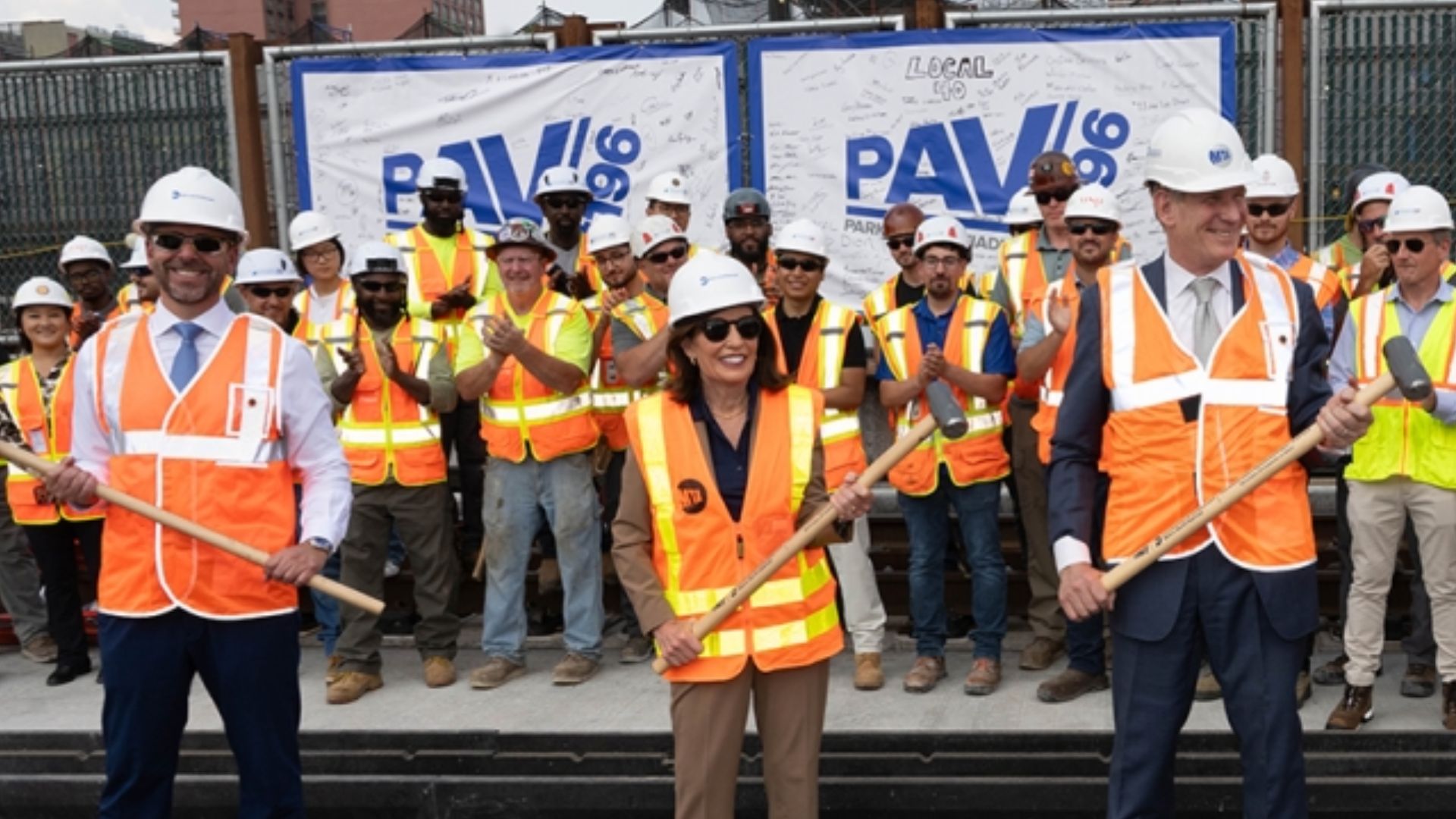
Albany, New York – New York’s commuter rail network has reached a significant milestone after state officials announced that one of its most important infrastructure upgrades has advanced far faster than expected. Governor Kathy Hochul revealed that the Metropolitan Transportation Authority has completed the primary structural replacement of the historic Park Avenue Viaduct years ahead of its original timeline while spending substantially less than initially projected.
The achievement marks a major step in the modernization of one of the busiest rail corridors in the country. The work was wrapped up an impressive 60 months earlier than scheduled and came in approximately $195 million under budget. Even more remarkable, construction crews managed to complete the extensive project without causing delays to Metro-North Railroad service, despite working on a structure that supports nearly every train entering and leaving Grand Central Terminal.
For commuters, the announcement means a stronger and more dependable route into Manhattan. For transportation officials, it serves as an example of how large public infrastructure projects can be completed efficiently through careful planning, engineering innovations, and tightly coordinated construction schedules.
The project carried a total cost of $765 million and involved replacing 196 bridge structures together with more than 12,600 feet of railroad infrastructure. Since work began in October 2023, crews completed the replacements during 28 carefully planned weekend construction periods, allowing weekday train operations to continue without interruption.
“This is what it looks like when government delivers: a major project to modernize essential infrastructure completed years ahead of schedule and hundreds of millions of dollars under budget, all without impacting service,” Governor Hochul said. “The Park Avenue Viaduct is critical, and by replacing infrastructure dating back to the Gilded Age, hundreds of thousands of Metro-North riders will now benefit from a smoother and more reliable ride.”
The Park Avenue Viaduct has long been one of the most essential pieces of New York City’s transportation system. Stretching roughly 1.8 miles, the elevated structure carries four Metro-North tracks from the Park Avenue Tunnel at East 97th Street to the Harlem River. Every weekday, approximately 750 trains travel across the viaduct, serving around 260,000 passengers as they commute between New York City and communities throughout the Hudson Valley and Connecticut.
Its importance, however, has also made its age a growing concern.
Now 133 years old, many of the viaduct’s steel girders had remained in service since the 1890s. Decades of continuous rail traffic and exposure to changing weather conditions made replacement increasingly necessary to preserve long-term reliability and safety.
Rather than waiting until deterioration created larger operational challenges, the MTA launched an ambitious effort to rebuild key portions of the structure between East 110th Street and the Harlem River Lift Bridge. The project specifically focused on replacing aging sections located between East 115th Street and East 132nd Street while ensuring that Metro-North’s daily operations continued uninterrupted.
Read also: State Police arrest Hyde Park man after investigation into alleged identity theft and forgery
That balance between construction and uninterrupted transportation became one of the project’s defining accomplishments.
MTA Chair and CEO Janno Lieber praised the outcome and highlighted the agency’s ability to modernize infrastructure without creating major inconvenience for riders.
“This project is the gold standard for major infrastructure work — modernize what matters most, without making riders suffer through disrupted service. The Park Avenue Viaduct may not be glamorous, but its continued deterioration was a real threat to the entire Metro-North system.”
The replacement work unfolded in two separate phases.
The first stage covered the section extending from East 115th Street to East 123rd Street. Construction began in October 2023 and reached completion in October 2025, finishing 21 months sooner than originally planned.
Attention then shifted farther north between East 127th Street and East 132nd Street. That second phase started in May 2024 and concluded during the weekend of July 25 and 26, completing the overall structural replacement five years earlier than projected.
Although the major bridge replacement has now been finished, some work still remains before the overall project is entirely complete. Crews will continue replacing sections of track, installing new cables, and removing temporary construction fencing and steel girders. Officials expect those remaining tasks to conclude by September 2027.
Behind the project’s accelerated timeline was a series of engineering methods designed to reduce disruption while maximizing productivity.
Instead of relying primarily on traditional cranes, engineers developed custom-built gantry systems capable of lifting prefabricated bridge sections weighing nearly 190,000 pounds. These specialized systems allowed construction teams to precisely position massive bridge components during carefully scheduled weekend work windows.
Read also: City of Rochester expands after-school care program with new location for the 2026-2027 school year
Because installations could be completed quickly and accurately, trains resumed their normal schedules at the beginning of each workweek without delays.
Another innovation involved the use of enclosed work areas positioned between active rail lines.
Known as an intertrack containment system, this approach created protected construction zones that allowed crews to safely work while trains continued operating immediately beside them.
Besides improving safety, the method reduced the need for additional flagging personnel, lowering overall project costs while demonstrating techniques that may be used on future rail projects where space is extremely limited.
Many bridge elements were also manufactured away from the construction site before being transported to the viaduct for installation.
Off-site fabrication significantly reduced the amount of work required above the active railroad. It also minimized worker exposure to hazardous conditions while making weekend construction schedules more predictable. Instead of spending days assembling steel components on location, crews could install completed sections within tightly coordinated 48-hour construction windows.
Jamie Torres-Springer, President of MTA Construction & Development, said the project demonstrates how major transportation improvements can move forward without sacrificing dependable service.
“The Park Avenue Viaduct replacement is proof that modernization doesn’t have to come at the expense of great service. Using creative design and construction innovations, this project is a hallmark example of how the MTA is delivering major upgrades across the system better, faster, and cheaper — and all while keeping New Yorkers moving.”
Metro-North Railroad President Justin Vonashek also emphasized the scale of the accomplishment, noting how many riders benefit directly from the viaduct every day.
“This project touches nearly every Metro-North customer and completing structural work of this scale without delaying a single train is an extraordinary achievement. The modernized viaduct will remain a central artery of Metro-North’s operations, supporting safe, reliable service to and from Grand Central Terminal for decades to come.”
The Park Avenue Viaduct forms one of three interconnected structures that transportation officials collectively describe as the Grand Central Artery.
Along with the Grand Central Terminal train shed and the Park Avenue Tunnel, the viaduct handles nearly all Metro-North service entering Manhattan. These structures have each served New York for more than a century, making modernization increasingly important as passenger demand continues to grow.
Metro-North remains the nation’s second busiest commuter railroad, carrying hundreds of thousands of riders throughout the region. Maintaining reliable infrastructure has therefore become central to the MTA’s long-term investment strategy.
Officials noted that improvements to the Park Avenue Viaduct are only one component of a broader effort to rebuild the aging transportation network serving Grand Central Terminal. Combined with upgrades to the Park Avenue corridor and the planned replacement of the Grand Central train shed, the authority is investing approximately $2.9 billion to strengthen Metro-North’s infrastructure for future generations.
The announcement also drew praise from state and city leaders who pointed to the project’s combination of fiscal discipline, accelerated construction, and uninterrupted rail service.
State Senator Jeremy Cooney said, “As the second most heavily traveled commuter railroad in the nation, maintaining a strong Metro-North is vital to New York’s transportation network. The completion of the Park Avenue Viaduct is a major victory for the hundreds of thousands who rely on its service each day, delivered ahead of schedule and under budget. I commend the Metro Transportation Authority for delivering these results and am grateful for Governor Hochul’s continued investments to modernize New York’s infrastructure.”
Manhattan Borough President Brad Hoylman-Sigal highlighted both the immediate transportation benefits and future opportunities tied to ongoing redevelopment around Grand Central.
“I applaud Governor Hochul and the MTA for delivering a modernized, structurally sound, and refurbished Park Avenue Viaduct ahead of schedule and nearly $200 million under budget. This is a monumental win for Manhattan, safeguarding the economic vitality of the entire Metro-North network for the more than 233,000 daily commuters who rely on it to get to work. Now comes the next opportunity: the Park Avenue Train Shed renovation is our chance to transform Park Avenue into a marquee boulevard built for people, not cars. Congratulations to Governor Hochul, MTA Chair Janno Lieber, MTA Construction & Development Chair Jamie Torres-Springer, and Metro-North Railroad President Justin Vonashek on this achievement. Let’s keep building and investing in the modern, rapid, and reliable transit system New Yorkers deserve.”
Support also came from New York City Council Majority Leader Shaun Abreu, who described the completed project as evidence that large public works can be delivered efficiently.
“The Park Avenue Viaduct is a piece of critical infrastructure that hundreds of thousands of transit riders use daily to get to work, school, and everywhere in between. Governor Hochul has delivered its replacement ahead of schedule and significantly under budget, proving that we can get the big projects done that New Yorkers need. I’m thankful for her commitment to making the infrastructure upgrades that will serve our city for years to come and strengthen the reliable service so many depend on.”
New York City Council Member Yusef Salaam focused on the project’s innovative construction methods while also emphasizing the importance of ensuring local communities benefit from future infrastructure investments.
“The completion of the Park Avenue Viaduct project years ahead of schedule and under budget is a tremendous achievement and a testament to what is possible when we embrace innovation in infrastructure. The MTA has demonstrated that with creative construction methods and thoughtful planning, we can modernize critical transit assets while minimizing disruptions for riders. As the MTA applies these same innovative approaches to transformative projects like the Second Avenue Subway extension, we must also ensure that local hiring remains a central part of that strategy. Building world-class infrastructure should also mean creating pathways to good-paying jobs for the communities where this work is taking place. The true measure of success won’t only be how quickly or efficiently these projects are completed, but whether they deliver lasting economic opportunities for local residents alongside improved transit. By pairing innovation with a strong commitment to local hiring, we can build a transportation system that strengthens both our infrastructure and our communities.”
With the primary structural replacement now complete, the Park Avenue Viaduct enters a new chapter after more than a century of service. While finishing work will continue over the next two years, the successful completion of the largest portion of the project provides Metro-North with a stronger foundation for the future. For the hundreds of thousands of passengers who rely on the line every day, the improvements are expected to support smoother operations, greater reliability, and a transportation corridor designed to serve New York for decades to come.


-
 Local News2 years ago
Monroe County announces legal proceedings against properties listed in official public notice of foreclosure
-

 Local News2 years ago
New ALDI store close to Rochester to begin construction in late 2025 or early 2026
-

 Local News2 years ago
County Executive Adam Bello and members of the county legislature celebrate exceptional young leaders and advocates at the 2025 Monroe County Youth Awards
-

 Local News1 year ago
The 2025 Public Market Food Truck Rodeo series will begin this Wednesday with live music by the Royal Bromleys