State
Governor Hochul launches major Regulatory Reset initiative to eliminate outdated rules and save New Yorkers valuable time and money

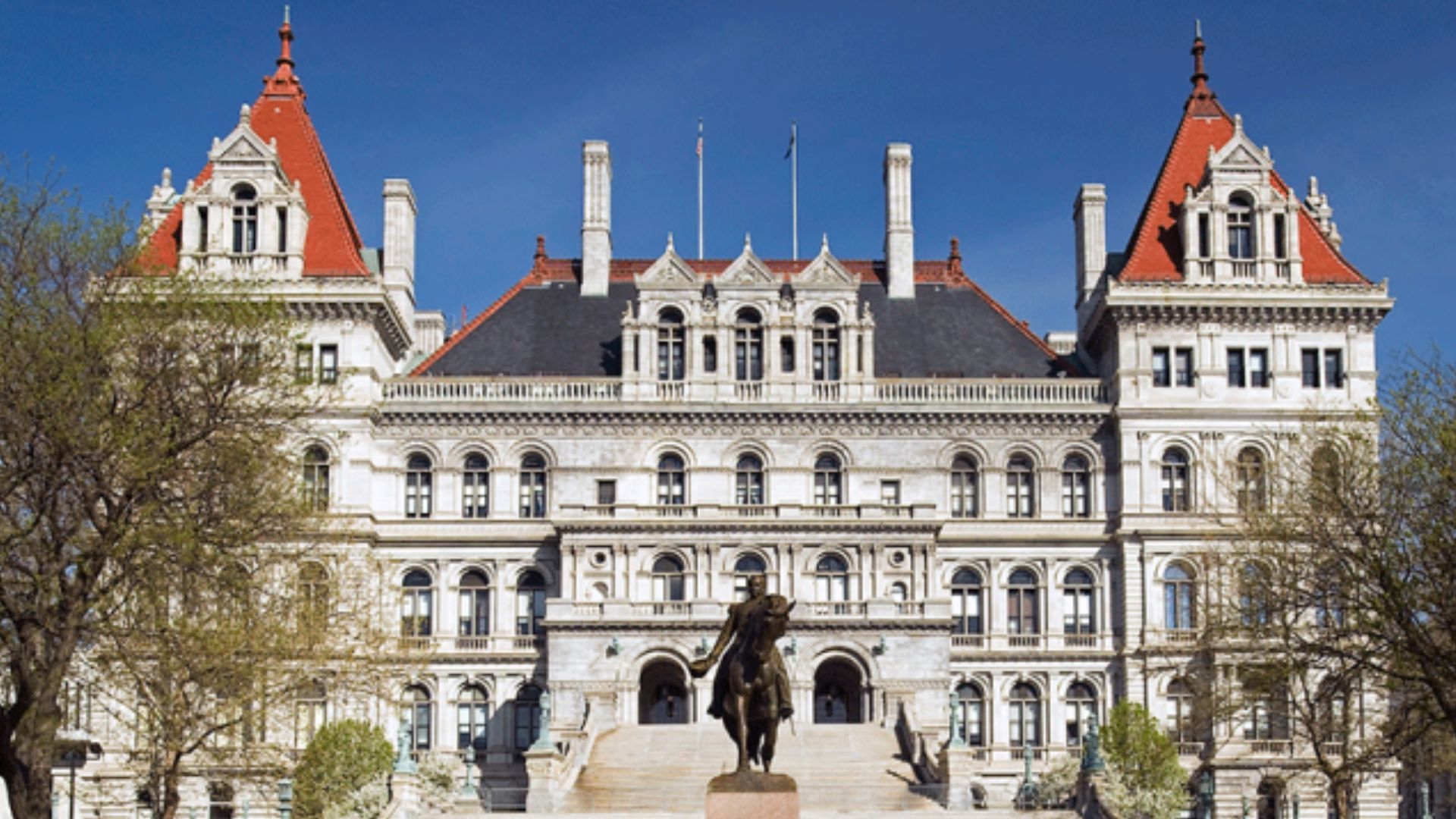
New York – New York Governor Kathy Hochul has launched a broad government reform effort aimed at reducing unnecessary bureaucracy, cutting outdated requirements, and making state services faster and easier for residents and businesses to access.
The governor issued an Executive Order beginning what the state is calling the “Regulatory Reset,” a comprehensive review of thousands of regulations, fees, and legal requirements across New York state agencies. The initiative is designed to identify rules that no longer serve the public, remove unnecessary obstacles, and improve the overall efficiency of state government.
Officials say the effort will focus on finding outdated processes that consume time and resources without providing meaningful benefits. The review will examine regulations that create unnecessary paperwork, require outdated forms of communication, impose burdensome costs, or require agencies to maintain boards, commissions, and reports that may no longer be needed.
Governor Hochul said the goal is to make government work better for the people who depend on it every day while protecting important public services.
“New Yorkers rely on state government in ways big and small every day, but for too long, needless red tape has slowed down the core functions of government and made it harder for our state to deliver for its residents – that changes today,” Governor Hochul said. “This ‘Regulatory Reset’ will leverage cutting edge tools and human expertise to conduct the most comprehensive review of our laws and regulations in state history, saving New Yorkers precious time and money. While some in Washington have tried to gut the very functions of government, we are choosing a different path, one that will strengthen the vital work of government and reaffirm its role for good in our state.”
The Executive Order directs state agencies to look closely at several areas where modernization could improve government operations.
One major focus will be removing outdated requirements that create unnecessary burdens for residents. These include rules that still require people to mail or fax documents, provide wet signatures, submit multiple physical copies of paperwork, appear in person to complete filings, or obtain notarized documents when digital alternatives may be available.
The review will also examine fees and fines charged to individuals and small businesses. State officials said some costs may increase financial pressure without generating significant revenue for New York. By identifying these fees, agencies will determine whether they should be reduced, eliminated, or redesigned.
Another area under review involves mandatory reports, boards, commissions, and councils. Some agencies spend significant time and resources maintaining these requirements, even when they may no longer provide a clear public benefit. The state will evaluate whether these obligations remain necessary or whether they can be changed.
To help complete the review, New York is working with technology organizations and academic researchers that specialize in government modernization. Officials said artificial intelligence tools have already helped identify thousands of possible opportunities for reform.
However, state leaders emphasized that technology will not replace human decision-making. Agency experts will carefully examine each identified regulation and determine whether changes are appropriate. Any recommendations will undergo additional review by state officials and the governor’s office before moving forward.
Potential reforms could happen through changes to agency regulations and rulemaking procedures or through updates to state laws developed with the New York State Legislature.
The first group of actions resulting from the Regulatory Reset is expected to be announced later this year.
New York officials describe the initiative as the largest state-level effort in the country focused on systematically reviewing outdated regulations and improving government efficiency. The project includes partnerships with organizations such as the Recoding America Fund, US Digital Response, and Stanford University’s RegLab.
The Recoding America Fund and US Digital Response helped develop AI-supported methods to identify regulations that may be outdated or overly complicated. The organizations also assisted with reviewing state fees and determining where changes could improve government services.
Stanford RegLab, an interdisciplinary research group involving engineers, data scientists, and social scientists, worked with New York officials to organize information from state laws and regulations into formats that agencies can more easily analyze. Researchers used AI-powered tools to examine mandatory reports, boards, commissions, and councils contained within millions of words of legal documents.
Recoding America Fund Executive Vice President Robert Gordon said the project represents a different way of thinking about government rules and regulations.
“Too often, governments just pile new rules on top of old ones, costing time and money for citizens, businesses, and public employees. Today New York asks a simple, necessary question: What can we take away? Alongside our partner US Digital Response, we’ve been honored to help deploy AI to find rules worth revisiting, at a scale once out of reach. We’re eager to see how New York’s work progresses–and how other states follow its lead.”
Stanford University Professor, Director of the RegLab, and Senior Fellow at Stanford HAI Daniel Ho said New York’s approach demonstrates how technology can support practical government improvements.
“New York is uniquely committed to untangling bureaucracy so that government actually works for the New Yorkers who depend on it. Using the methods pioneered by Stanford RegLab to sift through 18M words of legalese to enable the Regulatory Reset, the Governor’s office is demonstrating what leadership with human-centered reform looks like in practice.”
Tina J. Walha, CEO of U.S. Digital Response, said technology can help public employees complete work that would otherwise take years.
“When public servants have the right technical support, they can deliver for their communities in ways that would otherwise be out of reach. That’s the premise USDR was built on, and it’s what made this work with New York possible. Our team brought technical expertise to help accelerate a review that would have taken years by hand, while state agency staff and childcare providers brought the expertise and judgment that only they can. The result is a smarter, faster path to modernizing regulations that affect millions of New Yorkers’ lives.”
The Regulatory Reset builds on several other government reform efforts already launched by Governor Hochul’s administration.
The initiative is part of the state’s EXPRESS NY program, which focuses on improving government functions and making services more accessible. In June, Hochul announced an initial package of 50 major actions across 22 state agencies designed to eliminate or update regulations that slowed down services or created unnecessary barriers.
According to state officials, those early reforms are expected to save New Yorkers tens of millions of dollars in fees and more than one million hours of time each year. More than 1.5 million residents are expected to benefit from those changes.
The governor has also pushed reforms aimed at speeding up housing and infrastructure projects. In May, she signed legislation connected to her “Let Them Build” agenda, which introduced major changes to the State Environmental Quality Review Act (SEQRA).
Those changes represent the largest updates to SEQRA since the law was created in 1975. Supporters say the reforms will reduce delays and allow eligible housing and infrastructure projects to move forward as much as two years faster.
The Regulatory Reset also follows a public outreach effort launched earlier this year. In February, Governor Hochul asked New Yorkers to submit ideas about regulations, permits, and rules they believed should be modernized.
The response included nearly 4,000 submissions from residents across all 62 counties in New York. State officials said the feedback helped shape the priorities of the Regulatory Reset and provided insight into areas where people experience unnecessary government obstacles.
Officials are now reviewing those public suggestions, with the first round of changes expected later this year.
Through the Regulatory Reset, New York aims to create a more efficient government system while maintaining necessary protections and services. State leaders say the combination of technology, public input, and expert review will help identify outdated rules and create a government structure that better meets the needs of residents, workers, and businesses.


-
 Local News2 years ago
Monroe County announces legal proceedings against properties listed in official public notice of foreclosure
-

 Local News2 years ago
New ALDI store close to Rochester to begin construction in late 2025 or early 2026
-

 Local News1 year ago
County Executive Adam Bello and members of the county legislature celebrate exceptional young leaders and advocates at the 2025 Monroe County Youth Awards
-

 Local News1 year ago
The 2025 Public Market Food Truck Rodeo series will begin this Wednesday with live music by the Royal Bromleys