Local News
RIT turns public participation in science into global impact through open research and worldwide collaboration initiatives

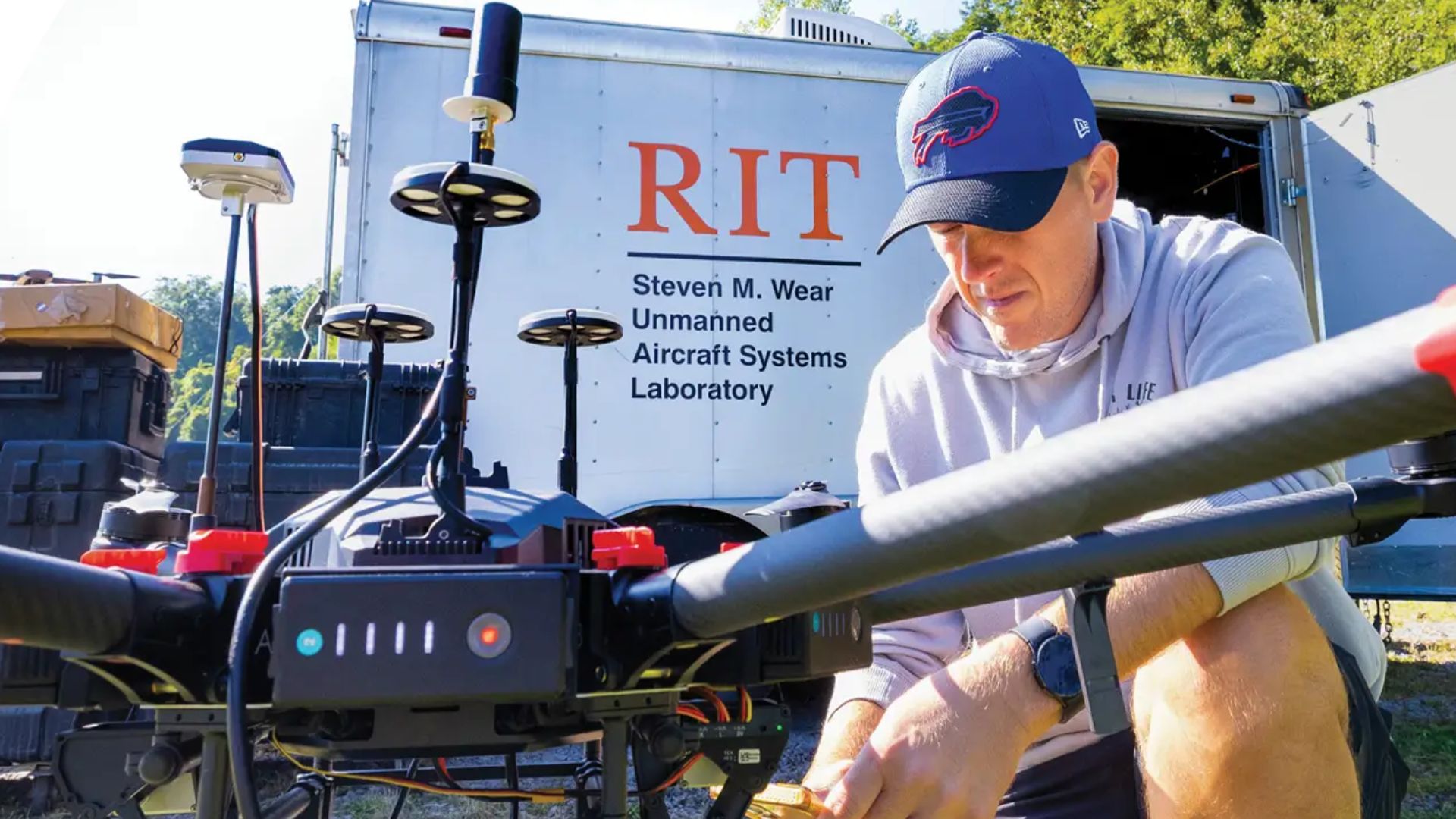
Rochester, New York – Rochester Institute of Technology (RIT) is showing how public participation in science can scale far beyond a single campus, turning shared data and community involvement into research that reaches across continents and even deep into space. From environmental monitoring in New York to galaxy mapping and hyperspectral imaging overseas, RIT-led initiatives are now shaping how scientists, students, and even non-experts interact with complex datasets in real time.
At the center of this approach is the idea that science does not need to stay locked inside labs. Instead, it can be opened, shared, and improved through broader participation. That philosophy is already producing results in fields ranging from remote sensing to astrophysics and biodiversity research.
“Many of the questions we face today are so wide-ranging in scope that they demand diverse perspectives and meaningful public involvement,” said André Hudson, dean of RIT’s College of Science. “Because science directly affects people’s lives, citizens should be part of the process. When they are, discovery becomes more innovative, more equitable, and more responsive to the needs of society.”
This vision was put into practice last fall during ROCX 2025, one of the largest public data collection efforts organized by RIT’s Digital Imaging and Remote Sensing (DIRS) Lab. The two-week experiment took place at RIT’s Tait Preserve in Penfield, New York, and was designed to produce a globally accessible dataset for research and education.
The scale of the project was significant. More than 60 researchers participated, using a coordinated system of commercial satellites, aircraft, drones, and ground-based instruments. All data was collected over a defined area and timeframe to ensure accuracy and consistency. The result is a carefully calibrated dataset that will soon be released to the global research community.
The goal is not only to support academic work but also to expand practical applications. Researchers expect the data to be useful in fields such as surveillance, environmental biology, agriculture, and mine detection. The full dataset is expected to be organized and distributed by summer, opening new pathways for both established scientists and independent researchers.
John Kerekes, a research professor in RIT’s Chester F. Carlson Center for Imaging Science and one of the organizers of the project, emphasized the importance of coordination in remote sensing.
“There is much earth-observing data out there, but it’s not always coordinated with knowing what’s on the ground,” he said.
That coordination is what makes ROCX 2025 stand out. By aligning multiple sensing systems at the same time, researchers are able to connect airborne and satellite imagery with real-world conditions on the ground. This improves both accuracy and usability, especially for studies that depend on fine detail.
For some researchers, the value of RIT’s open datasets goes far beyond academic curiosity. Amanda Ziemann ’11 BS/MS (applied and computational mathematics), ’15 Ph.D. (imaging science), now a scientist at Los Alamos National Laboratory in New Mexico, returned to RIT for ROCX 2025 after previously contributing as a student in 2012.
Her experience highlights how early exposure to real datasets can shape long-term research careers. She now works with hyperspectral imaging and uses the same types of data she first encountered at RIT.
“Having a data set that’s open, that’s well vetted, calibrated, and labeled makes it so that it’s easier for us to communicate our technical advancements to the community,” Ziemann said. “There aren’t very many ground truth public remote sensing hyperspectral data sets. We can make good use of the data for our research needs, and that’s what we’re excited about.”
In her current work, Ziemann analyzes patterns of life and compares them with temporal hyperspectral imaging data. These comparisons help her develop algorithms that improve how remote sensing systems interpret environmental changes over time. The open structure of RIT’s datasets allows researchers like her to test ideas faster and share findings more effectively.
While some teams focus on Earth observation, others at RIT are pushing public participation into space science. In astrophysics, a growing number of researchers are involving volunteers in the analysis of galaxy data through participatory science projects.
Astrophysical sciences and technology Ph.D. student Sadie Coffin is one of the researchers working on Redshift Wrangler, a project started by her adviser, Professor Jeyhan Kartaltepe. The project is supported by funding from the Future Investigators in NASA Earth and Science Space Technology program.
Read also: Rochester 2034 Report highlights community vision driving City investments
Redshift Wrangler invites people from around the world to examine light spectra from distant galaxies. By analyzing how light shifts across different wavelengths, volunteers help researchers track how galaxies form, evolve, and interact over billions of years.
The approach is simple but powerful: distribute complex datasets to trained volunteers and allow them to contribute directly to scientific discovery. This creates a shared workload that no single research group could handle alone.
“There’s certainly not just one route to science,” said Coffin. “There are a lot of advantages to having human eyes on our data. Volunteers can take our data, ask their own questions, and do their own science that we can’t do as one person or a small team of people.”
The impact is not only scientific but also social. Public involvement tends to increase transparency and trust, especially in fields that rely heavily on abstract or technical data. Coffin noted that the diversity of the volunteer community plays a key role in this.
“I think it makes people a lot more likely to have trust and understanding of why science is so important,” she said.
For participants like Baba Karthik Kalapatapu, the value lies in direct access to raw scientific information. Based in Denver and working as an associate project manager for a renewable energy company, he studies galaxy spectra in his spare time as part of the Redshift Wrangler project.
“Having data available to the public is extremely important,” said Karthik Kalapatapu, who is an associate project manager for a renewable energy company.
“You either learn how to read research papers or trust researchers who are giving talks about it, but for me, I need to understand the data. The fact that I can sit in my apartment, open a laptop, and study wavelengths of light from billions of years ago to understand the evolution of the cosmos is pretty neat.”
His experience reflects a broader shift in how science is being shared. Instead of remaining limited to specialists, data is increasingly accessible to motivated individuals who want to explore and contribute on their own terms.
Back on Earth, RIT researchers are also applying citizen science to environmental studies. In the Thomas H. Gosnell School of Life Sciences, assistant professor Elle Barnes is using public participation to study biodiversity and ecosystem health through a project called One Cubic Foot.
The project, originally launched by Smithsonian-backed photographer and environmentalist David Littschwager, uses one-cubic-foot frames called biocubes to document the life contained in small sections of natural environments. The idea is that even a tiny space can reveal surprising biological complexity.
The project first came to Rochester in 2015 through collaboration with the Seneca Park Zoo, focusing on the Genesee River. Last summer, it returned to examine how the river ecosystem has changed over the past decade.
Barnes contributes to the project by analyzing environmental DNA, or eDNA, collected from water samples. This method allows researchers to detect organisms that are not easily visible, providing a more complete picture of biodiversity.
The long-term goal is to build a large, community-driven database of ecological information. Samples collected by citizens are sent to Barnes’s lab, where they are analyzed to identify species present in the environment.
“If you continue to sample over time, and you employ citizens who are excited to go out and study the health of the river, you’ll have a much better understanding about the fruits of your conservation labor,” said Barnes. “I also think that it’s critical to the scientific field that you take the time to talk to the people that directly benefit from your work.”
Across disciplines, from imaging science to astrophysics and ecology, the same pattern is emerging at RIT: open data combined with public participation is expanding what research can achieve. It is also reshaping the relationship between scientists and society.
Professor Stanley Rotman, who works in electrical and computer engineering, has been using RIT datasets for nearly two decades. For him, access to high-quality hyperspectral data is not just helpful—it is essential.
At smaller institutions with limited funding, collecting such data independently can be difficult or impossible. RIT’s openly shared datasets remove that barrier.
Rotman also sees a strong educational impact. The ROCX 2025 data, in particular, will support student training and classroom projects, helping prepare the next generation of remote sensing researchers.
“I can’t have undergraduate classes and undergraduate projects unless I know I have the data available,” said Rotman. “This is reliable data, and RIT does it beautifully.”
As ROCX 2025 data moves toward public release and projects like Redshift Wrangler and One Cubic Foot continue expanding, RIT’s model is becoming increasingly clear. Science, when opened to participation, does not simply spread knowledge—it multiplies it, reshaping both who can contribute and what discoveries become possible.


-
 Local News2 years ago
Monroe County announces legal proceedings against properties listed in official public notice of foreclosure
-

 Local News2 years ago
New ALDI store close to Rochester to begin construction in late 2025 or early 2026
-

 Local News2 years ago
County Executive Adam Bello and members of the county legislature celebrate exceptional young leaders and advocates at the 2025 Monroe County Youth Awards
-
 Local News1 year ago
The 2025 Public Market Food Truck Rodeo series will begin this Wednesday with live music by the Royal Bromleys