Local News
Governor Hochul and Mayor Mamdani announce $8.4 million investment to transform Queens concrete medians into flood prevention infrastructure

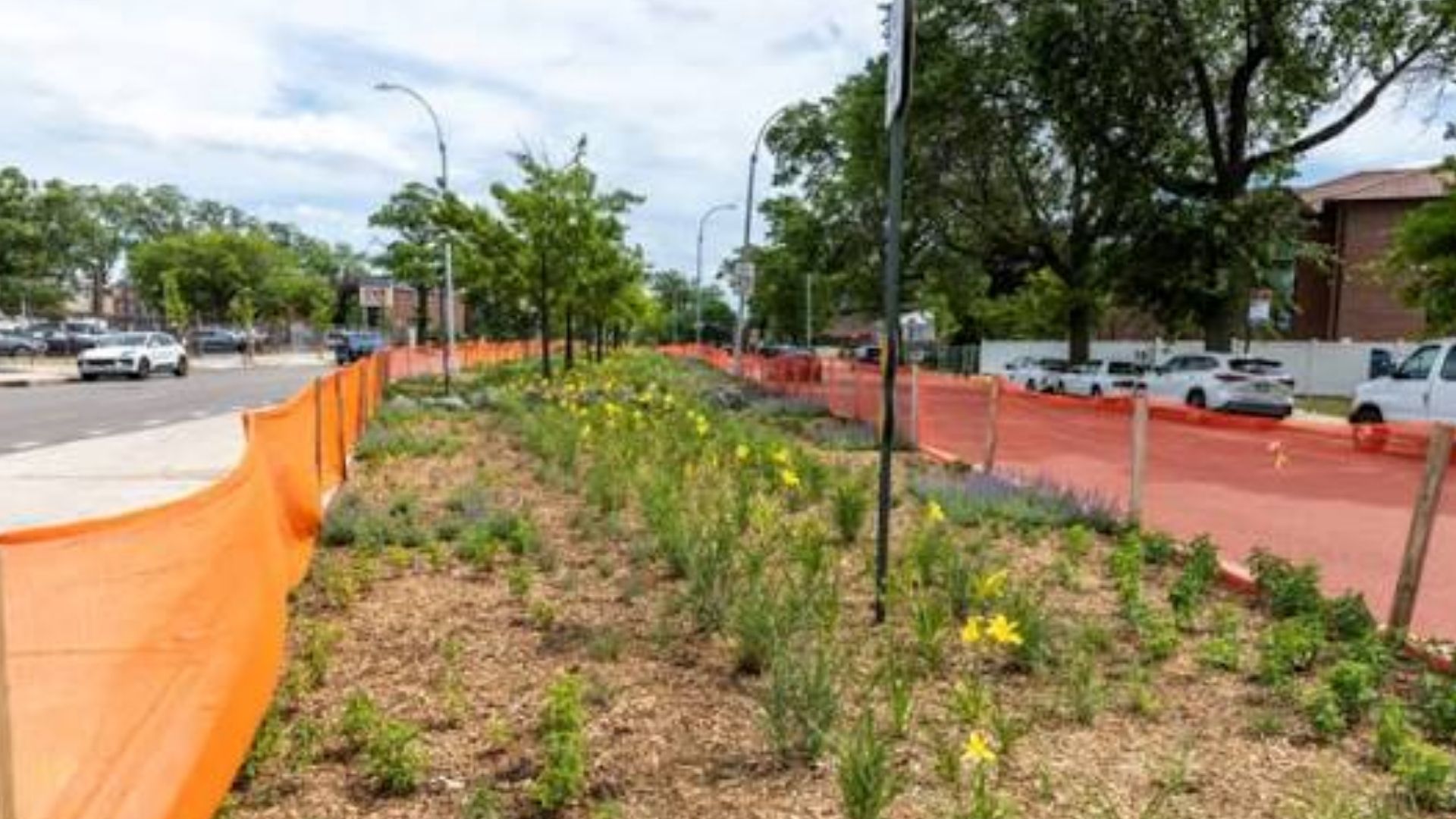
New York – New York State and New York City officials are putting $8.4 million toward a new approach to stormwater management in Queens, where concrete roadway medians in Whitestone, Forest Hills and Queens Village will be transformed into planted areas designed to absorb large amounts of rainwater.
Governor Kathy Hochul and Mayor Zohran Kwame Mamdani announced the investment as part of a broader effort to make neighborhoods more resilient to flooding and the increasingly heavy rainstorms associated with extreme weather. Once the projects are completed, the newly engineered medians are expected to capture an estimated five million gallons of stormwater each year.
The idea is straightforward but significant. Instead of allowing rainwater to run across paved streets and quickly enter the city’s sewer system, the redesigned medians will act as green infrastructure “sponges.” Water will be directed into the planted areas, where specially engineered soil and underground storage systems will hold and absorb it.
That process is expected to reduce pressure on the sewer system during major storms while also helping improve the quality of water flowing into nearby waterways, including the East River, Flushing Bay and Jamaica Bay.
“With flash floods becoming more the norm due to extreme weather tied to our changing climate, it’s imperative we do all we can to protect our communities,” Governor Hochul said. “Here in New York, we are implementing innovative solutions to strengthen our infrastructure and better protect our communities. Working with Mayor Mamdani and the City of New York, these critical green infrastructure projects will help make Whitestone, Forest Hills and Queens Village more resilient and safe.”
The projects are receiving substantial support from New York State. A total of $5 million in state grants is being provided through the Green Innovation Grant Program administered by the Environmental Facilities Corp. and the Water Quality Improvement Project overseen by the New York State Department of Environmental Conservation.
The remaining portion of the $8.4 million investment comes through the broader project funding structure, allowing the three locations to be redesigned as flood-management infrastructure while also receiving landscaping and pedestrian improvements.
Mayor Mamdani said the need for such projects has become more pressing as storms bring heavier and less predictable rainfall.
“Climate change is bringing more intense and unpredictable bursts of rain, and without action, those storms will continue to overwhelm New York City’s sewer system. This $8.4 million green median project meets that challenge with infrastructure that works for our environment and our neighborhoods. By planting native species and wildflowers above an underground stormwater storage network, we will capture five million gallons of stormwater each year, easing pressure on our sewer system and keeping New Yorkers safe. We are grateful to Governor Hochul and our state partners for investing in resilient infrastructure that protects New Yorkers while making our city greener and more beautiful.”
The changes will involve much more than simply planting flowers in existing medians. Construction crews will remove old concrete medians and curbs, along with overgrown or dead trees, weeds and accumulated debris.
Read also: RIT researchers explore the role of teamwork in engineering education
New openings will then be built to allow rainwater from the roadway to flow directly into the medians. The redesigned spaces will contain specially engineered soils and underground storage systems that are intended to hold stormwater and allow it to be absorbed rather than immediately entering the sewer network.
The finished medians will feature native plants, shrubs, grasses and wildflowers. Beyond their role in managing stormwater, the landscaping is expected to cool the streets and improve their appearance.
The projects also include pedestrian improvements. ADA-compliant ramps and detectable warning surfaces will be installed as part of the work, helping make crossings safer and more accessible.
State Environmental Conservation Department Commissioner Amanda Lefton described the projects as an example of how green infrastructure can address flooding while improving neighborhoods.
“DEC is proud to partner with Mayor Mamdani and our city and state partners on strategies to help reduce flooding and enhance communities in Queens. Thanks to Governor Kathy Hochul’s record state investments in green infrastructure and other water quality improvements, DEC is able to help support initiatives led by the City and municipalities statewide with resources they need to implement important stormwater management projects like these new green corridors that will greatly benefit Queens Village, Whitestone and Forest Hills.”
New York State Environmental Facilities Corporation President and CEO Maureen A. Coleman said the investment shows how infrastructure can work with natural systems rather than relying only on traditional concrete drainage methods.
“Governor Hochul is investing in solutions that are as practical as they are innovative. The $5 million in grants for these Queens projects will transform concrete medians into green ‘sponges’ capable of soaking up millions of gallons of stormwater, reducing flood risk and protecting New Yorkers. By supporting projects that work with nature to manage severe weather, the State is helping New York City build resilience while minimizing costs for ratepayers.”
The first project is located in Whitestone along Francis Lewis Boulevard, between 20th Avenue and 21st Road. The medians there are now nearing completion.
The Whitestone project stretches 1,105 feet and serves a 1.17-acre drainage area. Once fully operational, the redesigned medians are expected to manage about 1.11 million gallons of stormwater each year. That is also expected to reduce combined sewer overflows, or CSOs, into the East River.
Forest Hills is next. Along Union Turnpike between Metropolitan Avenue and 71st Road, the medians will stretch 3,245 feet and collect runoff from a 2.56-acre drainage area.
The Forest Hills improvements are scheduled to be planted this fall. They are designed to manage approximately 2.43 million gallons of stormwater annually, helping ease pressure on the sewer system and reduce CSOs into Flushing Bay.
In Queens Village, the project will focus on Springfield Boulevard between Lucas Street and Merrick Boulevard. Construction is expected to begin later this year.
Read also: New York State Police charge 30-year-old Burke man following aggravated harassment investigation
The Springfield Boulevard improvements will create 1,182 feet of green infrastructure connected to a 1.51-acre drainage area. The medians are expected to manage approximately 1.44 million gallons of stormwater each year and help limit CSOs into Jamaica Bay.
Together, the three projects account for the estimated five million gallons of stormwater that will be captured annually. Each location has been designed around the conditions of its surrounding streets and drainage area, but all three follow the same basic principle of slowing, storing and absorbing stormwater before it reaches the sewer system.
New York City Department of Environmental Protection Commissioner Lisa F. Garcia said the work represents a broader rethink of how everyday streets can be used to address environmental challenges.
“Climate change is reshaping our world, and we need to reshape the infrastructure of our city in return. By trading hard concrete for living landscapes, we are not just managing stormwater but reimagining what our streets can be. These expansive medians will become vibrant green corridors that soak up millions of gallons of stormwater each year. This is how we transform everyday spaces into innovative flooding solutions that both protect communities and beautify neighborhoods.”
The New York City Department of Transportation is also involved because the medians continue to serve an important transportation and pedestrian purpose. DOT Commissioner Mike Flynn noted that medians can provide safety benefits while also being adapted to help deal with extreme weather.
“Concrete medians help improve safety by making it easier for pedestrians to cross the street and by better organizing traffic — but they can also play an important role in protecting our city from the dangers of extreme weather and flooding. As New York City sees more and more intense rainstorms due to climate change, now more than ever it’s crucial to improve and rethink our infrastructure to protect New Yorkers against growing environmental threats.”
NYC Parks Commissioner Tricia Shimamura said the redesigned spaces will serve several purposes at once, combining stormwater management, pedestrian safety and landscaping.
“As we deal with the effects of climate change, New York City must take creative measures to bolster our infrastructure against flooding from severe storms. These medians will prevent millions of gallons of stormwater from entering our sewer system, while also making it safer for New Yorkers to cross streets and beautifying our neighborhoods with native plantings. We were proud to partner on this project that will serve to make our city greener and more resilient.”
All three projects are being closely coordinated with the New York City Department of Transportation and NYC Parks.
For residents in the three Queens neighborhoods, the changes will eventually mean that spaces that once consisted largely of concrete will become planted corridors with a practical job to perform. During heavy rain, they will provide additional capacity for stormwater. During normal conditions, they will add greenery, flowers and landscaping to busy roadways.
The investment also illustrates a growing effort to combine infrastructure improvements with environmental and neighborhood benefits. Rather than treating flood prevention, landscaping and pedestrian improvements as separate projects, the Queens medians are being designed to address all three needs in the same spaces.
With work nearing completion in Whitestone, planting planned for Forest Hills this fall and construction expected to begin later this year in Queens Village, the three projects will roll out in stages.
Once complete, the redesigned medians are expected to become a visible part of the city’s flood-resilience strategy, turning ordinary roadway infrastructure into spaces that can absorb millions of gallons of rainwater while adding more greenery to Queens neighborhoods.


-
 Local News2 years ago
Monroe County announces legal proceedings against properties listed in official public notice of foreclosure
-

 Local News2 years ago
New ALDI store close to Rochester to begin construction in late 2025 or early 2026
-

 Local News1 year ago
County Executive Adam Bello and members of the county legislature celebrate exceptional young leaders and advocates at the 2025 Monroe County Youth Awards
-

 Local News1 year ago
The 2025 Public Market Food Truck Rodeo series will begin this Wednesday with live music by the Royal Bromleys