Local News
University of Rochester’s Clinical and Translational Science Institute celebrates $29 million NIH award while marking two decades of advancing medical research

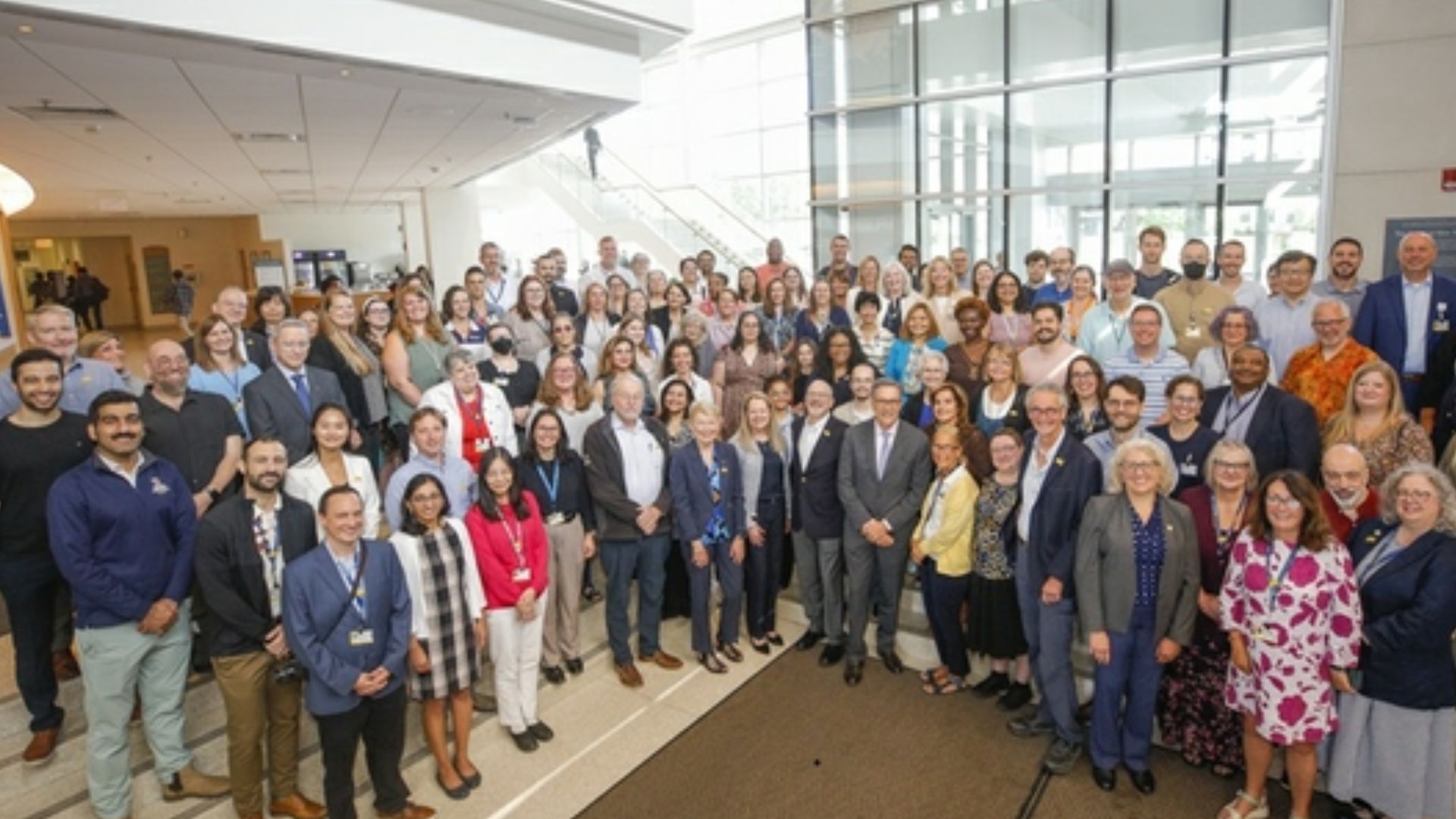
Rochester, New York – The University of Rochester Medical Center’s Clinical and Translational Science Institute (CTSI) is marking a major milestone after securing more than $29 million in new federal funding from the National Institutes of Health, reinforcing two decades of work aimed at speeding up medical discoveries and improving patient care.
The latest award, provided through the National Institutes of Health’s National Center for Advancing Translational Sciences and the Clinical and Translational Science Awards Program, will support research that moves scientific discoveries from laboratories into real-world healthcare settings more efficiently. University leaders, researchers, and elected officials gathered on July 23 at the Saunders Research Building on the UR Medicine Health Sciences Campus to celebrate both the funding and the institute’s 20-year legacy.
Since its launch, the Clinical and Translational Science Institute has become a central part of research efforts across the University of Rochester Medical Center. Over the past two decades, the institute has attracted more than $157 million in federal funding, helping researchers develop new treatments, strengthen clinical studies, and expand research opportunities designed to improve health outcomes for patients.
University President Sarah Mangelsdorf said the new funding ensures that researchers will continue receiving the support they need to advance medical science and improve lives.
“The University of Rochester is a national leader in research that improves human health,” said University President Sarah Mangelsdorf. “This funding will ensure our researchers have the tools they need to connect, learn, and get what they need to advance their knowledge and practice, develop cutting-edge treatments and therapies, and bring hope to people receiving care in the Rochester region and beyond.”
The institute provides a wide range of resources to research teams, including education, professional development, specialized services, financial support, and collaborative opportunities. These programs are designed to help scientists navigate every stage of the research process, from early discoveries to patient-focused clinical applications.
David Linehan, MD, CEO of URMC and Dean of the School of Medicine and Dentistry, said the institute has played an essential role in strengthening research across the medical center since its establishment.
“For twenty years, CTSI has served a critical infrastructure role for translational science and research at URochester Medicine,” said David Linehan, MD, CEO of URMC and Dean of the School of Medicine and Dentistry. “The CTSI team supports our academic and clinical missions by accelerating lab discoveries to bedside implementation and promoting team science. They will continue to play a pivotal role in achieving our research mission.”
Read also: S&P Global Ratings affirms City of Rochester’s strong credit rating
The University of Rochester was among the first institutions in the country to receive support through the NIH’s Clinical and Translational Science Awards initiative in 2006. Since then, the institute has continued expanding its programs while adapting to new challenges in healthcare research.
Federal leaders also praised the institute’s accomplishments and the impact of continued investment in biomedical research.
“For a patient waiting for answers, or a family hoping for a better treatment for a loved one, medical research that develops better health outcomes is deeply personal,” said Senator Chuck Schumer. “The University of Rochester earned this major $29 million federal NIH award through two decades of outstanding work and proven results, and I will keep fighting to protect the NIH investments that allow Rochester’s scientists to make discoveries that improve and save lives.”
Congressman Joe Morelle emphasized that sustained investment in research creates opportunities for discoveries that directly benefit patients and families.
“Medical breakthroughs don’t happen by accident—they happen because we invest in the researchers, institutions, and partnerships that turn discovery into better care for families,” said Congressman Joe Morelle. “For two decades, the University of Rochester’s Clinical and Translational Science Institute has been at the forefront of that mission, and I’m proud to celebrate this milestone and the more than $29 million in NIH funding that will help deliver lifesaving innovations for our community and communities across the country.”
The newly awarded funding will focus on two broad priorities. One centers on advancing translational science by reducing barriers that slow research progress. This includes greater use of artificial intelligence and machine learning to improve research methods while also helping clinical trials become more efficient and effective.
The second priority focuses on improving health outcomes for all communities. Researchers will use translational science to address pressing local and national health challenges, strengthen collaboration between laboratory and clinical researchers, and increase access to advanced clinical trials for a broader range of participants.
Karen Wilson, MD, MPH, co-director of CTSI, said these efforts are intended to reshape how medical research is carried out while ensuring that studies produce meaningful results for patients.
“We are showing the research community how translational science can reduce barriers to make research more meaningful for all,” said Karen Wilson, MD, MPH, co-director of CTSI. “Translational science can make a real difference in the lives of those receiving treatment because it makes healthcare research faster, less expensive, and more impactful.”
The funding will also strengthen support systems for scientists working across UR Medicine. Planned initiatives include expanded mentorship for emerging translational researchers, funding for innovative research projects, education programs for professionals involved in clinical trials, and enhanced informatics services that help researchers manage and analyze increasingly complex data.
Martin Zand, MD, PhD, co-director of CTSI, said the grant will create new opportunities for both experienced investigators and the next generation of research leaders.
“Our new grants will fund training and mentorship of up-and-coming translational scholars, support innovative research projects, offer training and education programs to improve our clinical trials workforce, support best-in-class informatics services, and more,” said Martin Zand, MD, PhD, co-director of CTSI.
Read also: International Plaza continues August with a full lineup of themed community events
Community partnerships remain another cornerstone of the institute’s mission. Since first receiving federal funding in 2006, CTSI has worked closely with local organizations and residents to connect research efforts with community needs. Under the new funding period, those partnerships will continue expanding, particularly in rural areas where access to research opportunities can be more limited.
Working alongside Common Ground Health and Edith Williams, MS, PhD, of the Center for Community Health and Prevention, the institute plans to strengthen community engagement through direct outreach and new approaches that make participation in research more accessible.
The newly awarded NIH funding will support CTSI through 2032, providing long-term stability for programs that aim to accelerate medical discoveries, prepare future research leaders, and bring promising scientific advances closer to the patients who need them most. As the institute enters its third decade, University of Rochester leaders say the investment will help build on a foundation that has already transformed research across the institution while continuing to improve healthcare in Rochester and beyond.


-
 Local News1 year ago
Monroe County announces legal proceedings against properties listed in official public notice of foreclosure
-

 Local News2 years ago
New ALDI store close to Rochester to begin construction in late 2025 or early 2026
-

 Local News1 year ago
County Executive Adam Bello and members of the county legislature celebrate exceptional young leaders and advocates at the 2025 Monroe County Youth Awards
-

 Local News1 year ago
The 2025 Public Market Food Truck Rodeo series will begin this Wednesday with live music by the Royal Bromleys