Local News
Rochester physician earns Executive MBA to help connect business strategy with high-quality patient care decisions

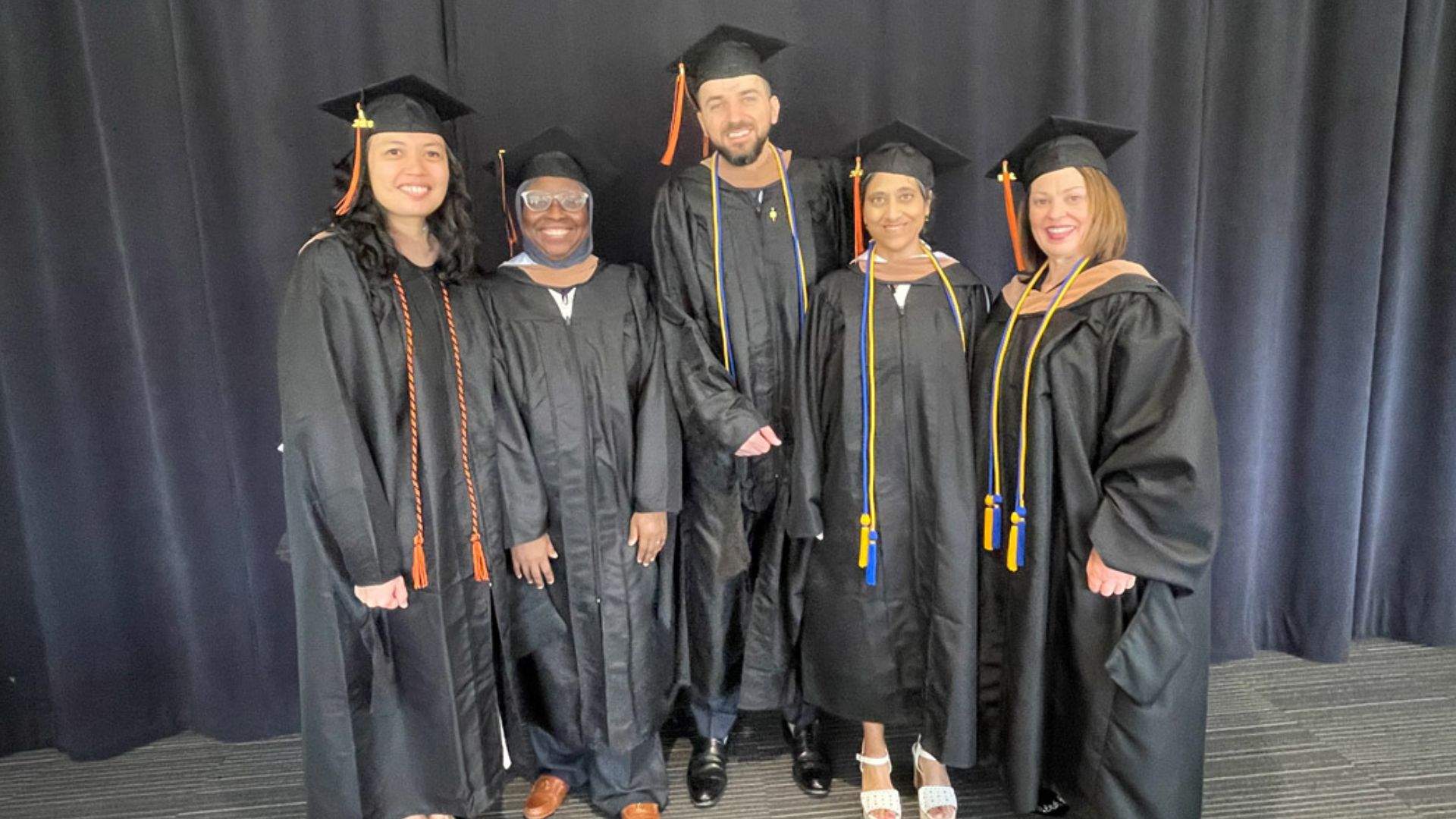
Rochester, New York – For many healthcare professionals, the path to leadership is built on years of clinical experience, research, and patient care. Yet as healthcare systems grow increasingly complex, medical knowledge alone is often no longer enough. Financial pressures, operational challenges, emerging technologies, and workforce management have become central to how hospitals and health networks function.
That reality helped inspire Dr. Shubha Shastry to pursue a new challenge—one that would take her beyond the walls of the clinic and into the world of business leadership.
Shastry, who oversees the nephrology service line for Rochester Regional Health, recently added another credential to an already impressive academic and professional resume. A trained physiologist who later earned a medical degree, she graduated this spring from Rochester Institute of Technology’s online Executive MBA program, joining a diverse group of professionals seeking to strengthen their leadership and management skills.
Read also: Saunders College of Business to recognize Jay McHarg with 2026 Vanden Brul award
Her graduating class reflected the broad spectrum of industries that drive the regional economy. Alongside physicians were engineers, scientists, technology professionals, nonprofit executives, and leaders from the manufacturing sector. While each student brought a unique perspective, they shared a common goal: learning how to lead more effectively in increasingly complicated environments.
Shastry entered the program through a partnership established in 2024 between Saunders College of Business and Rochester Regional Health. The initiative was designed to provide physicians with greater exposure to business principles and leadership development. Seventeen doctors began the executive education certificate component, and fifteen completed the year-long program. Five participants, including Shastry, chose to continue their studies and earn the full Executive MBA degree.
What began as an opportunity to learn business fundamentals quickly evolved into something much broader.
During the first year of the program, Shastry found herself surrounded primarily by fellow physicians who understood many of the same challenges facing modern healthcare providers. But as she progressed into the MBA curriculum, the classroom expanded far beyond medicine.
Students from banking, manufacturing, and technology sectors introduced different viewpoints and experiences that often challenged traditional assumptions.
“We would have discussion posts, and we’d sort of learn about things like AI—AI in banking, if one of my colleagues was in banking, or AI in manufacturing,” Shastry said. “I found that really interesting, to see how some of the same concepts that we apply in medicine are applied in different industries.”
Those cross-industry conversations became one of the most valuable aspects of the program. While healthcare often faces unique challenges, many of the underlying leadership and operational principles are remarkably similar across sectors. Exposure to those ideas gave Shastry a broader understanding of how organizations innovate, manage change, and respond to emerging technologies.
Among the courses that left the strongest impression on her were classes focused on negotiations and leadership.
The negotiations course explored how individuals approach decision-making and conflict, emphasizing the importance of understanding motivations and priorities. For a physician leader responsible for working with administrators, healthcare providers, and patients, those lessons proved immediately relevant.
Equally influential was a leadership course that encouraged students to reflect on the characteristics that define effective leaders.
The timing could not have been better.
When Shastry entered the MBA program, she was already an experienced physician. By the time she completed it, her career had taken an unexpected turn. She was promoted to Service Line Division Head of Nephrology, assuming responsibility for her specialty across eight hospitals within the Rochester Regional Health network.
The promotion transformed classroom lessons into real-world leadership challenges almost overnight.
“It taught me a lot about what being a leader is,” said Shastry. “But it also showed me what kind of leader I don’t want to be.”
That type of personal transformation is something faculty members have observed repeatedly among Executive MBA students.
According to Molly McGowan, who co-directs the program alongside Rick Lagiewski, leadership development remains one of the defining features of the Saunders EMBA experience. Through executive coaching sessions and leadership-focused coursework, students are encouraged not only to improve their business skills but also to gain a deeper understanding of themselves.
“I’ve heard this line a few times from students,” McGowan said. “‘I expected to come in and get better at business or finance. I didn’t expect to come out having a deep dive into myself and who I am as a person and as a leader, and how I want to spend my life and my career and grow as a leader.’”
For Shastry, the decision to pursue an MBA was rooted in a challenge she has witnessed throughout her healthcare career.
In many organizations, business leaders and healthcare providers often approach problems from different perspectives. Administrators must ensure financial sustainability, while clinicians remain focused on delivering the highest quality care to patients. Balancing those priorities is rarely simple.
Shastry wanted to become someone capable of understanding both sides of that equation.
“Sometimes people who have purely a business mind might recommend cuts or things without really having a solid understanding of how it might affect patient care,” Shastry said. “My goal in getting this was to be able to influence decisions by really understanding both the business side and the patient care side. I really wanted to be the one at the table helping to make those decisions.”
As healthcare systems continue to evolve, professionals who can bridge the gap between medicine and management are becoming increasingly important. Shastry’s journey illustrates how leadership education can help prepare physicians not only to care for patients but also to shape the strategic decisions that affect entire healthcare networks.
The learning experience does not end with graduation. On June 4, RIT will host its annual “Sharpen the Saw” professional development event, bringing together Executive MBA students, alumni, and business leaders for a day of keynote presentations, leadership discussions, and networking opportunities.
For graduates like Shastry, the event serves as a reminder that leadership is not a destination reached with a diploma. Instead, it is an ongoing process of learning, reflection, and growth—one that continues long after commencement day.


-
 Local News2 years ago
Monroe County announces legal proceedings against properties listed in official public notice of foreclosure
-

 Local News2 years ago
New ALDI store close to Rochester to begin construction in late 2025 or early 2026
-

 Local News2 years ago
County Executive Adam Bello and members of the county legislature celebrate exceptional young leaders and advocates at the 2025 Monroe County Youth Awards
-

 Local News1 year ago
The 2025 Public Market Food Truck Rodeo series will begin this Wednesday with live music by the Royal Bromleys