Local News
Governor Hochul unveils major $10 million initiative to help communities strengthen and protect urban forests across New York

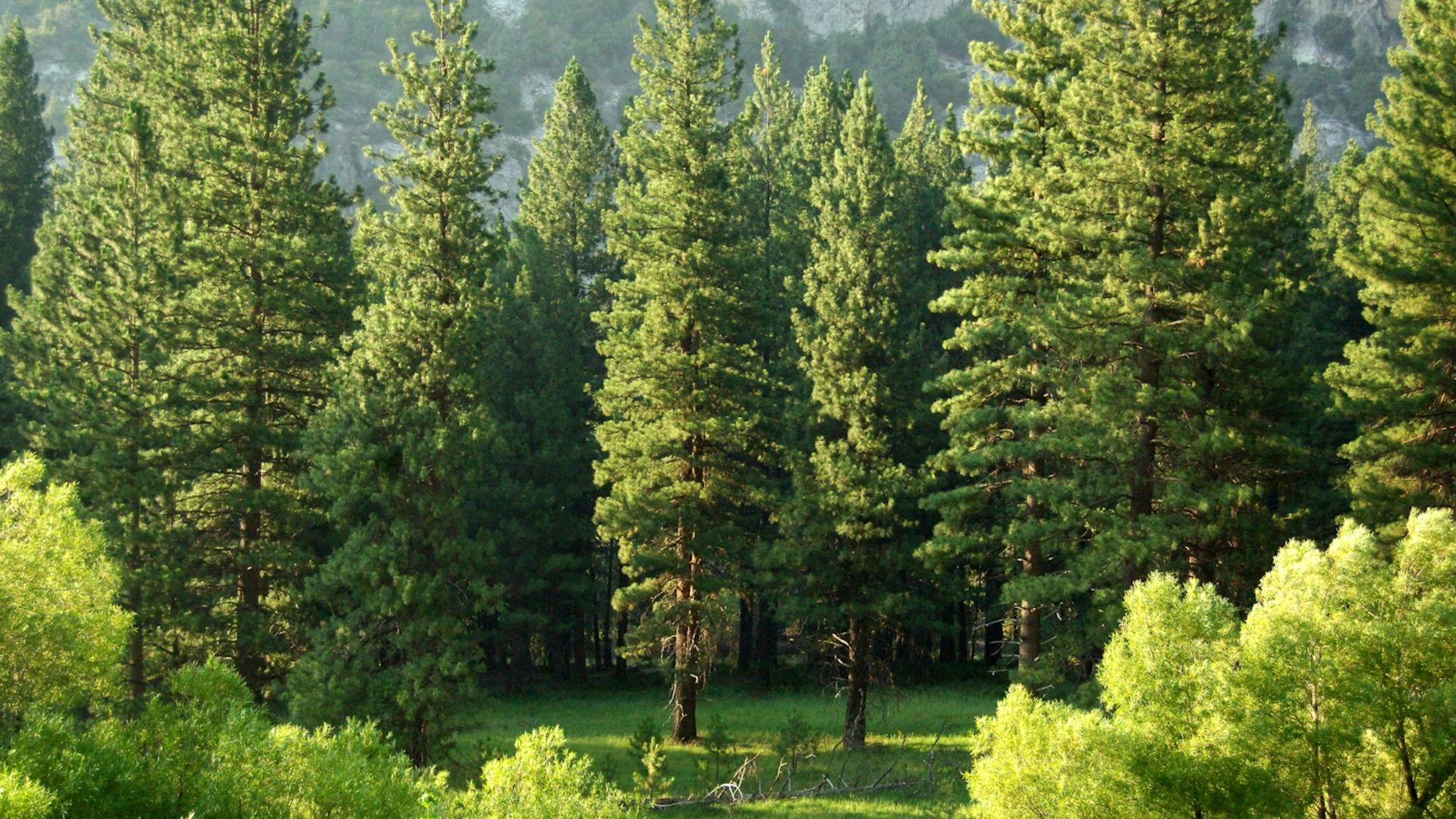
Albany, New York – Governor Kathy Hochul unveiled a new $10 million funding opportunity aimed at helping communities across New York better understand, protect, and expand their urban forests, continuing the state’s growing push toward climate resilience and environmental justice.
The latest round of support, announced through the New York State Department of Environmental Conservation’s Urban and Community Forestry Grant Program, will provide financial assistance for projects focused on tree inventories, forest assessments, and long-term management planning in cities, towns, and public spaces throughout the state.
Municipalities, nonprofit groups, Tribal Nations, and community-based organizations are all eligible to apply for the funding, which state officials say is designed to strengthen local green infrastructure while improving neighborhood health and environmental quality.
“We recognize how essential urban and community forests are to the health and well-being of our neighborhoods,” Governor Hochul said. “With this latest $10 million investment, our State is empowering communities with the tools to better understand, manage, and grow their tree resources to build stronger, more resilient neighborhoods and deliver on our commitment to environmental justice for all New Yorkers.”
The announcement arrives as New York continues investing heavily in forestry and conservation efforts. Since 2021, the state has committed more than $116.5 million toward tree-related initiatives, including urban forestry projects, nursery expansion, forest-based markets, reforestation programs, and forest health improvements.
Of that total, approximately $41 million has specifically supported urban and community forests, while another $61 million has gone toward tree nurseries and forest-based economic development efforts. An additional $7.5 million has been directed toward forest health and reforestation initiatives.
State officials also pointed to substantial federal support flowing into New York in recent years. Through the Inflation Reduction Act under the Biden Administration, an extra $73.5 million in federal funding has been awarded directly to local governments and nonprofit organizations for urban forestry projects.
The newly announced grants are expected to support several categories of projects, including traditional inventories of street trees and park trees, assessments of forested natural areas, and the development of management plans built from collected forestry data.
Read also: COSMOS-Web scientists unveil the most detailed map ever created of the universe’s vast cosmic web
One of the most notable additions in this funding cycle is the inclusion of advanced mapping and remote sensing technologies. Communities will now be able to apply for projects using terrestrial LiDAR technology, a sophisticated system that uses laser scanning to create detailed three-dimensional models of trees and forested spaces.
Officials believe these technologies could significantly improve the speed and accuracy of urban forestry assessments while giving communities stronger data to guide future planting and maintenance decisions.
The use of LiDAR and other emerging assessment tools reflects a broader shift in how governments and environmental agencies manage urban ecosystems. Rather than relying solely on traditional field surveys, communities can now gather highly detailed digital information about tree size, canopy coverage, species diversity, and overall forest health.
New York State Department of Environmental Conservation Commissioner Amanda Lefton emphasized the importance of that data-driven approach.
“Today’s $10 million opportunity underscores Governor Hochul and DEC’s ongoing commitment to protecting and expanding the State’s urban tree canopy and celebrating the vital role trees play in our communities. Tree inventories are a critical first step in building healthier, more resilient urban forests. By supporting the use of new technology and assessment methods, this round of funding will help communities make data-driven decisions to support resiliency and maximize the benefits of their green infrastructure.”
Unlike many environmental grant programs, this opportunity does not require applicants to provide matching funds, potentially opening the door for smaller communities and organizations with limited budgets to participate.
Applicants can request funding amounts ranging from $50,000 to as much as $2.5 million, depending on the size and scope of their proposed projects.
All funded work must take place on public property, land open to the public, or on federally and state-recognized Tribal reservation land.
Environmental advocates have long argued that urban forests play a far greater role than simply beautifying neighborhoods. Trees help cool cities during extreme heat events, improve air quality, reduce stormwater runoff, lower energy costs, and support public health.
In lower-income communities and densely populated urban areas, tree canopy coverage is often significantly lower than in wealthier neighborhoods, contributing to hotter temperatures and poorer air conditions. State officials say expanding access to urban greenery remains a major part of New York’s environmental justice strategy.
The grant initiative also ties directly into Governor Hochul’s broader statewide goal of planting 25 million trees by 2033, one of the most ambitious tree-planting targets in the country.
Officials say every tree planted through local and state-supported initiatives will contribute toward reaching that milestone.
The Urban and Community Forestry Grant Program is intended to complement other state efforts, including the Community Reforestation Program, also known as CoRe. While CoRe focuses heavily on tree planting itself, the latest grants are designed to help communities gather the information and planning resources necessary to make future planting efforts more effective and sustainable.
DEC officials stressed that understanding the condition and composition of existing urban forests is essential before communities can make informed decisions about expansion, maintenance, and long-term resilience planning.
To help potential applicants navigate the process, the DEC will host a free informational webinar on June 2 from 1 p.m. to 3 p.m. During the session, agency representatives are expected to explain eligibility requirements, application procedures, and scoring criteria while also answering questions from prospective applicants.
Applications for the grants will remain open until 2 p.m. on Aug. 12, 2026.
All submissions must be completed through the Statewide Financial System, commonly known as SFS. Organizations planning to apply must first register within the system, while nonprofit groups are also required to complete a prequalification process before the application deadline.
Funding for the initiative is being provided through New York’s Environmental Protection Fund, which has become one of the state’s primary financial tools for conservation, climate adaptation, and environmental restoration projects.
State officials say the newest investment represents another step in building greener, healthier, and more climate-resilient communities throughout New York at a time when urban forestry is increasingly viewed as essential infrastructure rather than a simple landscaping feature.


-
 Local News2 years ago
Monroe County announces legal proceedings against properties listed in official public notice of foreclosure
-

 Local News2 years ago
New ALDI store close to Rochester to begin construction in late 2025 or early 2026
-

 Local News1 year ago
County Executive Adam Bello and members of the county legislature celebrate exceptional young leaders and advocates at the 2025 Monroe County Youth Awards
-

 Local News1 year ago
The 2025 Public Market Food Truck Rodeo series will begin this Wednesday with live music by the Royal Bromleys