Local News
RIT welcomes international UPWARDS partners from U.S. and Japanese universities to advance semiconductor workforce development

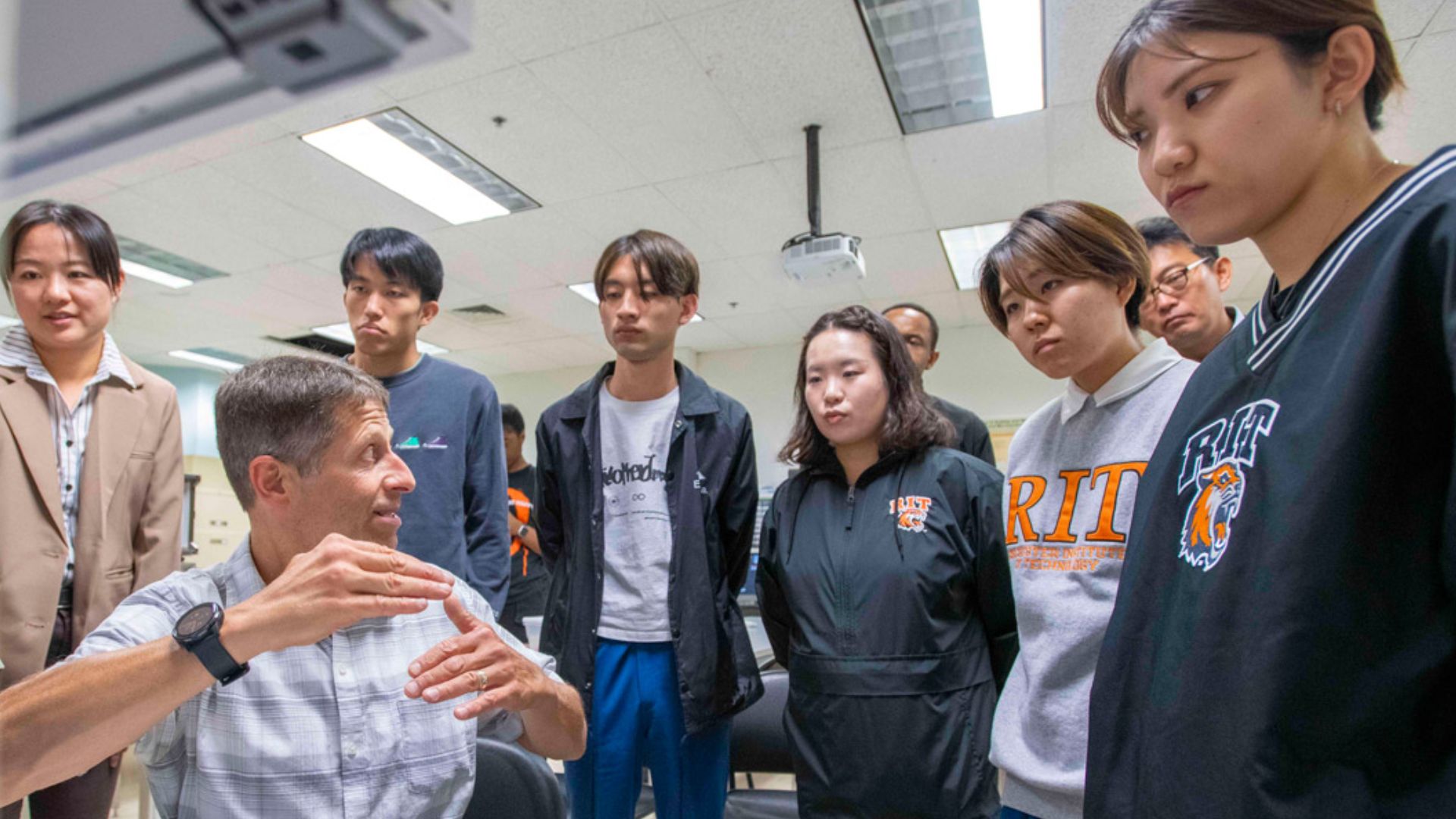
Rochester, New York – A growing international effort to shape the future of the semiconductor industry is taking center stage this week, as Rochester Institute of Technology (RIT) prepares to host a major gathering of academic and industry leaders. The sixth meeting of UPWARDS—the U.S.-Japan University Partnership for Workforce Advancement and Research & Development in Semiconductors for the Future—will unfold over two days, April 22 and 23, bringing together minds from across continents with a shared goal: building the workforce that will power tomorrow’s technology.
The event marks another step in a collaboration that has steadily gained momentum since its launch in 2023. What began as a strategic alliance between universities in the United States and Japan has grown into a structured network where ideas are exchanged, research is refined, and academic programs are aligned with the evolving demands of the semiconductor sector. This year’s meeting is expected to draw more than 80 participants, including faculty researchers, engineers from leading companies, and university administrators, all converging for workshops, planning sessions, and campus tours.
At the heart of the gathering lies a simple but urgent reality—semiconductors are no longer just a specialized field. They are the backbone of modern economies, quietly driving everything from smartphones to national infrastructure. As global demand surges, so too does the need for skilled professionals who can design, manufacture, and innovate within this complex industry.
“We’re looking forward to hosting the network partners at RIT and continuing conversations about our ongoing projects,” said Doreen Edwards, dean of RIT’s Kate Gleason College of Engineering. “Each of our universities is committed to teaching and training students for the semiconductor industry that fuels the global economy. The relations being built now between faculty and students in the U.S. and Japan will have a long-lasting impact on collaborations in the future.”
That sense of long-term vision has defined UPWARDS from the beginning. The initiative was formally introduced during the G7 Summit in Japan, where key stakeholders signed a memorandum of understanding aimed at strengthening competitiveness in semiconductor design and manufacturing. Backed by industry leaders like Micron Technology and Tokyo Electron (TEL), along with support from the National Science Foundation, the partnership quickly established itself as a model of cross-border cooperation.
The network now includes 11 universities—six from the United States and five from Japan—each contributing its own strengths and expertise. Institutions such as Hiroshima University, Tohoku University, and Nagoya University collaborate alongside American counterparts including Purdue University, Virginia Tech, and the University of Washington. Together, they form a pipeline of knowledge and talent that stretches across the Pacific.
Yet the initiative goes beyond traditional academic exchange. UPWARDS has carved out a series of focused priorities designed to address both current gaps and future needs in the semiconductor workforce. These include curriculum development tailored to industry standards, expanding opportunities for women in the field, and creating hands-on learning experiences that bridge theory with real-world application. Research efforts—particularly those centered on semiconductor and memory technologies—are also a key pillar, though structured in a way that encourages open collaboration rather than proprietary competition.
One of the more distinctive aspects of the program is its emphasis on mobility. Students and faculty are given opportunities to study, teach, and conduct research abroad, fostering not just technical expertise but also cultural understanding. In an industry where supply chains and innovation span continents, that global perspective is becoming increasingly valuable.
Micron, one of the driving forces behind the partnership, has also contributed in practical ways. The company has developed a library of engineering course modules that can be shared across participating universities, ensuring a level of consistency in training while still allowing for local adaptation. It has also opened doors for exchanges and internships, helping students transition more smoothly into industry roles.
“UPWARDS is built on the idea that no single institution can meet this moment alone. It takes universities, industry, and global partners working together in a coordinated way,” said Janine Rush-Byers, director, Strategic University Partnerships, Micron Technology. “RIT exemplifies that spirit of collaboration—bringing together education, hands-on experience, and industry alignment in a way that strengthens the entire ecosystem. That’s what makes it such a fitting host for this convening.”
The timing of the meeting also reflects broader shifts in the semiconductor landscape. In recent years, governments and companies have ramped up investments in domestic chip production, seeking to reduce reliance on overseas manufacturing. Micron itself broke ground in 2025 on a major fabrication facility in Central New York, part of a wider wave of expansion that includes projects in states like Idaho and Virginia.
These developments have intensified the need for a steady stream of highly trained workers—engineers, technicians, and researchers capable of navigating increasingly complex technologies. UPWARDS aims to meet that demand not just by producing graduates, but by reshaping how they are educated in the first place.
As participants arrive at RIT this week, the agenda may be filled with workshops and presentations, but the underlying mission is far broader. It is about building connections that outlast individual meetings, aligning educational systems across borders, and preparing a workforce ready for challenges that are still emerging.
In a field defined by precision and speed, the work of UPWARDS unfolds more gradually. But its impact, organizers believe, will be lasting—measured not only in technological breakthroughs, but in the global network of people trained to achieve them.


-
 Local News2 years ago
Monroe County announces legal proceedings against properties listed in official public notice of foreclosure
-

 Local News2 years ago
New ALDI store close to Rochester to begin construction in late 2025 or early 2026
-

 Local News2 years ago
County Executive Adam Bello and members of the county legislature celebrate exceptional young leaders and advocates at the 2025 Monroe County Youth Awards
-

 Local News1 year ago
The 2025 Public Market Food Truck Rodeo series will begin this Wednesday with live music by the Royal Bromleys