State
Governor Hochul announces more than $23 million in new funding to accelerate next generation building innovation projects across New York State

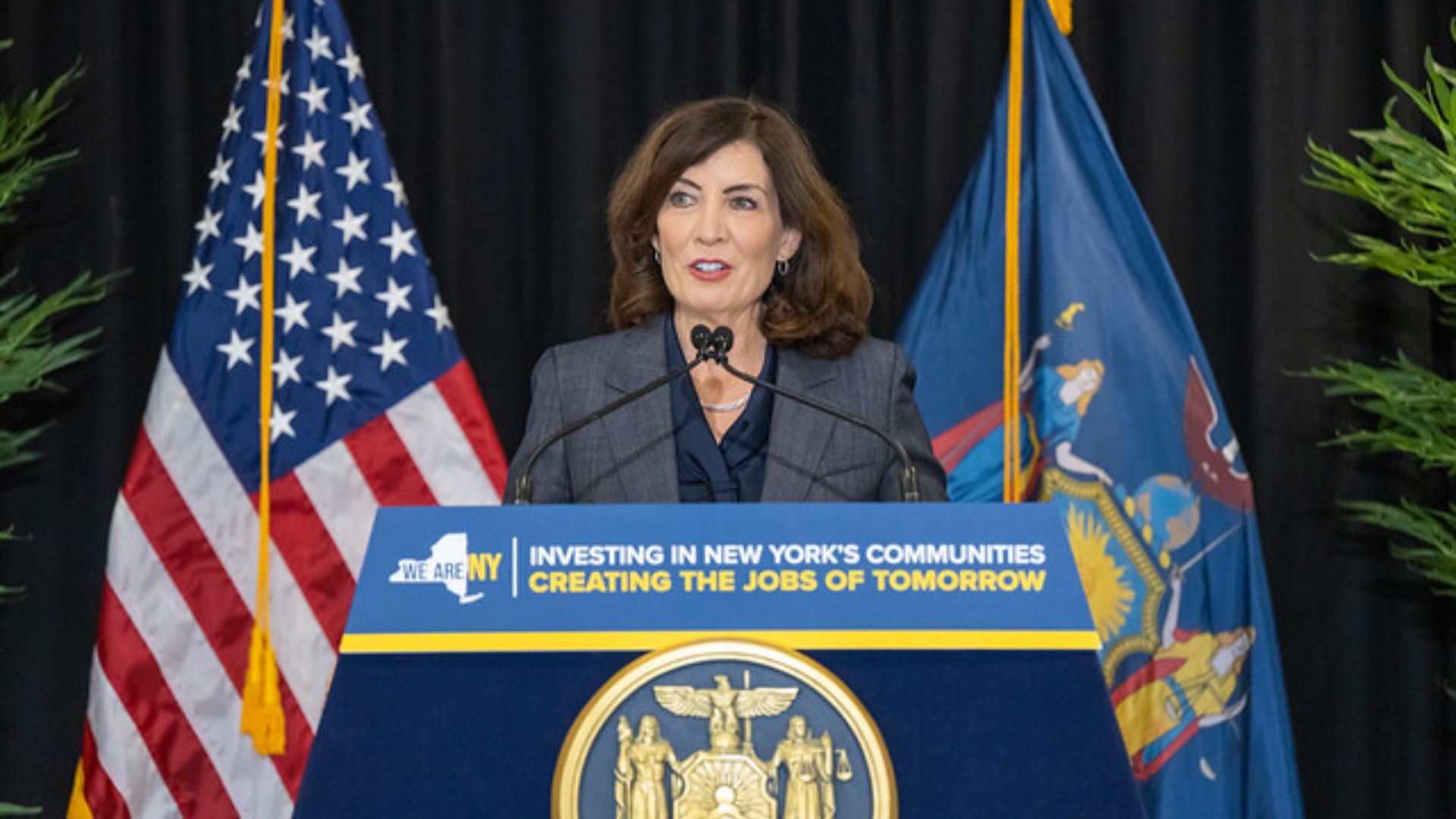
New York – New York State is putting fresh momentum behind cleaner, smarter, and more affordable buildings with a new round of major investments aimed at transforming how structures are heated, cooled, and powered. Governor Kathy Hochul announced that more than $23 million has been awarded to 24 projects through the NextGen Buildings Innovation Challenges program, a statewide initiative designed to close technology gaps that slow the shift toward low-carbon buildings.
The newly funded projects target some of the toughest challenges in building decarbonization, from outdated heating systems to inefficient building envelopes that leak energy year-round. With this latest round of awards, the state has now committed nearly $49 million to 51 projects under Governor Hochul’s leadership, signaling a sustained push to modernize buildings across New York.
At the core of the program is a practical goal: accelerate the adoption of building technologies that work not only in new construction, but also in existing buildings that make up the bulk of New York’s housing and commercial stock. By focusing on scalable solutions, the initiative aims to reduce energy use, cut operating costs, and make buildings more comfortable and resilient for the people who live and work in them.
“Investing in modern and advanced building solutions will help New York reduce its carbon footprint, lower energy costs and build a more sustainable future,” Governor Hochul said. “These awards support practical innovations that reduce energy use, improve comfort and give building owners more control over their energy bills. They will also strengthen resiliency by making buildings more reliable during extreme weather. This is how we move our state forward and deliver for New Yorkers.”
The NextGen Buildings Innovation Challenges program is administered by the New York State Energy Research and Development Authority, better known as NYSERDA. Through the program, each selected project receives funding to develop, commercialize, and demonstrate a new product or system that offers building owners cleaner and more efficient energy options without driving up costs.
Importantly, the state emphasized equity alongside innovation. Five of the awarded projects either directly benefit low-to-moderate-income housing or are located in disadvantaged communities, aligning the program with New York’s broader climate justice goals. State leaders have repeatedly stressed that the transition to clean energy must lower costs and improve living conditions for all residents, not just those who can afford high-end upgrades.
NYSERDA President and CEO Doreen M. Harris said the program is already reshaping how buildings function across the state. “NYSERDA’s NextGen Buildings Innovation Challenges continue to move innovation forward in a way that is transforming how buildings are designed, operated, and powered across New York State. The awarded projects provide building owners the tools to retrofit existing buildings or equip new buildings with clean, efficient systems to manage energy use and improve comfort for occupants.”
The projects funded in this round span several key focus areas, each addressing a different piece of the building energy puzzle. Some concentrate on improving building envelopes, the walls, windows, and insulation that separate indoor spaces from the outdoors. Others aim to reduce the cost and complexity of advanced heating systems, such as ground source heat pumps. Several projects explore intelligent building controls that allow buildings to interact with the electric grid, shifting energy use to off-peak hours and reducing strain during times of high demand.
Among the highlights are solutions that improve insulation and air sealing in existing buildings, an area where even modest improvements can lead to significant energy savings. Poor insulation often forces heating and cooling systems to work harder than necessary, driving up energy bills and emissions. New approaches supported by the program aim to make these upgrades faster, cheaper, and easier to deploy at scale.
Other projects focus on occupant-centric, data-driven controls in commercial buildings. These systems use real-time data to balance comfort with efficiency, reducing peak energy loads while ensuring indoor conditions remain stable. By coordinating multiple energy assets, such as heating, cooling, and storage systems, these controls can help buildings respond more intelligently to both occupant needs and grid conditions.
Geothermal energy also features prominently in the funded work. Several projects target the high upfront cost of drilling boreholes for ground source heat pump systems, a major barrier to wider adoption. By developing solutions that reduce drilling time and expense, the state hopes to unlock one of the most efficient and reliable heating and cooling technologies available.
In multifamily buildings, one project will demonstrate induction stoves with integrated batteries, an approach that supports electrification while maintaining reliable cooking options during power disruptions. Thermal storage technologies are also being tested to improve the performance of heat pump systems, allowing buildings to store energy when it is abundant and use it when demand is higher.
Control technologies for demand management and load shifting round out the portfolio. These tools enable buildings to adjust energy use in response to grid conditions, helping to stabilize the electric system as more renewable energy comes online.
For a full list of projects that received funding visit NYSERDA’s website.
State leaders and energy experts praised the initiative as a critical step toward a cleaner and more resilient building sector. New York State Public Service Commission Chair Rory M. Christian highlighted the long-term impact of the awarded projects. “Kudos to Governor Hochul and her team of energy experts for moving forward with a plan to change the way buildings are designed, operated, and powered across New York State. These winning projects point the way for building operators to retrofit existing buildings or equip new buildings with clean, energy efficient systems; a win for all concerned.”
Lawmakers also pointed to the economic benefits of investing in building innovation. State Senator Kevin Parker framed the funding as part of a broader commitment to climate leadership and fairness. “New York has long been a leader in tackling climate change, and today’s commitment to decarbonize our buildings marks another important step toward a sustainable and equitable future. These investments not only support innovative technologies and businesses, but they also create family-sustaining jobs and ensure that the benefits of a clean energy economy reach all communities, especially those historically left behind. I applaud Governor Hochul and NYSERDA for their vision and leadership in building a cleaner, stronger New York for generations to come.”
State Senator Brian Kavanagh emphasized the link between building decarbonization and affordability. “The $23 million allocated today through the NextGen Buildings Innovation Challenges program is a critical part of our ongoing efforts to promote innovation and support a robust and affordable transition to a clean, efficient, and reliable energy system. Decarbonizing and greening our building stock is an important step towards achieving our ambitious climate goals, doing our part to protect New Yorkers and the world from extreme weather and other threats to our safety and wellbeing, and make our homes and businesses more affordable. I thank Governor Kathy Hochul, Doreen Harris and her colleagues at NYSERDA, and all of the property owners involved for their commitment to clean, efficient, affordable buildings!”
In the Assembly, support centered on the urgent need to cut emissions from existing structures. Assemblymember Didi Barrett noted that buildings remain the largest source of statewide emissions. “Decarbonizing our state’s existing building sector, the largest source of statewide emissions, is critical to meeting our climate goals. This funding will help develop and demonstrate new solutions, furthering innovation while increasing comfort and affordability to residents.”
Industry leaders also welcomed the announcement, pointing to New York’s role as a national leader in building innovation. Building Energy Exchange CEO Richard Yancey, FAIA, praised the breadth of the selected projects. “We would like to congratulate all the winners of NYSERDA’s NextGen Building Innovation Challenge, and the critical work they are doing to make our buildings dramatically more efficient, comfortable, healthy and affordable. New York State continues to lead in advancing innovative technologies for clean heating and cooling systems, thermal storage, building envelopes, and intelligent building systems. With the support of NYSERDA and the Governor, these innovators are helping to accelerate our transition to high performance buildings for everyone.”
From a national perspective, the program is being watched closely by other states seeking practical models for scaling energy efficiency. National Association of State Energy Officials President David Terry highlighted the program’s real-world focus. “As states work to bring advanced technologies to market, NYSERDA provides yet another invaluable example of supporting technologies that address the practical challenges of constructing and retrofitting efficient and affordable buildings. The NextGen Building Innovation Challenge is an excellent example of a public-private partnership of delivering technologies to scale energy efficiency projects.”
Funding for the NextGen Buildings Innovation Challenges program comes from the Clean Energy Fund, a long-term investment vehicle that supports New York’s transition to a low-carbon economy. The fund plays a central role in backing research, development, and commercialization efforts that might otherwise struggle to attract private investment in their early stages.
NYSERDA, which has been operating for more than fifty years, remains a cornerstone of the state’s energy strategy. Through its Innovation and Research program, the authority is deploying approximately $1.2 billion over 15 years to support new technologies and bring them to market. To date, more than $800 million has been invested in over 700 companies, resulting in nearly 300 products becoming commercially available. Combined with utility programs, more than $5.6 billion has been directed toward decarbonizing buildings and expanding high-efficiency, all-electric heating and cooling systems.
The latest awards also fit squarely within New York State’s broader climate agenda. The state has committed to an affordable and just transition to a clean energy economy, with a requirement that at least 35 percent of the benefits flow to disadvantaged communities. The long-term goal is an emissions-free economy by 2050, with coordinated efforts spanning energy production, buildings, transportation, and waste management.
As climate impacts intensify and energy costs remain a concern for households and businesses alike, state officials see building innovation as one of the most effective tools available. Buildings last for decades, and the choices made today about how they are designed and retrofitted will shape energy use and emissions for generations.
With more than $23 million now flowing to cutting-edge projects across New York, the state is betting that practical innovation, paired with public investment, can deliver cleaner air, lower bills, and more resilient communities. The NextGen Buildings Innovation Challenges program, leaders say, is not just about technology. It is about rethinking how buildings serve the people inside them, and how they fit into a cleaner, more reliable energy future for all New Yorkers.


-

 Local News1 year ago
New ALDI store close to Rochester to begin construction in late 2025 or early 2026
-

 Local News11 months ago
County Executive Adam Bello and members of the county legislature celebrate exceptional young leaders and advocates at the 2025 Monroe County Youth Awards
-

 Local News1 year ago
Rochester Lilac Festival announces exciting 127th edition headliners
-

 Local News11 months ago
The 2025 Public Market Food Truck Rodeo series will begin this Wednesday with live music by the Royal Bromleys