Local News
RIT students from different academic disciplines join forces to create a video game focused on peacebuilding and the lasting effects of war

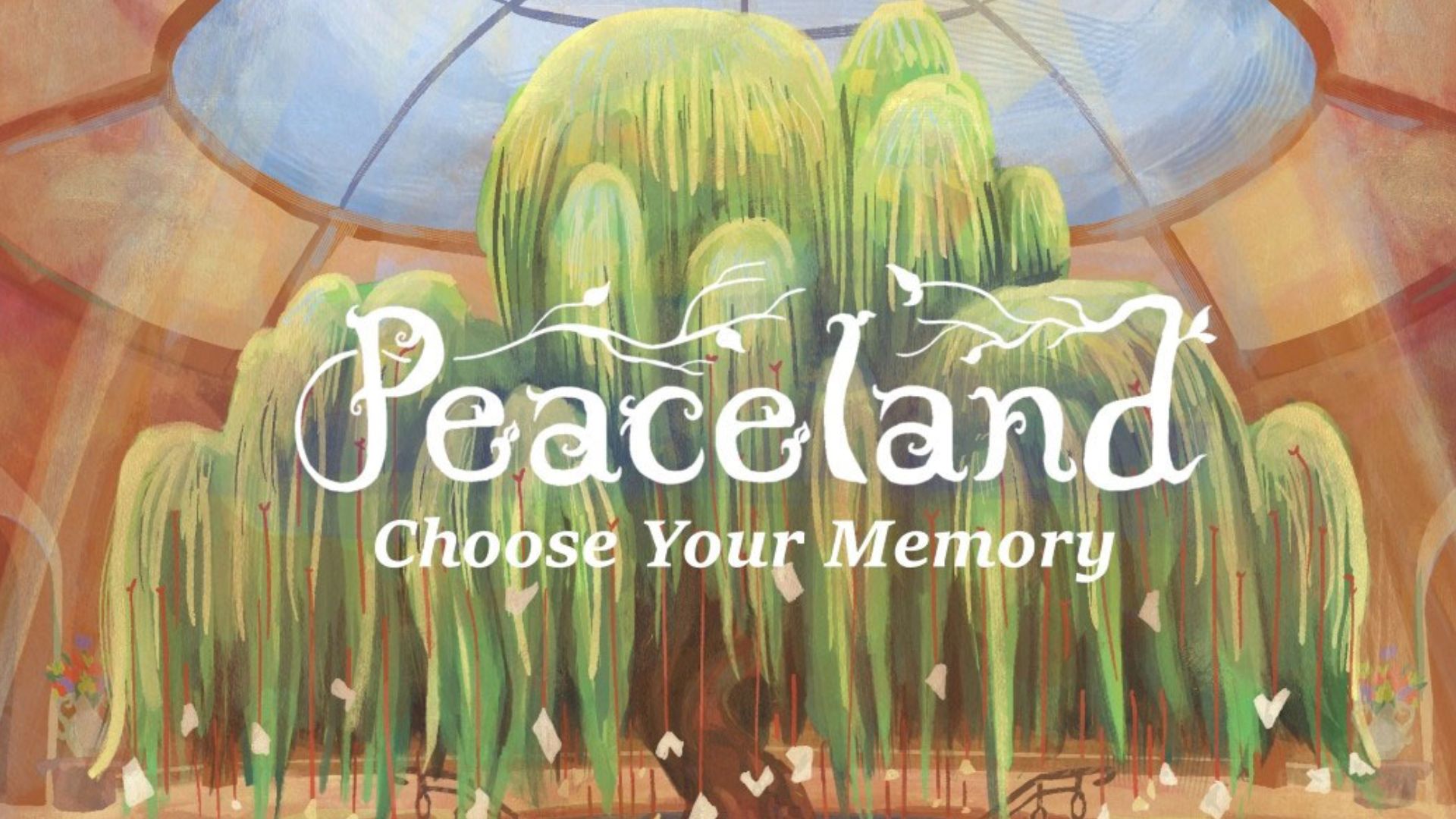
Rochester, New York – The project, called Peaceland: Choose Your Memory, asks players to think about how the memories of war can shape people and communities long after fighting has ended. Set in a fictional country three decades after a civil war, the game puts players in situations where seemingly small decisions can affect relationships, events and, ultimately, the future of the country.
The game is being developed by RIT students and faculty from several academic disciplines. Instead of simply building a fictional world for players to explore, the team is using storytelling, art, programming and research to examine questions surrounding conflict, memory and peace.
“The game doesn’t judge or tell people what to do,” said Marcia Hartwell, professor of practice in RIT’s School of Individualized Study and a faculty leader on the game. “You learn as you make decisions throughout the game and the small choices you make scale up to peace, war, or something in between.”
That idea of personal choice is central to Peaceland. Players are not simply given a lesson about peace or told which characters are right or wrong. Instead, they have to interact with people who have different experiences and decide how they want to respond.
“Everyone has agency, especially young people,” she said. “You have a voice, and your voice matters.”
For the students involved, the project is also a different kind of classroom.
Dozens of RIT students are contributing to the game, giving them an opportunity to use what they are learning in their degree programs on a project connected to a real-world issue. They receive academic and co-op credit while working on research, programming, game development, writing, illustration, visual design and other parts of production.
The students also have to respond to feedback from playtests involving both local and international players. That process means the game is not being created by one group working in isolation. Ideas are tested, discussed and changed as the project develops.
The team hopes the finished game will eventually reach audiences well beyond the RIT campus.
Hartwell believes Peaceland could have a place in the growing area of serious and social-impact games. She also sees a connection with PeaceTech, an emerging field that uses technology and digital tools as part of efforts to prevent conflict and reduce violence.
She envisions the game eventually being useful to organizations working on peacebuilding, including the United Nations and locally led groups.
Turning memories of war into a game
The story begins with a young person living in a country that is still dealing with the effects of civil war.
The player takes the role of a 20-year-old member of the post-conflict generation. Thirty years have passed since the war, but its memories remain part of everyday life.
After entering a museum, the player meets different characters and hears their stories. Those encounters become an important part of the game because each person has a different relationship with the past.
Read also: City of Rochester adds free workshops to help seniors learn how to save money on property taxes
Players then make choices about how they communicate and interact with the people they meet. The results of those decisions gradually become clear as the story continues.
One character, Boris, illustrates the difficulty at the center of the game. He wants to contribute positively to society, but he also has a complicated history because he was a paramilitary member during the war.
That raises questions that do not have easy answers.
“Do you have to believe what everyone around you believes? Can you build a peaceful future with people you don’t like?” said Hartwell. “You don’t find out the outcome until the end of the game.”
The creators want players to experience those questions rather than simply read about them.
The game includes narrative storytelling, minigames and moments that encourage players to stop and reflect. Together, those elements are designed to make players consider the relationship between what happened in the past, what people do in the present and what kind of future those choices might create.
The concept has roots in Hartwell’s work in Kosovo.
During her 2022-23 Fulbright Scholar experience there, Hartwell researched ways digital technology could support peacebuilding while working with students at RIT Kosovo. Kosovo experienced armed conflict in the late 1990s, and Hartwell saw how memories of that period continued to influence people who had not personally experienced the war.
Those memories can help preserve a sense of community and shared identity. But they can also contribute to divisions, particularly when different groups remember the same events in very different ways.
“You carry burdens of the past into the future,” said Hartwell. “Can you work with past enemies, or do you hate them and blame them?”
While in Kosovo, Hartwell spoke with students about why certain events are remembered, how those memories are passed between generations and whether people can be encouraged to approach the past in less divided ways.
One idea that came from those conversations was a digital game.
Rather than relying only on traditional forms of structured dialogue, a game could give people another way to explore difficult post-conflict questions. Players could make decisions themselves, see consequences and consider viewpoints that might be difficult to encounter in ordinary conversations.
Students bring different skills to the project
Peaceland is being developed through RIT’s Vertically Integrated Projects program, which allows students from different areas of study to work together over multiple semesters.
That structure is particularly important for a game that combines so many different elements.
A successful video game needs more than programming. It needs a story, characters, artwork, environments, dialogue, interface design and a system that allows all of those pieces to work together.
Bella Miller, a third-year game design and development major from Alexandria, Virginia, is working as the project’s narrative lead.
Miller already enjoyed writing stories, particularly fantasy, but Peaceland has given her an opportunity to approach storytelling from a very different direction.
“I always loved writing stories, and I normally work on fantasy things,” said Miller, who is from Alexandria, Va. “Now, every time I research narrative for this game, I learn something new.”
The fictional country in Peaceland is inspired in part by conflicts in the Balkans. Because of that connection, the development team has to conduct extensive research before deciding how the world and its characters should look and behave.
Miller’s work includes researching visuals, developing characters, writing dialogue and preparing outlines, wireframes and scripts.
The project is also giving her something she can take with her after graduation.
“Having a shipped game with my name on it will be huge for getting a job in the games industry,” said Miller.
For Kay Hutchins, a third-year illustration major from Buffalo, New York, the appeal was partly artistic and partly personal.
Hutchins wanted to experience what it was like to work as an artist as part of a larger team. She was also interested in the project’s focus on empathy and community.
“Community is something I’m really passionate about and I think it’s especially important to maintain connections that allow it today,” said Hutchins, who is from Buffalo, N.Y. “This project actively reflects that and I’m really glad to be part of it.”
Hutchins works as a 2D artist, producing character portraits, backgrounds and other visual elements that will make up the game’s world.
Her work is just one piece of a much larger collaboration involving students with different academic backgrounds and responsibilities.
Learning through development
RIT’s experiential learning model gives students opportunities to work on projects that resemble the type of teamwork they may encounter after graduation. Peaceland is one example of that approach.
Students involved in the project have to learn how to communicate with people whose expertise may be completely different from their own. An illustrator may need to explain a visual idea to a programmer. A writer may have to adjust a story because of a technical limitation. Developers may offer feedback that changes how a scene is presented.
Those interactions are part of creating the game.
The project also gives students experience receiving criticism and making changes based on feedback. Playtesting with local and international participants provides another perspective, allowing the development team to see how different people respond to the story and its choices.
The game began in 2024 and remains in the preproduction stage.
The project has also brought in perspectives from outside RIT. Students at RIT Kosovo are consulting on the game, along with University of Rochester students from Bosnia-Herzegovina and Serbia.
Those connections are particularly relevant because the game’s fictional setting draws inspiration from real conflicts in the Balkans. The team can use those perspectives while developing a story that is fictional but connected to real questions about memory, identity and reconciliation.
The current plan is to release Peaceland in 2028 as an open-access game. The developers hope to make it available for PC, web and mobile platforms.
The planned game would offer approximately three to four hours of gameplay.
For the students, however, the experience is already much larger than the eventual playing time.
They are building a game, but they are also learning how stories can influence the way people think about difficult subjects. They are researching history, creating characters, testing ideas and working with classmates from fields they might not normally encounter.
And at the center of it all is a simple question: what happens when people are given the opportunity to make different choices about the past and the people around them?
Peaceland: Choose Your Memory is being designed to let players explore that question for themselves, one decision at a time.


-
 Local News1 year ago
Monroe County announces legal proceedings against properties listed in official public notice of foreclosure
-

 Local News2 years ago
New ALDI store close to Rochester to begin construction in late 2025 or early 2026
-

 Local News1 year ago
County Executive Adam Bello and members of the county legislature celebrate exceptional young leaders and advocates at the 2025 Monroe County Youth Awards
-

 Local News1 year ago
The 2025 Public Market Food Truck Rodeo series will begin this Wednesday with live music by the Royal Bromleys