Local News
Buffalo Bills Public Art Program at Highmark Stadium brings RIT-connected design to life through an interactive fan-powered installation

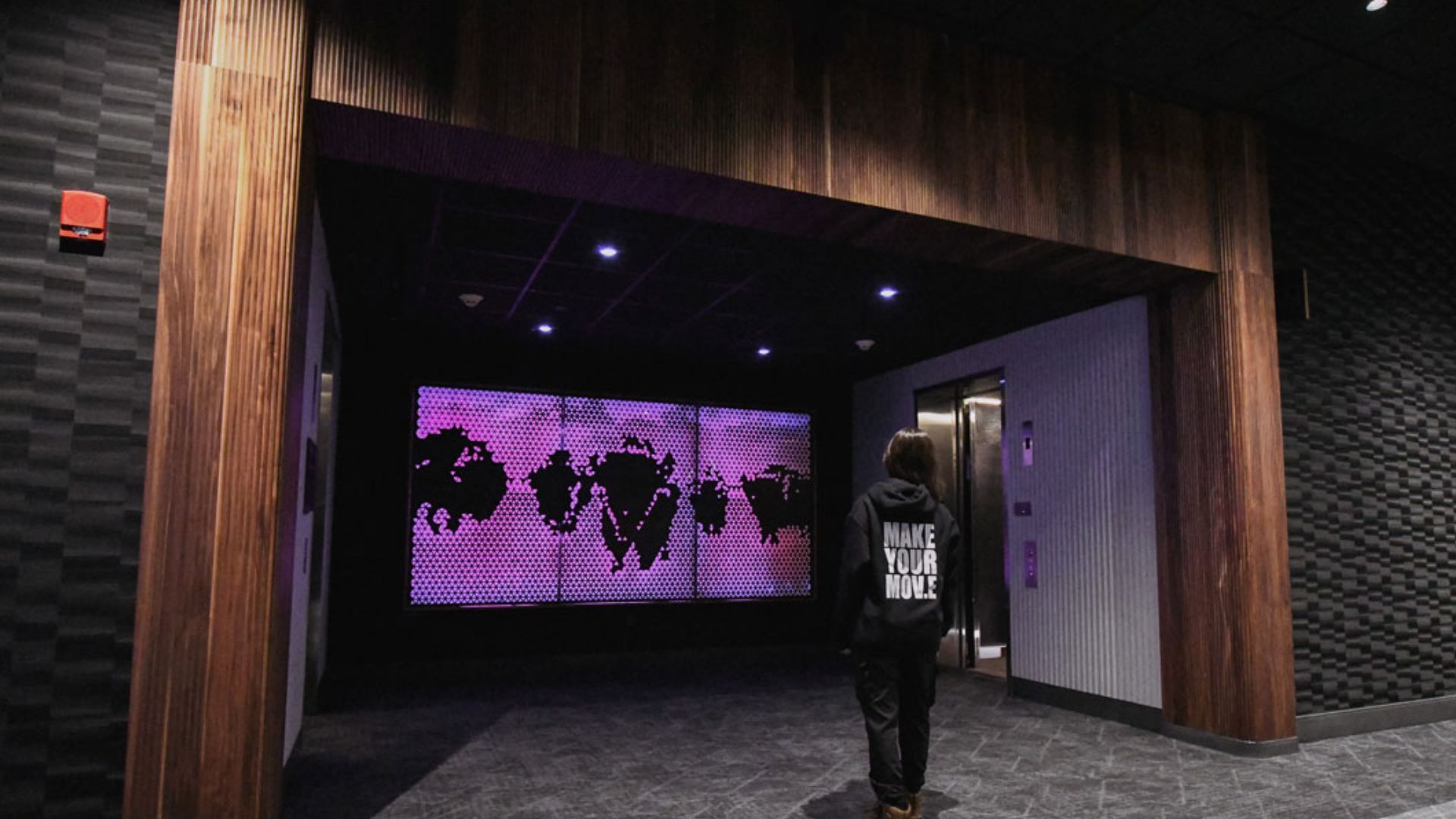
Rochester, New York – Called Charge the Herd, the site-specific artwork was created by MOV.E, a collaborative artist-design team based in Buffalo. The team consists of Randy Fernando, an assistant professor in RIT’s School of Design, and artist Joselyne Morocho. Their work was commissioned through the Buffalo Bills Public Art Program at Highmark Stadium and is now part of the stadium’s permanent art collection.
For Fernando, the project offered a chance to combine design, technology and the atmosphere of a Bills home game. Rather than creating a traditional static sculpture or mural, he and Morocho designed an installation that changes in response to the people around it.
“It was an incredible experience to be accepted into the Buffalo Bills Public Art Program at Highmark Stadium, and it was an interesting creative challenge,” said Fernando. “We were inspired by the strength, dynamic movement, and symbolism of the American bison when creating the piece. The installation abstracts the image of a stampeding herd, and celebrates the cherished, chaotic energy of a home game.”
The piece uses audio-reactive light, perforated steel, acrylic and wood. Its illuminated geometric screens are designed to respond to crowd noise and the atmosphere inside the stadium. As fans react to the action on the field, the lighting animations can change, giving the artwork a sense of movement and making the audience part of the experience.
That interactive quality is central to the idea behind Charge the Herd. The installation is intended to represent the collective energy associated with Bills fans, while also drawing on themes of movement, resilience and shared identity. Instead of simply being something visitors look at, the artwork reacts to its surroundings and turns the sounds and activity of the stadium into part of the visual display.
The installation is located on the first floor of Highmark Stadium, between the elevators near the entrance to the 716 Club. Fans passing through the area can see the work as part of the broader collection of public art incorporated into the new stadium.
Fernando and Morocho were also supported during the development and installation process by Kimberly Sass, Holly Hayden and Frank Cravotta. The three individuals support the Buffalo Bills Public Art Program in different capacities and provided feedback to the artists during several stages of the design process.
The public art initiative, presented by Victory Live, was created to bring a wide range of original artwork into the new Highmark Stadium. Professional visual artists and artist teams were invited to submit proposals for site-specific projects. The selection process was competitive, with artists chosen through an RFP process by local art representatives and other project stakeholders serving on the Selection Panel.
The result is a collection that extends throughout the stadium. Sculptural ceiling pieces, murals and wall-based works were selected for different areas and levels of the facility. More than 40 artists and thousands of community members were involved in creating the artwork displayed throughout the stadium.
For RIT, Charge the Herd also highlights the type of work being produced by faculty connected to its School of Design. Fernando recently joined the faculty, bringing professional creative experience into a program known for combining technology with theoretical approaches to design problems.
The school emphasizes finding practical and creative solutions through both technological and conceptual methods. Its graduates have gone on to work with major companies and organizations, including Adidas, Burberry, Duolingo, the Walt Disney Company and Amazon.
Fernando’s involvement in the Buffalo Bills project provides another example of that combination of design and technology. At Highmark Stadium, his work with Morocho takes materials, lighting, sound and visual design and connects them with the unpredictable atmosphere of a live sporting event.
For Bills fans, the result is something that continues to change with the environment around it. For the artists, it is a permanent installation inspired by the bison and the energy of a home game. And for RIT, it offers a visible example of how the work of a School of Design faculty member can move from the classroom and design studio into a major public space.


-
 Local News1 year ago
Monroe County announces legal proceedings against properties listed in official public notice of foreclosure
-

 Local News2 years ago
New ALDI store close to Rochester to begin construction in late 2025 or early 2026
-

 Local News1 year ago
County Executive Adam Bello and members of the county legislature celebrate exceptional young leaders and advocates at the 2025 Monroe County Youth Awards
-
 Local News1 year ago
The 2025 Public Market Food Truck Rodeo series will begin this Wednesday with live music by the Royal Bromleys