State
Congressman Pat Ryan and Hudson Valley residents rally against 25-year PFAS cleanup delay after silence from the Department of Defense

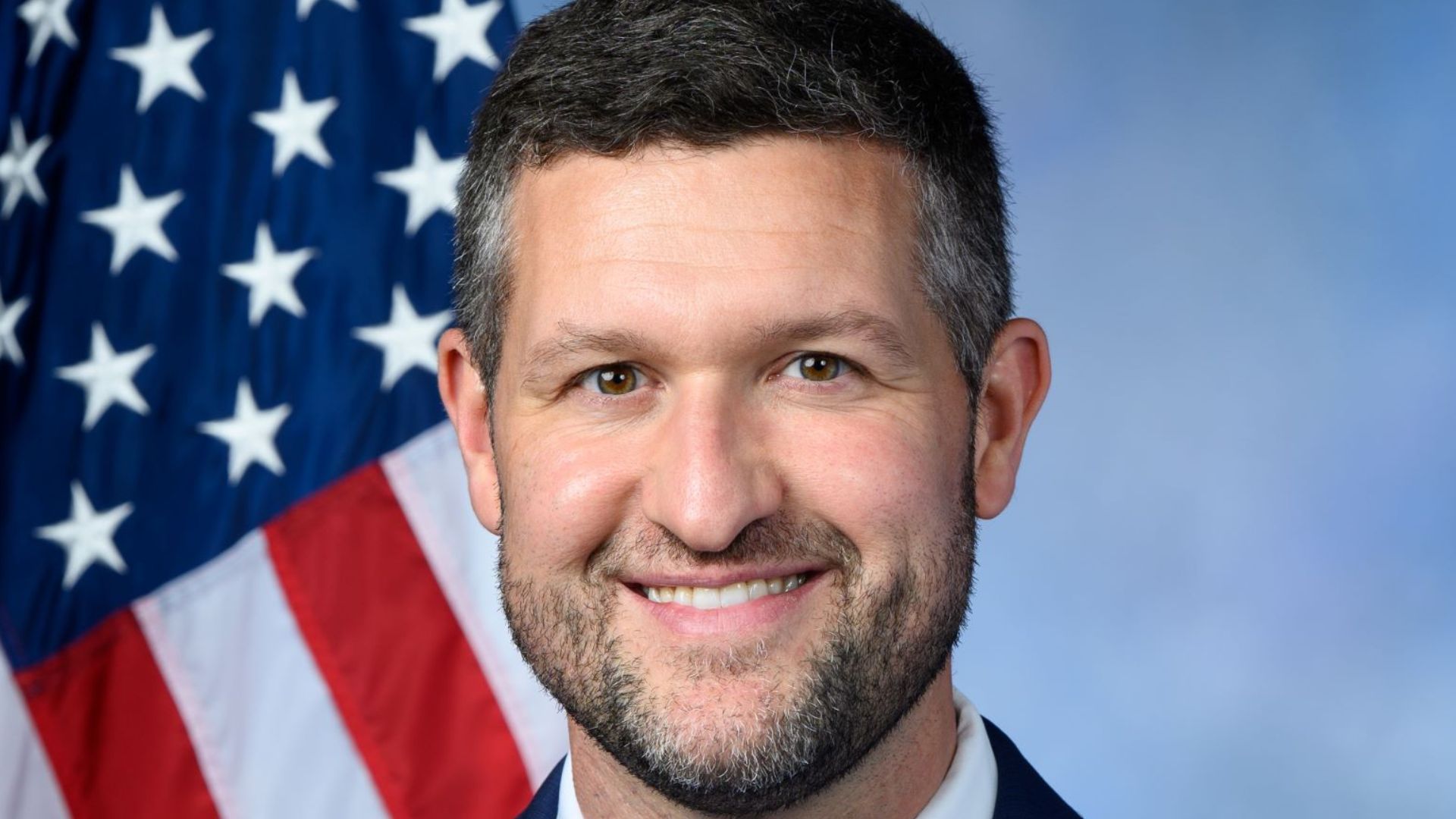
Newburg, New York – Anger is growing in Newburgh after the U.S. Department of Defense pushed back a major step in the cleanup of PFAS contamination at Stewart Air National Guard Base by another 25 years, prompting Congressman Pat Ryan and local environmental advocates to demand answers from federal officials.
Ryan, a member of the House Armed Services Committee and an Iraq War combat veteran, joined community members and advocates in Newburgh last week to speak out against the latest delay. The congressman has been pressing the Department of Defense for action since learning that the cleanup timeline had been pushed back again.
The latest change means a key part of the federal cleanup process, known as a remedial investigation and feasibility study, is now expected to be completed in 2051. The study had previously been scheduled for completion in September 2026.
The remedial investigation and feasibility study is an important stage in determining how contamination will ultimately be addressed. For residents and advocates who have spent years pushing for cleanup around Stewart Air National Guard Base, the new timeline represents another major setback.
PFAS, or per- and polyfluoroalkyl substances, are often described as “forever chemicals” because they can remain in the environment for long periods. The chemicals have been linked to concerns about human health and are present at and around more than 500 U.S. military installations.
In the Hudson Valley, the contamination has had a particularly direct impact. PFAS pollution associated with Stewart Air National Guard Base contaminated drinking water in Newburgh, one of the region’s largest cities. The issue has led to years of concern among residents, environmental groups and local officials.
Ryan said the federal government should be moving more quickly to address the contamination rather than extending the process for decades.
“Every American – especially our kids – deserves to have clean drinking water. For years, we’ve been fighting hard to ensure clean, safe drinking water is available in every Hudson Valley community, including those around Stewart Air National Guard Base. This critical step was supposed to be completed today. Instead, inexplicably, Hegseth’s DoD has chosen to deprioritize the project and pushed back the timeline 25 years. It’s a massive betrayal, and we’re fighting back, ” said Congressman Pat Ryan. “We’re still facing a public health crisis in the Hudson Valley, and the federal government should be speeding up the clean-up, not slowing it down by decades. Our community is coming together with one voice and a clear message for Hegseth’s DoD: we deserve better, and we won’t stop fighting until every one of our neighbors has access to clean water. We are not giving up this fight.”
Ryan had already contacted Defense Secretary Pete Hegseth after an earlier delay was reported. He asked the Defense Department to restore existing PFAS remediation efforts and timelines and provide a detailed written briefing within 30 days.
He also called for a public and written commitment that no additional delays would be imposed unless the department could provide a specific, documented technical or legal reason for the change.
According to Ryan’s office, the Department of Defense did not respond to his request before the latest delay was announced. That lack of response became a central concern during the Newburgh rally, where local groups called for greater accountability and a clear explanation of why the cleanup schedule had been extended so dramatically.
Dan Shapley, senior director of advocacy, policy and planning for Riverkeeper, said residents cannot afford to lose the progress that has already been made.
“It is unacceptable that the Department of Defense is delaying this cleanup for an unprecedented 20-plus years while the people of Newburgh and New Windsor have live with the consequences,” said Riverkeeper Senior Director of Advocacy, Policy, and Planning Dan Shapley. “Riverkeeper has spent the last decade fighting to protect this community while the full remediation process inches forward. What we can’t afford now is to lose the momentum we’ve finally built. This year’s interim projects are proof that meaningful progress is possible right now, not just on some far-off cleanup horizon. Our message to every decisionmaker up the chain is simple: Don’t stand in the way of progress.”
Other environmental advocates at the rally echoed those concerns, saying the cleanup process has already taken too long.
David H Toman of Hudson River Sloop Clearwater said Newburgh residents have been waiting for the remedial investigation phase to move forward and urged the Defense Department to complete the study without additional delays.
“Newburgh has been waiting years for the Stewart Air National Guard Base PFAS cleanup to conclude the Remedial Investigation phase,” said David H Toman, Hudson River Sloop Clearwater. “We cannot allow this cleanup process to be delayed unnecessarily, and we stand with Congressman Ryan and the Newburgh community in calling on the Department of Defense to complete the Remedial Investigation and Feasibility Study without further delay and keep the cleanup moving forward. Clean drinking water and the health of our community should not, and can not, wait decades for action; the time for action is now.”
Jennifer Rawlison, community co-chair of the Stewart Air National Guard Restoration Advisory Board and a member of the Newburgh Clean Water Project Steering Committee, described the latest delay as a serious blow to public confidence in the cleanup effort.
Read also: State Police investigate fatal one car crash that claimed the life of a Monroe woman
“The Department of Defense’s decision to further delay the PFAS cleanup at Stewart Air National Guard Base by more than 2 decades is a direct betrayal of public health and destroys any trust this community had in the military’s remediation process. Forcing families to wait decades while toxic “forever chemicals” continue to run off the base is an unforgivable environmental injustice and we deserve better. Our community demands a timely restoration of our land and watershed,” said Jennifer Rawlison, Community Co-Chair of the SANG Restoration Advisory Board and Newburgh Clean Water Project Steering Committee Member.
Environmental Advocates NY also joined the call for faster action. Rob Hayes, the group’s senior director of clean water, pointed to the continuing concerns surrounding PFAS contamination and the potential risks to drinking water and the environment.
“The science is clear: there is no known safe level of exposure to toxic PFAS chemicals,” said Rob Hayes, Senior Director of Clean Water with Environmental Advocates NY. “Newburgh residents have already waited far too long for the Department of Defense to remediate PFAS contamination in and around Stewart Air National Guard Base and Washington Lake. Delaying the start of cleanup efforts for more than 20 years is unconscionable when contamination of the surrounding environment is still ongoing, putting clean water and the health of the community at risk. We stand with our local partners and officials to demand that the Department of Defense abandon any attempts to delay PFAS cleanup and instead remediate this pollution as swiftly as possible.”
Mike Schade of Toxic-Free Future, a national environmental health research and advocacy organization, also criticized the new timeline. Schade is a member of the Stewart Air National Guard Restoration Advisory Board.
“This Administration promised to “make America healthy again”, but delaying cleanup of PFAS forever chemicals will only do the opposite,” said Mike Schade of Toxic-Free Future, a national environmental health research and advocacy organization, and a member of the Stewart Air National Guard Restoration Advisory Board (RAB). “We need faster, not slower cleanup of these toxic chemicals, to put Americans’ health first. Pushing this process out for decades is a slap in the face to the residents of Newburgh and New Windsor, who were exposed to PFAS chemicals for far too long. We need urgent action to protect the Hudson Valley from these toxic forever chemicals.”
For Newburgh officials, the consequences of the contamination are not simply a matter of a future cleanup plan. The city has already had to change how it supplies drinking water.
Council Member Ronald Zorrilla said the city’s reservoir was contaminated by firefighting foam from the air base, forcing Newburgh to purchase water from New York City. New York State currently pays that water bill, but Zorrilla warned that the arrangement carries a major financial risk for residents if the state ever stops covering the cost.
“Newburgh doesn’t drink its own water anymore. Firefighting foam from the air base contaminated our reservoir, so we now buy our water from New York City,” said Council Member Ronald Zorrilla. “New York State has been paying that bill for pollution we didn’t create. If that ever stops, our residents face an 80- to 90-percent rate increase. But buying us water is not a cleanup. The Defense Department doesn’t get to rent its way out of this until 2051.”
The comments highlight the two sides of the issue facing the Hudson Valley: the environmental concerns surrounding PFAS and the financial burden associated with replacing contaminated water supplies.
For Ryan and the community groups gathered in Newburgh, the latest timeline is unacceptable. They are calling on the Defense Department to provide answers about the reason for the 25-year extension and to move forward with the studies and cleanup work rather than allowing the process to stretch into the middle of the century.
The rally also underscored the continued frustration among residents who have spent years waiting for a permanent solution. While interim projects have offered signs that work can move forward, advocates say those efforts should not replace a full and timely cleanup.
For now, the remedial investigation and feasibility study remains scheduled for completion in 2051. Ryan and the local groups say they intend to continue pressing federal officials to reconsider that timeline and accelerate the work.
Their message from Newburgh is direct: after years of concern over PFAS contamination and its impact on local water, residents do not want to wait another generation for the federal government to finish the job.


-
 Local News2 years ago
Monroe County announces legal proceedings against properties listed in official public notice of foreclosure
-

 Local News2 years ago
New ALDI store close to Rochester to begin construction in late 2025 or early 2026
-

 Local News2 years ago
County Executive Adam Bello and members of the county legislature celebrate exceptional young leaders and advocates at the 2025 Monroe County Youth Awards
-

 Local News1 year ago
The 2025 Public Market Food Truck Rodeo series will begin this Wednesday with live music by the Royal Bromleys