Local News
Governor Hochul makes $35 million available to expand public electric vehicle charging infrastructure across New York State

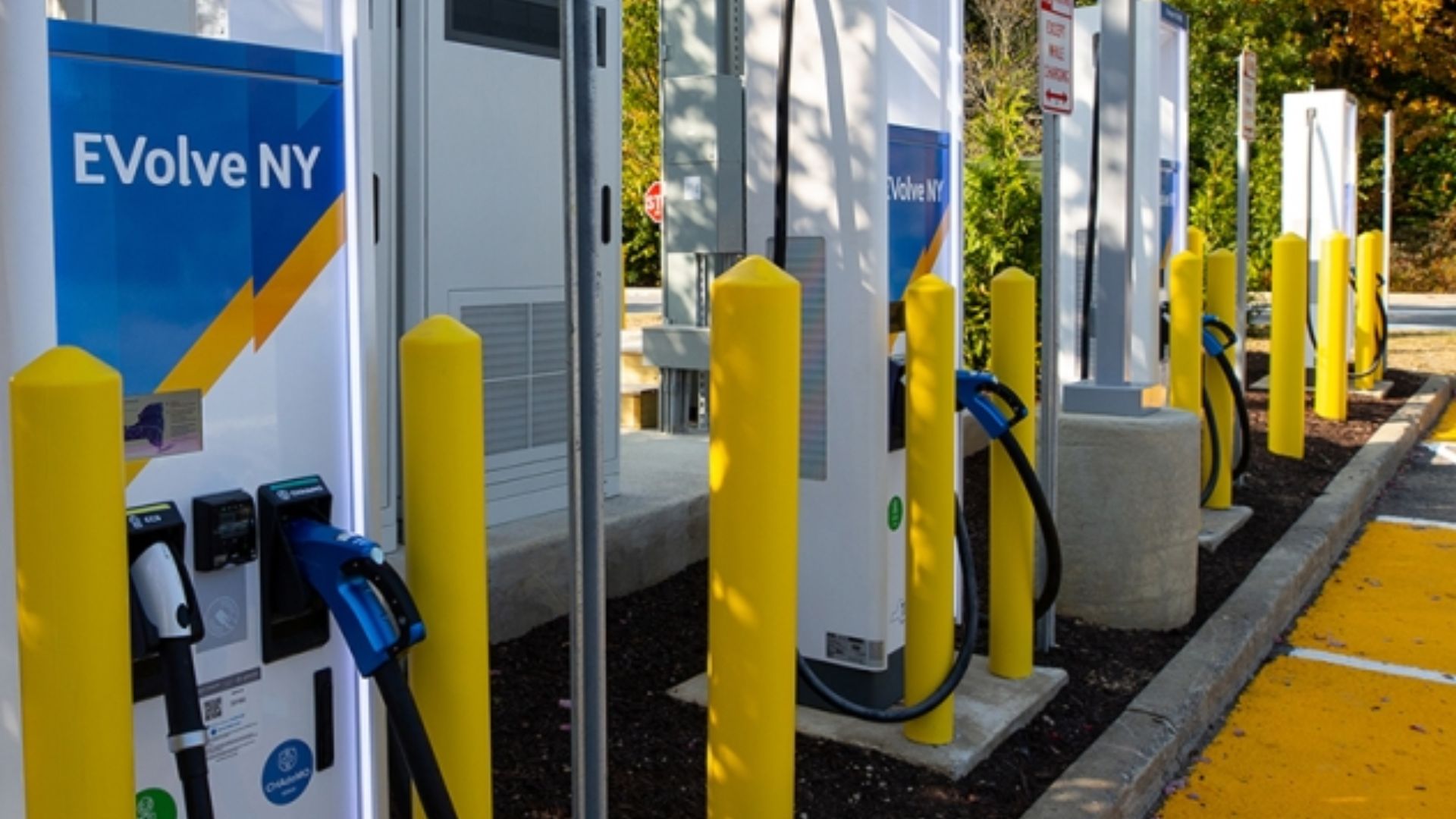
Albany, New York – New York is making $35 million available to public sector organizations that want to install and operate electric vehicle charging stations on publicly owned property, Governor Kathy Hochul announced. The new funding is intended to expand access to charging, lower the cost of installing the equipment and make electric vehicles easier to use for drivers across the state.
The money is being offered through a new initiative called the Charge Ready NY — Large Public Sector Project program. The program is being administered by the New York State Energy Research and Development Authority, or NYSERDA, and is aimed at larger public-sector projects that can add Level 2 electric vehicle chargers in locations accessible to the public.
The announcement comes as the number of electric vehicles in New York continues to grow. As of July 2026, more than 331,000 electric vehicles were on the state’s roads, while more than 21,000 Level 2 and direct current fast chargers had been installed across New York. State officials say the latest investment will help keep charging infrastructure growing alongside the number of electric vehicles.
“As we continue to lead the way in building a cleaner, more connected transportation system, New York must have a vast network of charging stations that are convenient to reach and easy and affordable to use,” Governor Hochul said. “By investing in much-needed public charging options, we are giving New Yorkers more confidence to drive an electric vehicle and reduce their exposure to volatile gasoline prices while improving air quality in our communities.”
The new program is focused specifically on public-sector applicants. Eligible participants include New York State agencies and authorities, local governments, and state or city university systems. These entities can seek funding to install Level 2 charging stations on publicly owned land, with the chargers intended for use by members of the general public.
Individual projects can be relatively large. Under the program, selected applicants will receive at least $1 million and can receive as much as $15 million. The funding can support charging installations at a single location or across multiple sites, giving public agencies and institutions the opportunity to develop broader charging networks rather than relying only on individual stations.
For public agencies, the program could help address one of the practical challenges involved in expanding charging infrastructure. Installing chargers requires equipment, electrical work and other related costs, and those expenses can make projects difficult to complete without financial assistance.
Under the new program, proposers may request as much as 80 percent of eligible, documented purchase and installation costs for electric vehicle supply equipment, commonly referred to as EVSE. The remaining costs would have to be covered according to the program’s requirements.
There are also specific requirements concerning the equipment and network services used in funded projects. Applicants must work with original equipment manufacturers, white-labeled models and network service providers that have been approved by NYSERDA. Those providers must qualify through NYSERDA’s Charge Ready NY 2.0 Equipment and Network Qualification Process.
The state is using a competitive application process, meaning public-sector organizations interested in the funding will have to submit proposals and meet the program’s eligibility and evaluation requirements.
Proposals are due by October 20, 2026, at 3 p.m. Eastern Time. NYSERDA has published the eligibility rules and evaluation criteria as part of the program’s solicitation information.
Before the deadline, NYSERDA also plans to hold an online information session. The webinar is scheduled for September 15, 2026, at 3 p.m. Eastern Time and will cover the solicitation, project requirements and the application process. The session is intended to give potential applicants more information before they prepare and submit their proposals.
Read also: Plattsburgh man pleads guilty to federal drug conspiracy involving more than three kilograms of MDMA
Doreen M. Harris, president and CEO of NYSERDA, said the program can make better use of public property while bringing charging to more communities.
“Strategically expanding electric vehicle charging on publicly owned property is an opportunity to maximize existing assets while bringing reliable charging to more communities in New York. Through partnerships with other state and local entities, NYSERDA is helping develop high-impact charging infrastructure that is publicly accessible and supports the continued adoption of electric vehicles.”
The state’s effort is also being backed by environmental and transportation groups that say charging availability remains an important part of the transition away from gasoline-powered vehicles.
Julie Tighe, president of the New York League of Conservation Voters, said additional charging infrastructure could help remove a practical obstacle for people considering an electric vehicle.
“Expanding access to EV charging is critical to building a cleaner transportation future for New York. This investment will help more New Yorkers make the switch to electric vehicles by addressing one of the practical barriers to EV ownership, while reducing our reliance on fossil fuels and cutting harmful transportation emissions. With gas prices continuing to strain household budgets, investments like this give New Yorkers a cleaner, more affordable way to get where they need to go. We applaud Governor Hochul and NYSERDA for continuing to move New York’s clean transportation transition forward.”
Albert Gore III, executive director of the Zero Emission Transportation Association, also pointed to the importance of having chargers available in places where drivers can actually use them.
“Charging flexibility is one of the many benefits of driving an electric vehicle, and Level 2 chargers at good locations are a key part of this flexibility. Of course, this requires infrastructure to be in place when and where drivers need it. That is why accelerating the build out of charging infrastructure, including Level 2, is so key to growing the number of EVs on the road and developing a strong American EV industry.”
The program could also put more charging stations in places people already visit during their daily lives. Public facilities such as parks, libraries and schools can become useful charging locations, particularly for drivers who may not have access to convenient charging at home.
Josh D. Boone, executive director of Veloz and Electric For All, said expanding those public options can make electric vehicles more practical for a wider range of drivers.
“We applaud New York for investing in the expansion of electric vehicle charging as more drivers experience the benefits of driving electric. This funding is more important than ever as EV adoption continues to grow amid rising gas prices and the increasing cost of living. More drivers are finding that electric vehicles fit seamlessly into their daily lives, and expanded access to charging at parks, libraries, schools and other public places is making driving electric more affordable and accessible than ever.”
Marguerite Wells, executive director of the Alliance for Clean Energy New York, said the cost savings associated with electric vehicles can be especially important for households dealing with rising expenses.
“Switching to an electric vehicle can be a massive cost-savings for New Yorkers struggling to make ends meet. By advancing the deployment of additional EV chargers, it makes life that much easier for those who have made the switch, and those who might make the switch in the coming years. This is an investment in New York’s future that will pay off for years to come.”
The $35 million program is not the state’s only effort to expand charging infrastructure. NYSERDA’s existing Charge Ready NY 2.0 program continues to provide support to public, private and nonprofit organizations installing Level 2 chargers at multifamily buildings, hotels and workplaces.
In February 2026, NYSERDA added another $15 million to that program. Under the existing initiative, funding of between $3,000 and $4,000 per charging plug is available on a first-come, first-served basis.
Together, the programs are intended to support different parts of New York’s charging network. Charge Ready NY 2.0 covers a variety of private and nonprofit locations, while the new Large Public Sector Project program is designed for larger installations on publicly owned land.
The latest funding is part of a much larger state effort to increase the use of zero-emission transportation. Under Governor Hochul’s leadership, New York says it is investing nearly $3 billion in zero-emission vehicles and expanding access to clean transportation, including for people living in low-income and disadvantaged communities.
The state has several programs operating alongside Charge Ready NY. They include the Drive Clean Rebate Program, EV Make Ready, EVolve NY, the New York Truck Voucher Incentive Program, the New York School Bus Incentive Program, the National Electric Vehicle Infrastructure program and the Direct Current Fast Charger Program.
Each program addresses a different part of the transportation system, from passenger vehicles and charging stations to trucks and school buses. The broader strategy reflects New York’s goal of moving more transportation away from fossil fuels while expanding the infrastructure needed to support that change.
State Senator Kevin Parker said the new investment can help bring charging equipment closer to residents and make electric vehicles more accessible.
“Expanding access to reliable electric vehicle charging is an important part of building an energy system that works for every New Yorker. This $35 million investment will help local governments and public institutions bring charging infrastructure directly into our communities, making electric vehicles more practical and accessible while reducing transportation emissions. We must continue investing in infrastructure that strengthens our communities, lowers costs for families and ensures that the transition to a cleaner transportation system leaves no New Yorker behind.”
The charging investment is being funded through Governor Hochul’s $2 billion Sustainable Future Program, which New York describes as the largest climate investment in the state’s history. The program is intended to support projects that reduce emissions, lower household energy costs and encourage the development of green jobs.
The state’s climate agenda calls for a transition to a clean energy economy that is intended to be affordable and fair while supporting economic growth and family-sustaining employment. New York has also set a goal of directing at least 40 percent of the benefits of its climate investments to disadvantaged communities.
Transportation is a major part of that effort. Expanding electric vehicle use requires more than encouraging people to purchase electric cars. Drivers also need dependable places to charge them, particularly when traveling beyond their homes or workplaces.
That is where the new $35 million program is expected to play a role. By targeting publicly owned property, New York is seeking to place charging infrastructure in locations that can serve residents and visitors while making use of land and facilities already controlled by public entities.
For potential applicants, the next major date is September 15, when NYSERDA will hold its webinar explaining the program. The final deadline for proposals is October 20 at 3 p.m. Eastern Time.
With more than 331,000 electric vehicles already on New York roads and thousands of chargers installed statewide, the state is moving into a stage where expanding the charging network is becoming increasingly important. The new program is designed to help public agencies keep pace with that growth and make charging easier to find in communities throughout New York.
The goal, state officials say, is not simply to add more charging stations. It is to create a wider and more reliable network that can give drivers greater confidence in choosing an electric vehicle, reduce transportation pollution and help communities participate in New York’s broader shift toward cleaner energy.


-
 Local News2 years ago
Monroe County announces legal proceedings against properties listed in official public notice of foreclosure
-

 Local News2 years ago
New ALDI store close to Rochester to begin construction in late 2025 or early 2026
-

 Local News1 year ago
County Executive Adam Bello and members of the county legislature celebrate exceptional young leaders and advocates at the 2025 Monroe County Youth Awards
-

 Local News1 year ago
The 2025 Public Market Food Truck Rodeo series will begin this Wednesday with live music by the Royal Bromleys