Local News
RIT historians bring Rochester’s LGBTQ+ history to life in new George Eastman Museum exhibition

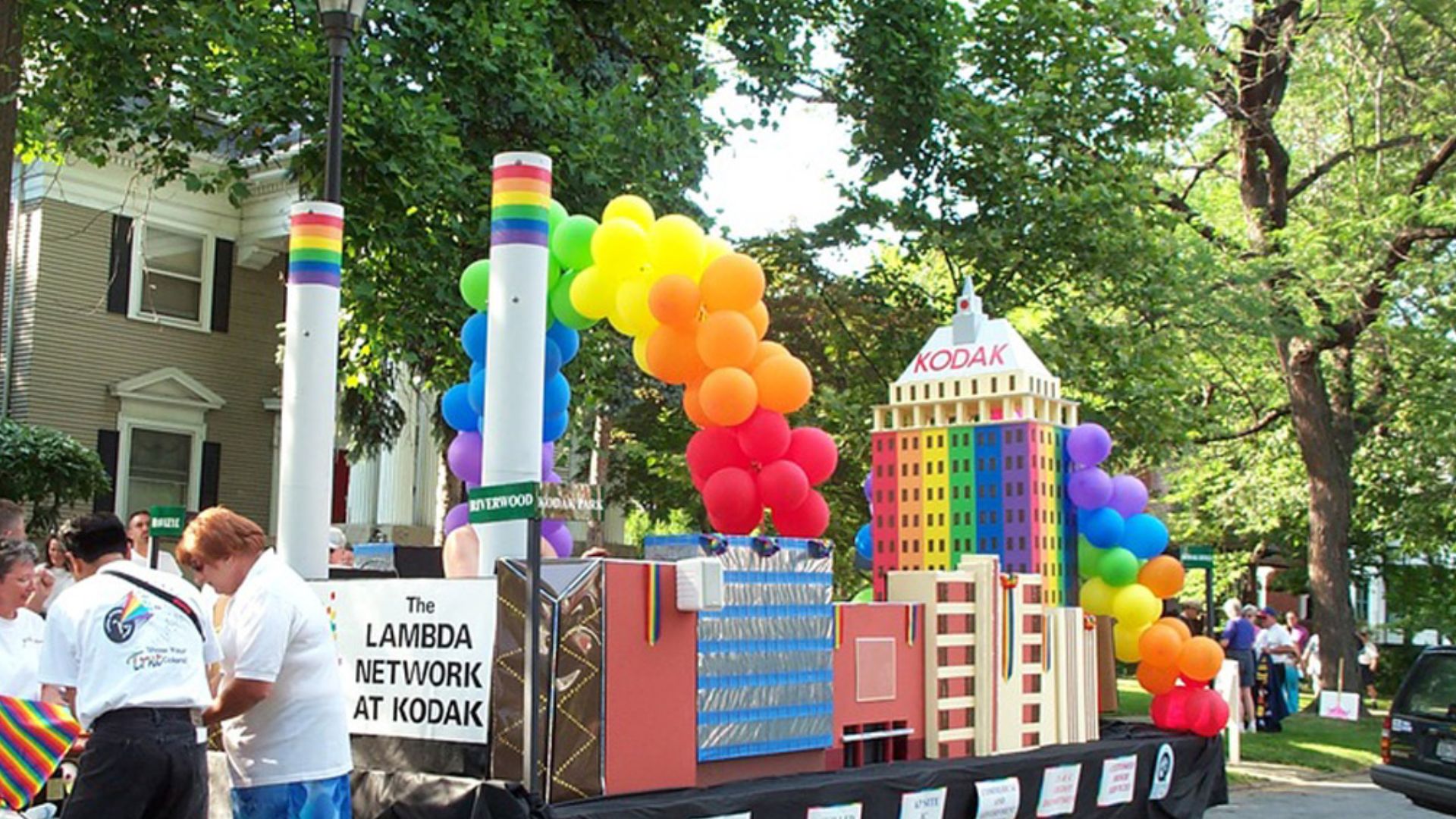
Rochester, New York – A remarkable chapter of Rochester’s history is stepping into the spotlight after spending decades largely unknown to the public. Thanks to years of research led by Rochester Institute of Technology historian Tamar Carroll, the story of the Lambda Network at Kodak—a pioneering employee group that helped reshape workplace equality for LGBTQ+ employees—is now the focus of a major exhibition at the George Eastman Museum.
The exhibition, Picturing Equality: The Lambda Network at Kodak, officially opened on June 27 inside the museum’s Gallery Obscura. Running through Nov. 8, the exhibit explores how a small group of Kodak employees challenged workplace norms during a time when many LGBTQ+ workers across America still felt compelled to hide their identities.
Drawing from never-before-displayed archival materials, photographs, videos, and oral history interviews, the exhibition documents how ordinary employees helped influence one of the country’s best-known companies to adopt more inclusive workplace policies while changing its corporate culture from within.
For Carroll, a professor of history at RIT, the exhibition represents the culmination of five years of extensive research into a story that she believes deserves far greater recognition.
Kodak has long occupied a central place in Rochester’s identity. Stories about the company’s innovations, business success, and influence on the city have been passed down for generations. Yet Carroll discovered that one important part of Kodak’s legacy had remained largely absent from public conversation.
“Everyone in Rochester has a theory or story about Kodak, but very few people know about the Lambda Network. I thought that it was an important story to tell,” said Carroll.
That desire to preserve a forgotten piece of local history eventually grew into a collaborative project involving former Lambda members Emily Jones and Dan Sapper, numerous RIT scholars, students, and local historians. Together, they transformed years of research into a museum exhibition designed to make the Network’s achievements accessible to a broad audience.
Read also: RIT alum turns early love of baseball statistics into a successful finance career
An opening celebration and panel discussion is scheduled for July 8 from 6 to 7 p.m. in the Dryden Theatre, giving visitors the opportunity to hear directly from people connected to the project.
The Lambda Network traces its origins to the early 1990s, when a small group of gay and lesbian Kodak employees decided to organize around workplace inclusion.
Officially recognized by Kodak in 1993, the employee resource group gradually expanded with encouragement from senior company leadership. Over time, its mission evolved beyond simply providing support for LGBTQ+ employees. Education became a central focus, helping coworkers better understand issues surrounding inclusion while encouraging meaningful dialogue inside the company.
Those efforts eventually produced tangible changes.
The Network played an influential role in helping Kodak introduce domestic partner benefits and adoption benefits. Members also advocated publicly for the Employment Non-Discrimination Act (ENDA), demonstrating that employee-led initiatives could shape corporate policy while influencing discussions at the national level.
Rather than focusing solely on policy victories, however, the exhibition highlights the personal experiences of the people who made those changes possible. Letters, photographs, meeting records, internal communications, and interviews paint a picture of individuals who balanced everyday jobs with extraordinary advocacy.
Carroll hopes visitors leave with an understanding that lasting social change often begins with ordinary people willing to act.
“I hope that the personal stories of Lambda members will resonate and inspire people to think about how they can take part in making social change,” said Carroll. “The Lambda members were ordinary workers at Kodak, but they accomplished something extraordinary. We have power and influence in our roles as workers.”
Much of the research behind the exhibition became possible because of two people who carefully preserved decades of Lambda Network history.
Emily Jones and Dan Sapper maintained extensive collections of documents, photographs, videos, newsletters, and other materials that chronicled the organization’s work over the years.
Jones, who concluded her Kodak career as director of New Imaging Materials Research, helped establish the Lambda Network alongside David Kosel and Kathryn Rivers. Sapper, whose final role at Kodak was as a factory quality manager, later served as the organization’s president for several years.
Recognizing the historical importance of their collections, both granted Carroll and her research team access to digitize the materials.
Read also: Governor Hochul launches $17 million highway improvement projects across Western New York
That effort eventually expanded beyond traditional archival work. Carroll and her students created an online resource titled Remembering the Lambda Network at Kodak, making the history available to researchers and the wider public. The digital project later became the foundation for the physical museum exhibition now on display.
Jones believes preserving the history has become increasingly important given changing public attitudes toward LGBTQ+ issues.
“The writing of this history is critical now, when we’re seeing data from the Human Rights Campaign and Gallup polls that reflect a backslide and change in feeling around gay marriage and inclusion,” said Jones. “Tamar is showcasing some very seminal work that no one thought of doing before. Being connected to her work is a source of pride for us.”
For Sapper, displaying the exhibition inside the George Eastman Museum carries special significance because of its deep historical ties to Kodak.
“For me, in a way, it’s a homecoming to have our stories and the history of our network, from inception through the present, being shown there,” said Sapper. “These materials were core to our experience, our friendships, and our work. It means an awful lot to reflect upon those years and—to be cliché—look at those Kodak moments and pictures.”
The George Eastman Museum views the exhibition as more than a historical display.
According to museum officials, presenting the Lambda Network’s story aligns closely with the institution’s mission of preserving important histories while serving a diverse community.
Emma Rathe, manager of programs and exhibition production and co-director of Gallery Obscura, said the archival materials remain surprisingly relevant decades after they were first created.
“Sharing the history of the Lambda Network at Kodak through Gallery Obscura is important to the mission of the Eastman Museum and to the diverse community it serves,” said Emma Rathe, manager of programs and exhibition production and co-director of Gallery Obscura, George Eastman Museum. “The archival documents featured in this exhibition reveal how relevant their messaging remains today.”
The exhibition encourages visitors not only to reflect on Kodak’s corporate history but also to consider how workplaces evolve through the efforts of employees who advocate for change from within.
The project has also become an important educational opportunity at RIT.
Since Carroll began researching the Lambda Network, nearly 20 students have contributed to different aspects of the work. Their involvement has included digitizing fragile archival documents, organizing historical records, conducting research, and helping prepare materials for both the digital archive and museum exhibition.
One of those students, Emmarose Tabin, graduated from RIT in 2024 with a degree in humanities, computing, and design. She joined the project in 2023 and chose to remain involved even after graduation.
For Tabin, the project carried personal meaning alongside academic value.
“Not that long ago, people were genuinely afraid to be out, and it was normal to be closeted. I’ve never experienced that kind of fear in my entire life, and I think it’s important to get that perspective and learn from older generations,” said Tabin.
Working on the project also allowed her to combine interests in historical preservation with digital technology—skills that helped prepare her for her current position as a digital engagement coordinator at the National Susan B. Anthony Museum & House.
Seeing years of research transformed into a public exhibition has provided a rewarding conclusion to an effort that stretched across multiple academic years.
Beyond documenting one employee group’s achievements, Picturing Equality: The Lambda Network at Kodak seeks to preserve an overlooked part of Rochester’s cultural and social history before it fades from public memory.
The exhibition demonstrates how local history can reveal broader national stories about workplace equality, corporate responsibility, and community activism. Through carefully preserved documents, personal recollections, and photographs that had never previously been shared publicly, visitors gain insight into a movement that quietly reshaped one of America’s most recognizable companies.
Supported by numerous organizations—including RIT’s College of Liberal Arts, the Central New York Humanities Corridor funded by the Mellon Foundation, the LGBT+ Giving Circle Fund, the Rochester Area Community Foundation, and ImageOut—the exhibition stands as both a historical record and a reminder that meaningful social progress often begins with individuals whose contributions are rarely recognized outside their own communities.
For Rochester, the exhibition restores a missing chapter of its history. For visitors, it offers an opportunity to understand how determination, collaboration, and persistence inside the workplace helped influence policies that would eventually reach well beyond Kodak’s walls.


-
 Local News1 year ago
Monroe County announces legal proceedings against properties listed in official public notice of foreclosure
-

 Local News2 years ago
New ALDI store close to Rochester to begin construction in late 2025 or early 2026
-

 Local News1 year ago
County Executive Adam Bello and members of the county legislature celebrate exceptional young leaders and advocates at the 2025 Monroe County Youth Awards
-
 Local News1 year ago
The 2025 Public Market Food Truck Rodeo series will begin this Wednesday with live music by the Royal Bromleys