Local News
RIT Fulbright Specialist Tom Rieger heads to Indonesia to help preserve endangered cultural heritage

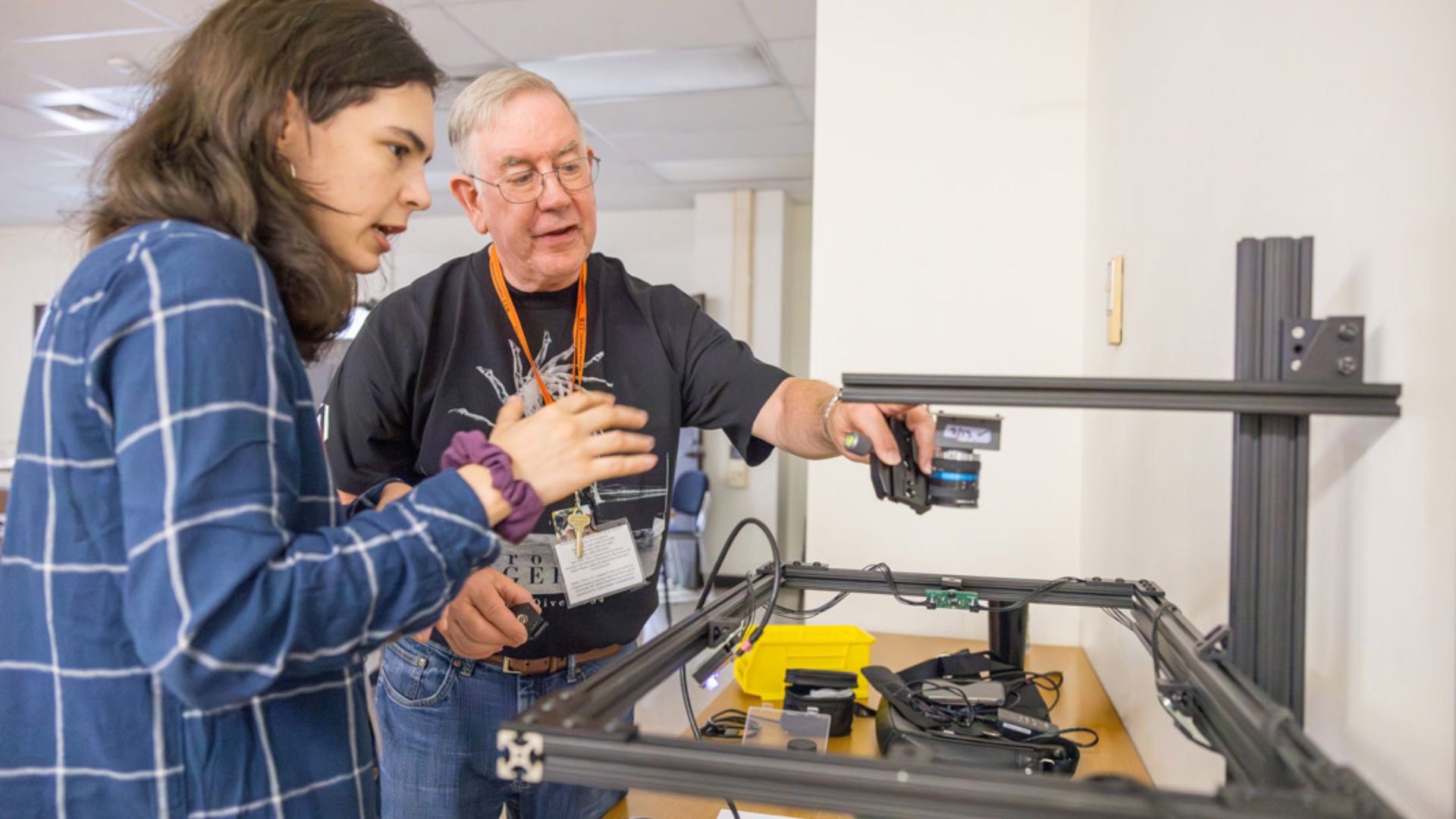
Rochester, New York – The loss of historical artifacts is often silent. A manuscript fades in a humid archive. A centuries-old document is damaged by flooding. A rare object, preserved for generations, is destroyed in a fire within minutes. Around the world, cultural treasures face countless threats, making preservation efforts increasingly important for institutions charged with protecting history.
For Tom Rieger, a Rochester Institute of Technology alumnus whose career has been devoted to cultural heritage imaging and digitization, safeguarding the past has become a lifelong mission. That mission is now taking him thousands of miles from the United States to Southeast Asia after receiving a Fulbright Specialist Program award that will allow him to work closely with the National Library of Indonesia on strategies aimed at preserving the nation’s historical collections.
Rieger, who earned his photography degree from RIT in 1974, spent decades working at the intersection of imaging technology and cultural preservation. Although he retired after a distinguished career, his dedication to protecting historical artifacts ultimately drew him back into academic life. In 2025, he joined RIT’s College of Liberal Arts as a Professor of Practice in the museum studies program, allowing him to continue sharing his expertise with a new generation of professionals.
His latest assignment represents both a continuation of that work and a significant international collaboration.
Between July 12 and Aug. 15, Rieger will be based at the National Library of Indonesia, where he will conduct educational training activities focused on cultural heritage imaging, preservation techniques, and digitization practices. During the five-week engagement, he will work alongside library staff members Irhamni Ali, Faisal Huzein, and Khosyi Alfin Maulana as they develop plans for a nationwide initiative designed to document and digitally preserve vulnerable artifacts held by institutions throughout Indonesia.
The project arrives at a critical moment for cultural heritage organizations worldwide. Museums, libraries, archives, and research institutions increasingly face the challenge of protecting collections from environmental threats, aging materials, and natural disasters. Digitization has become one of the most effective tools available, allowing institutions to create lasting records of valuable items before they are lost or damaged.
Rieger understands those risks better than most.
“As is the case all around the world, our heritage is disappearing. It’s getting burned up in fires, destroyed in floods, eaten by insects, or, in some cases, it’s been stored in poor environmental conditions and it self-destructs,” said Rieger. “As best we can, we can’t allow that to happen to something like a 500-year-old artifact.”
Rather than focusing solely on technical imaging procedures, Rieger’s role in Indonesia will concentrate heavily on strategic planning. His objective is to help establish long-term frameworks that can guide preservation efforts across the country. This includes creating policies, workflows, and decision-making processes that can help institutions identify at-risk materials, prioritize preservation efforts, and determine how best to allocate resources.
The work requires more than technical expertise. It also demands practical experience in building large-scale preservation programs.
“They really want a facilitator. Someone who’s been there and done that, as far as developing these policies, to guide them through the process,” he said.
That experience stems from Rieger’s years at the U.S. Library of Congress, where he served as chief of the Collections Digitization Division. During his tenure, he helped oversee efforts to digitize and preserve significant portions of one of the world’s most important cultural collections. The challenges he encountered there closely mirror those facing institutions in many countries today, including Indonesia.
Drawing upon that background, Rieger hopes to help create an integrated system that addresses every stage of preservation, from identifying cultural assets to ensuring their long-term survival.
“I’m trying to blend what they already do into a total process that spans everything from figuring out what the nation has, what condition it’s in, what it needs to survive, and what kinds of preservation and conservation routines can be done for those objects,” said Rieger.
The collaboration is expected to extend well beyond his summer visit. While the Fulbright assignment itself lasts only five weeks, both sides view the project as the beginning of a longer partnership. After returning to the United States, Rieger will continue supporting the National Library of Indonesia through his connection with RIT and its Cultural Heritage Imaging Lab.
The lab has earned recognition for advancing technologies that help institutions document, analyze, and preserve historical materials. Co-directed by Juilee Decker, Roger Easton Jr., and David Messinger, the facility works with organizations around the world to improve access to preservation tools and imaging expertise.
Among its notable innovations is the Multispectral Imaging System for Historical Artifacts, known as MISHA. The technology allows researchers to recover information from damaged, faded, or deteriorating materials that may otherwise be unreadable. Such capabilities have become increasingly valuable as institutions search for ways to preserve fragile historical records while expanding public access to cultural collections.
The broader mission of the Cultural Heritage Imaging Lab is one that strongly resonates with Rieger. He believes knowledge and expertise must be shared openly if preservation efforts are to continue succeeding in the future.
In many ways, that belief is what motivated him to leave retirement behind and return to teaching and mentoring.
“We absolutely must pass on the knowledge that we have to the next generation that’s coming up behind us if we are to have any hope that our work over the years carries forward,” Rieger said. “You are not a good leader if you can’t train the people that come after you to pick up that baton and become the next leader.”
As Rieger prepares for his journey to Indonesia, the project reflects more than a professional achievement. It highlights the growing importance of international cooperation in protecting humanity’s shared heritage. Through expertise, technology, and collaboration, efforts like these seek to ensure that irreplaceable artifacts and historical records remain accessible not only for today’s researchers, but for generations still to come.


-
 Local News2 years ago
Monroe County announces legal proceedings against properties listed in official public notice of foreclosure
-

 Local News2 years ago
New ALDI store close to Rochester to begin construction in late 2025 or early 2026
-

 Local News2 years ago
County Executive Adam Bello and members of the county legislature celebrate exceptional young leaders and advocates at the 2025 Monroe County Youth Awards
-

 Local News1 year ago
The 2025 Public Market Food Truck Rodeo series will begin this Wednesday with live music by the Royal Bromleys