Local News
NSF CAREER awards highlight groundbreaking RIT research that could transform the future of artificial intelligence

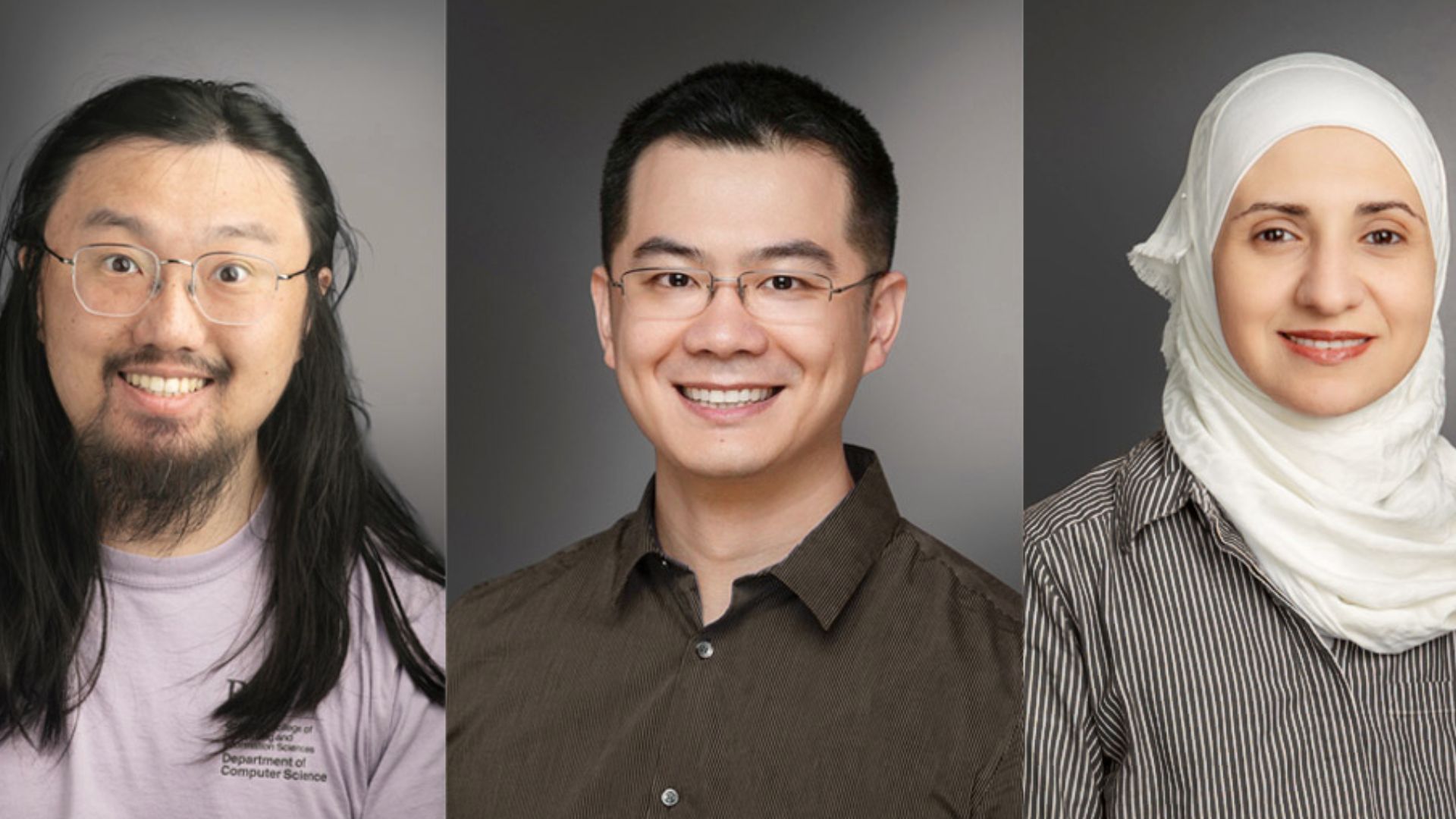
Rochester, New York – As artificial intelligence rapidly reshapes industries across the globe, researchers at Rochester Institute of Technology are taking aim at some of the technology’s biggest unanswered questions. From making AI systems more trustworthy to reducing their energy demands and strengthening their security, several faculty members are now leading projects that could influence how future generations interact with intelligent machines.
Their work has gained national recognition through the National Science Foundation’s highly competitive CAREER Award program, an honor reserved for early-career faculty whose research and teaching efforts show exceptional promise. At a moment when AI tools are becoming deeply woven into daily life—from healthcare technologies to autonomous systems—the projects underway at RIT reflect growing concerns about how these systems learn, adapt, and make decisions.
Among the researchers receiving support is Dimah Dera, Frederick and Anna B. Wiedman II Professor in the Chester F. Carlson Center for Imaging Science. Dera’s research focuses on one of AI’s most difficult problems: helping systems continue learning over time without constantly being rebuilt from scratch.
Today’s AI models often require complete retraining whenever they encounter new information, a process that can be costly, slow, and inefficient. Dera is working to change that by developing models capable of adapting continuously while still remaining transparent and dependable. Her research also explores uncertainty awareness—an increasingly important topic as AI systems begin making decisions in sensitive areas where mistakes can carry serious consequences.
While some researchers are concentrating on how AI thinks, Ke Xu, assistant professor in the School of Physics and Astronomy, is examining where those calculations happen in the first place.
Much of modern AI depends heavily on massive cloud computing centers that consume enormous amounts of energy. Xu’s work takes a different direction by advancing edge computing technologies, which allow AI systems to process information locally rather than sending everything to distant data centers.
That shift could have major implications for both speed and sustainability. Local processing allows devices to respond more quickly, an advantage that becomes critical in systems such as wearable medical monitors, autonomous sensors, and other real-time technologies. At the same time, reducing dependence on centralized computing infrastructure may also help lower the environmental footprint tied to large-scale AI operations.
Another key challenge receiving attention at RIT involves security and accountability—issues becoming increasingly urgent as AI systems grow more powerful and influential.
Weijie Zhao, assistant professor of computer science, is leading a CAREER Award-supported effort aimed at protecting machine learning systems from adversarial attacks and hidden weaknesses. Researchers in the field have long warned that AI models can sometimes be manipulated through carefully crafted inputs, exposing vulnerabilities that may not be visible during normal operation.
Zhao’s research seeks to make AI systems easier to interpret and trace, improving transparency in the decision-making process while helping guard against misuse and manipulation. The work could prove especially important in high-stakes environments where AI technologies influence security, safety, or critical infrastructure.
Together, the three projects highlight the expanding role universities are playing in shaping the future of artificial intelligence beyond commercial development alone. While AI continues to advance at extraordinary speed, questions surrounding trust, sustainability, and reliability remain at the center of global discussions.
At RIT, researchers are not only trying to push AI capabilities further—they are also working to ensure the technology evolves responsibly. Through the NSF CAREER Award program, those efforts are now receiving broader national attention, positioning the university as an important contributor to the next chapter of AI innovation.


-
 Local News2 years ago
Monroe County announces legal proceedings against properties listed in official public notice of foreclosure
-

 Local News2 years ago
New ALDI store close to Rochester to begin construction in late 2025 or early 2026
-

 Local News1 year ago
County Executive Adam Bello and members of the county legislature celebrate exceptional young leaders and advocates at the 2025 Monroe County Youth Awards
-

 Local News1 year ago
The 2025 Public Market Food Truck Rodeo series will begin this Wednesday with live music by the Royal Bromleys