Local News
Variety recognizes RIT as one of the most innovative film schools shaping the future of the entertainment industry

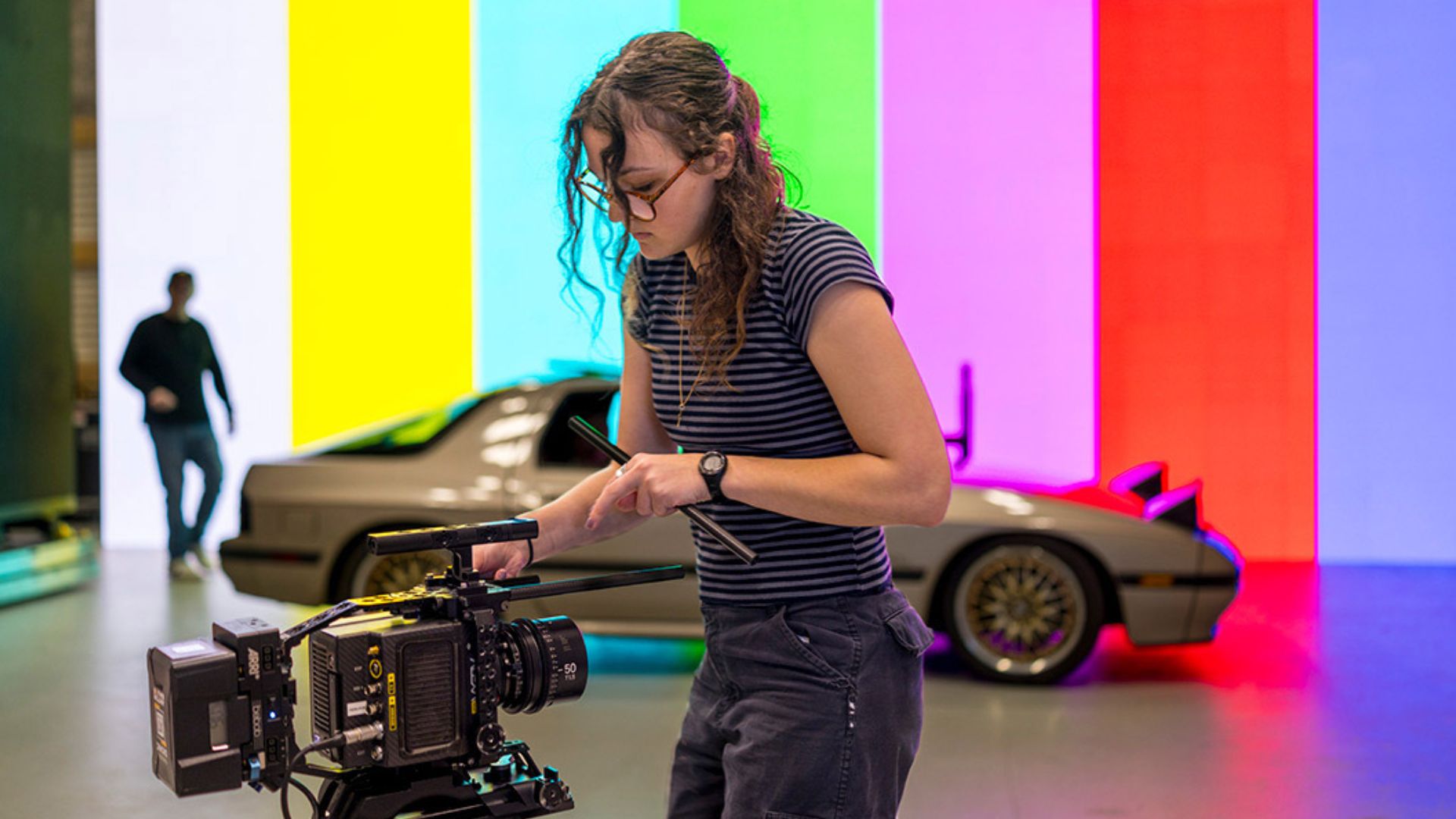
Rochester, New York – Recognition in the entertainment world often comes with a spotlight, but for Rochester Institute of Technology, the latest praise feels more like a steady glow built over years of quiet evolution. In its 2026 Education Impact Report, Variety has once again named RIT’s School of Film and Animation among the most innovative film schools in the country—an acknowledgment that reflects not just where the school stands today, but how it continues to move forward.
The annual report, compiled by Variety, casts a wide net across colleges and universities that are reshaping how students prepare for careers in film, television, and digital media. This year, 26 institutions made the list, each selected for its ability to respond to an industry in flux. Technology is changing rapidly. Storytelling is evolving with it. And schools are being measured not only by tradition, but by how well they anticipate what comes next.
RIT’s inclusion, now for the second consecutive year, speaks to a philosophy that blends innovation with restraint. The School of Film and Animation has earned recognition for its curriculum, which does not chase trends blindly but instead integrates new tools thoughtfully. Faculty members, described as both engaged and current, play a key role in that balance—bringing industry awareness into the classroom without losing sight of creative fundamentals.
A significant part of that conversation centers on artificial intelligence. While many institutions are racing to incorporate AI into their programs, RIT has taken a more measured approach, focusing on how technology can serve creativity rather than replace it.
“RIT has a long history of being at the forefront of emerging fields—whether in photography, print technology, or motion picture science—and we believe it’s critical that generative AI does not lead us toward a future that exploits artists,” said RIT President Bill Sanders. “We’re committed to making sure our students’ creativity remains, first and foremost, human driven. That balance between technological innovation and human creativity has always been central to RIT, and that is not going to change.”
That idea—human creativity first, technology second—runs through much of the school’s work. It is visible not only in course design, but also in the broader experiences offered to students.
Programs like RIT in LA allow students to step directly into the professional environment of the entertainment industry, gaining firsthand exposure to how projects are developed and produced. Meanwhile, international opportunities, such as the exchange program with the Film and TV School of the Academy of Performing Arts in Prague, broaden perspectives and encourage creative risk-taking beyond familiar settings.
For Ricky Figueroa, director of the School of Film and Animation and the John Traver Endowed Professor, the goal is not simply to keep pace with the industry, but to prepare students to shape it.
“Our students are looking to learn the creative, critical thinking, and technical skills that have always been at the heart of our film school. RIT’s legacy as a leader of teaching new technologies will continue as the industry evolves,” said Figueroa. “Our graduates are well prepared to navigate this evolving technological landscape, while keeping the art of storytelling and originality front and center as filmmakers and creative technologists.”
That preparation appears to be paying off. RIT graduates have found their way into influential corners of the entertainment world, contributing to both creative and technical advancements. Among them are Alex Forsythe, now senior director of science and technology at the Academy of Motion Picture Arts and Sciences; John Traver, a creative technologist and co-founder of Frame.io; and Christopher Edwards, founder and CEO of The Third Floor.
These alumni stories add weight to the school’s reputation, which has been consistently recognized by industry publications such as The Hollywood Reporter, TheWrap, and Animation Career Review. Each nod reinforces the idea that RIT is not just teaching film—it is actively contributing to the way the field evolves.
Still, what sets the school apart may not be any single program or accolade, but a mindset. There is a clear emphasis on making—on experimenting, building, and learning through doing. It is a culture that encourages students to test ideas, adapt quickly, and remain curious even as tools and platforms shift around them.
In an industry often defined by rapid change and uncertain pathways, that kind of grounding can make all the difference. And as Variety’s latest report suggests, it is precisely this combination of innovation and intention that keeps RIT’s School of Film and Animation firmly in the national conversation.
For students walking into the program today, the message is subtle but steady: technology will change, trends will come and go, but storytelling—human, imperfect, and original—will always remain at the center.


-
 Local News1 year ago
Monroe County announces legal proceedings against properties listed in official public notice of foreclosure
-

 Local News1 year ago
New ALDI store close to Rochester to begin construction in late 2025 or early 2026
-

 Local News1 year ago
County Executive Adam Bello and members of the county legislature celebrate exceptional young leaders and advocates at the 2025 Monroe County Youth Awards
-

 Local News1 year ago
The 2025 Public Market Food Truck Rodeo series will begin this Wednesday with live music by the Royal Bromleys