Local News
RIT researchers build strong momentum as sponsored funding surpasses major milestones across expanding research programs

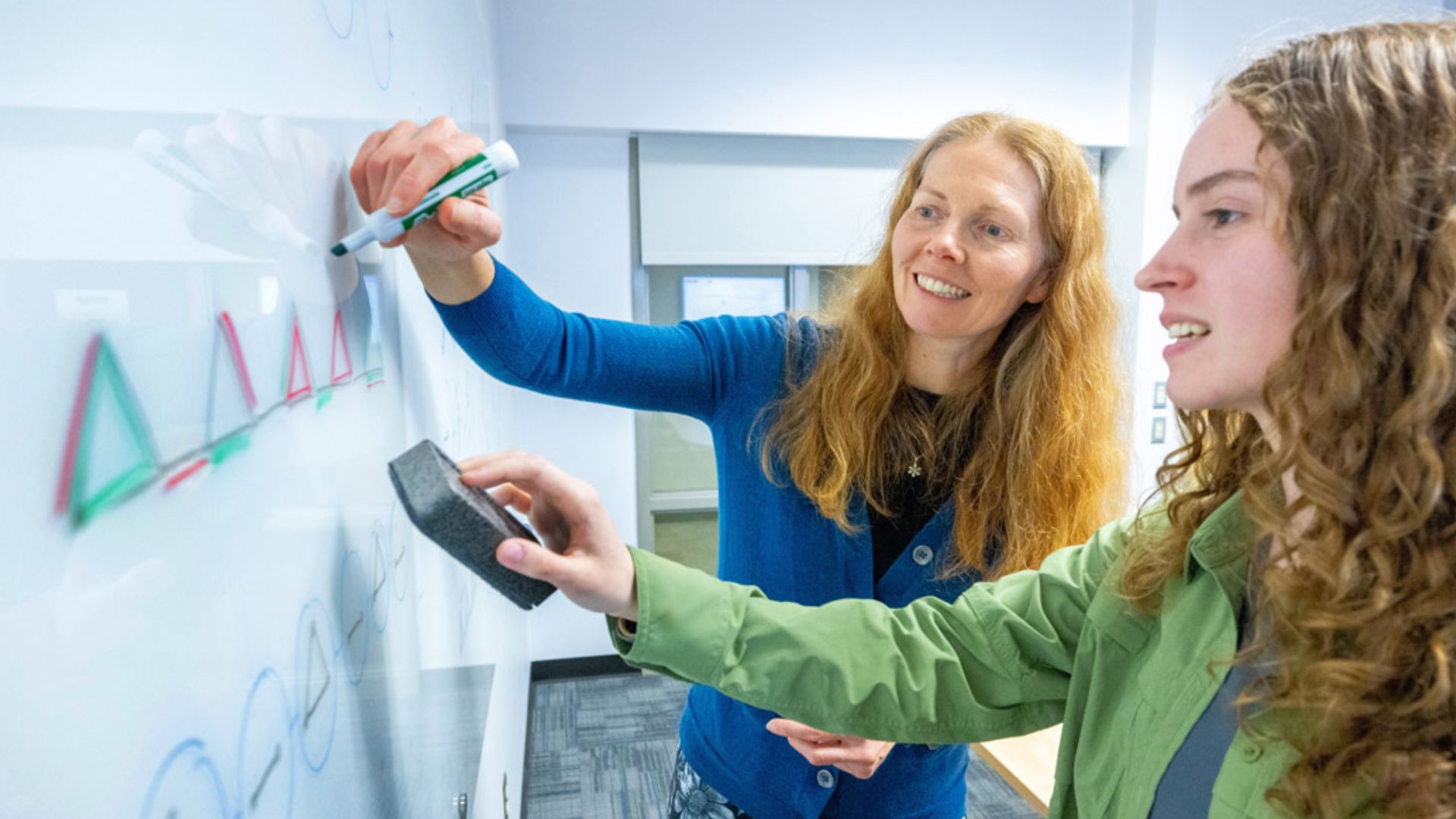
Rochester, New York – Research activity at Rochester Institute of Technology continues to expand as more faculty members secure significant research funding and launch new projects aimed at solving real-world problems. Across the university, a growing number of scholars are reaching major milestones in sponsored funding, reflecting years of persistent work, strategic institutional support, and a culture that encourages experimentation and collaboration.
Among the newest members of this expanding group are computer scientist Ivona Bezáková and mechanical engineer Xudong Zheng. Both researchers recently surpassed the $1 million mark in sponsored research funding, joining a community of faculty whose projects are helping to shape the university’s rising research profile.
Their achievements were recognized alongside other faculty members who successfully completed the university’s grant writers bootcamp and secured internal seed funding. The program is designed to equip researchers with the tools and strategies needed to compete for external grants and strengthen the long-term impact of their work.
Building tools that support learning
Bezáková’s research focuses on improving how students learn complex computational concepts. She leads a team developing an automated tool designed to assist educators by providing instant feedback to students as they construct computational models.
The system analyzes a student’s work and identifies why a particular solution might be incorrect. Rather than simply flagging an error, the tool explains the reasoning behind it, helping learners better understand the underlying concepts.
For instructors, this technology could offer an efficient way to support large groups of students while still delivering personalized guidance. For students, the immediate feedback creates opportunities to correct misunderstandings quickly and continue building their skills.
The path to this funding milestone was not a quick one. Bezáková’s research program grew gradually through experimentation, persistence, and support from several internal initiatives at the university.
One of those programs was RIT’s Faculty Education and Development Grants initiative, which gave her time to focus on research despite the demands of a heavy teaching schedule. Seed funding from the university’s Golisano College of Computing and Information Sciences also played an important role by allowing her to explore new ideas and test them before seeking outside funding.
Those early investments eventually helped her secure multiple research awards and develop projects that expanded into externally funded studies.
“Few research projects work out the way they were intended or hoped for, and having the ability and support to test an idea before developing a full proposal for external funding has been extremely helpful,” said Bezáková. “While not every seed funding award I received immediately turned into a proposal for external funding, I learned a lot during the process of working on those projects. These experiences eventually led to research progress on other projects and other grant proposals.”
Simulating complex fluid movement
While Bezáková’s progress developed over years of careful iteration, Zheng’s research momentum accelerated quickly through early external funding and interdisciplinary collaboration.
His work uses advanced computer simulations to study how fluids—such as air or water—move through complicated environments. By modeling these interactions with high precision, Zheng aims to better understand physical systems that are difficult to observe directly.
One area of focus involves the movement of air through the vocal folds during speech. By examining how airflow interacts with muscle movement and tissue vibration, his simulations could help scientists better understand voice production and improve the diagnosis and treatment of voice disorders.
Before joining RIT, Zheng had already established a strong research trajectory. He previously earned a faculty career award from the National Science Foundation to investigate how muscles, tissue motion, and airflow interact to produce sound.
After arriving at the university, internal financial support allowed him to begin a second research direction inspired by an unexpected biological observation—seal whiskers. These specialized whiskers are capable of detecting subtle changes in water flow, allowing seals to sense disturbances in their environment.
Drawing inspiration from that natural system, Zheng began developing a hydrodynamic sensing technology capable of detecting underwater disturbances. The research attracted additional funding from the Office of Naval Research within the United States Department of Defense.
“Reaching this funding milestone at RIT is very exciting and meaningful for me and my research group,” said Zheng. “It reflects the collaborative efforts of my students, colleagues, and the support from the university.”
Institutional support driving research growth
University leaders say the success of researchers like Bezáková and Zheng is part of a deliberate effort to strengthen the institution’s research environment.
During fiscal year 2025, RIT reported a record $105 million in sponsored research funding. The university also achieved its highest level of funding from the National Science Foundation, surpassing $21 million in awards.
Faculty engagement in national competitions has grown as well. RIT researchers submitted a record 30 proposals for NSF CAREER awards, one of the most prestigious honors available to early-career faculty members. Proposal activity overall has surged, with more than 500 research proposals submitted since July 1 of the current fiscal year.
According to Ryne Raffaelle, vice president for research at RIT, the university is committed to helping faculty members transform innovative ideas into funded research programs.
Through its Sponsored Research Services office, the institution provides proposal development workshops, grant-writing training, and several seed funding opportunities designed to help researchers generate preliminary results that strengthen future proposals.
“RIT is continuing on a path of significant growth by building foundations for the next wave of groundbreaking research,” said Raffaelle. “By providing our faculty with the support and tools they need to successfully advance their cutting-edge research, work alongside top students, and team with experts in their fields, RIT is demonstrating its commitment to solving real-world problems that will move the world forward.”
Expanding space for discovery
The university has also invested heavily in research infrastructure to support the increasing volume of projects and collaborations.
In December, RIT opened a new Research Building equipped with 19 specialized laboratories and workspaces designed to support interdisciplinary teams. The facility is part of a broader effort to expand research capacity across campus.
Renovations to Brown Hall, along with newly available spaces resulting from the development of the SHED—RIT’s Student Hall for Exploration and Development—have also contributed to the expansion.
Combined with the new building, these projects created 55 laboratories and nearly 60,000 square feet of additional research space in just three years.
University officials say the expanded facilities will allow researchers to pursue more ambitious projects while offering students opportunities to participate in hands-on discovery.
A growing research community
The cumulative effect of these investments is evident in the university’s growing community of successful researchers.
Since 2000, 94 RIT faculty members have reached or exceeded $1 million in sponsored research funding. In addition, 16 faculty members have received NSF CAREER awards since 2014, a sign of the university’s increasing competitiveness in national research programs.
The institution’s recently launched Strategic Framework further emphasizes the importance of research as a central pillar of its mission. The initiative highlights the university’s goal of producing discoveries that address global challenges while engaging students in meaningful research experiences.
Recent faculty members joining the $1 million funding milestone include Jane Amstey, Ivona Bezáková, Jason Kolodziej, Kathleen Lamkin-Kennard, Rui Li, Rui Liu, Cory Merkel, Alireza Vahid, and Xudong Zheng.
For some researchers, like Bezáková, the journey reflects years of steady progress and careful refinement of ideas. For others, like Zheng, the milestone represents rapid growth fueled by early opportunities and collaborative innovation.
Together, their experiences illustrate how institutional support, curiosity-driven inquiry, and perseverance can transform early concepts into impactful research programs—helping propel RIT’s expanding research ecosystem forward.


-

 Local News1 year ago
Monroe County announces legal proceedings against properties listed in official public notice of foreclosure
-

 Local News2 years ago
New ALDI store close to Rochester to begin construction in late 2025 or early 2026
-

 Local News1 year ago
County Executive Adam Bello and members of the county legislature celebrate exceptional young leaders and advocates at the 2025 Monroe County Youth Awards
-

 Local News1 year ago
The 2025 Public Market Food Truck Rodeo series will begin this Wednesday with live music by the Royal Bromleys