Local News
American St Nick and the extraordinary true story of a Pittsford hero whose wartime kindness brought hope to a nation

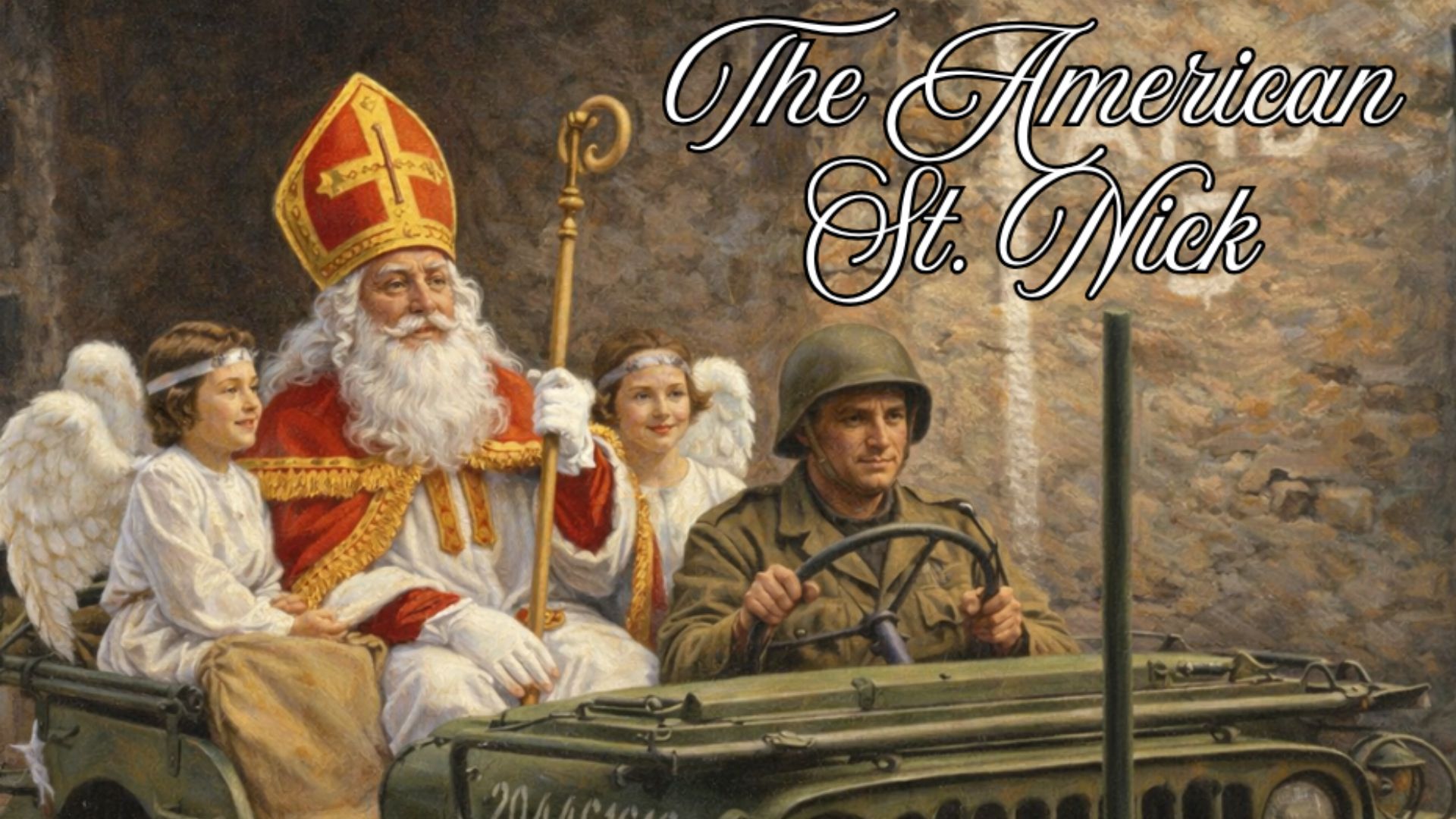
Pittsford, New York – In the winter of 1944, as much of the world tried to hold on to familiar holiday rituals amid the devastation of World War II, the people of Luxembourg were facing another December without one of their most beloved traditions. For children especially, the absence was deeply felt. St. Nicholas Day, once the heart of the holiday season, had vanished under years of occupation, leaving behind silence where joy had once lived.
Before the war, December 6 was a day of magic across Luxembourg. Children carefully polished their shoes and placed them by doors or windows, hoping St. Nicholas would visit during the night. When morning came, those shoes were often filled with sweets, fruit, nuts, and small gifts. Dressed as a bishop, St. Nicholas traveled from town to town, visiting schools and greeting children, reinforcing a sense of generosity, faith, and continuity that defined the season.
That tradition was abruptly erased during the Nazi occupation. Luxembourg was formally annexed by Nazi Germany in 1942, and the effects were swift and harsh. The French language was banned, religious expression was restricted, and long-standing customs were outlawed. St. Nicholas celebrations disappeared, and Christmas itself was reshaped into a secular observance tied to so-called Germanic identity. For families, especially those with young children, the loss went far beyond a holiday. It was a loss of culture, comfort, and hope.
The suffering intensified as the war dragged on. Food shortages, cold winters, and constant fear became part of daily life. When Allied forces liberated Luxembourg in September 1944, there was a brief sense of relief. People dared to believe that normal life might return, and that familiar traditions could be restored. But that hope was quickly tested.
In December 1944, Nazi Germany launched its final major offensive on the Western Front: the Battle of the Bulge. The fighting swept through northern Luxembourg, with the small town of Wiltz caught at the center of the chaos. Civilians once again huddled in cellars as artillery fire echoed overhead. Supplies dwindled, and the approach of Christmas brought little comfort to families struggling simply to survive.
It was during this grim moment that soldiers from the U.S. Army’s 28th Infantry Division entered Wiltz. Among them was Corporal Richard Brookins, a native of Rochester, New York. The soldiers were met with scenes of destruction and exhaustion, but they also learned something that struck them deeply: the children of Wiltz had gone years without celebrating St. Nicholas.
One soldier in particular, Corporal Harry Stutz, felt compelled to act. A Jewish American, Stutz wanted to bring some form of joy to the children who had known so little of it during the war. Town leaders noticed that Brookins bore a strong resemblance to the traditional image of St. Nicholas. With encouragement from Stutz and the local community, Brookins agreed to step into the role.
What followed was an act of kindness that would echo across decades. Brookins was given a makeshift bishop’s robe and miter. Riding through the damaged streets of Wiltz in a military jeep, he was accompanied by two young girls dressed as angels. Fellow soldiers pooled what little they had, offering candy and gum from their own rations. Company cooks prepared cookies and donuts, sharing warmth and generosity at a time when nothing was guaranteed.
“We weren’t much more than kids ourselves, really,” said Brookins. “It was a chance for us to have a party, too.”
The weather that day was dark and wet, but spirits were lifted. Children who had grown up amid occupation and war were suddenly able to take part in a tradition they had only heard about. For many, it was their first experience of St. Nicholas Day. Laughter returned to streets that had known only fear, if only for a moment.
The meaning of that day went far beyond sweets or costumes. In the middle of artillery fire and uncertainty, Brookins’ appearance became a symbol of humanity and compassion. The people of Wiltz gave him a name that would last a lifetime: “The American St. Nick.”
After the war ended, Brookins returned home to the United States and eventually settled in Pittsford. He lived a quiet life, volunteering at the Pittsford Senior Center and rarely speaking about his wartime experiences. To those around him, he was modest and unassuming, never seeking attention for what he had done.
In Luxembourg, however, the memory never faded. Each year in Wiltz, the town honored both its traditional St. Nicholas and the mysterious American soldier who had restored the celebration during the darkest days of the war. For decades, his true identity remained unknown. He was remembered simply as the American who saved Christmas.
That mystery was finally solved in 1977, when a fellow American soldier identified Brookins. Once the town of Wiltz learned that their local legend was still alive, they reached out immediately. Brookins was invited back, and over the years, he returned many times. Each visit was marked by deep gratitude and recognition, as he was embraced not as a visitor, but as one of their own.
In 2016, Luxembourg honored Brookins with its highest distinction, the Luxembourg Military Honor Medal. It was a powerful acknowledgment of an act that had no strategic value in military terms, but immeasurable value in human terms.
Brookins’ story also reached wider audiences later in life. In 2015, he sat down with author Peter Lion for a “Pittsford Personalities” segment on ERCN TV-12. That same year, Lion published the book American St. Nick: A True Story, ensuring the full account would be preserved for future generations.
Richard Brookins passed away in 2018 at the age of 96. He was laid to rest at White Haven Memorial Park in Pittsford. Yet his legacy continues to grow. In Luxembourg, memorials and annual commemorations keep his story alive. Just last year, the country issued two special postage stamps honoring his act of kindness, a rare tribute to a foreign soldier whose compassion left a lasting mark.
Why does the story of the American St. Nicholas still resonate? Perhaps because it represented one of the first signs that Luxembourg’s culture would survive the war. The gifts handed out in Wiltz were small, but their meaning was enormous. They carried the promise that identity, tradition, and freedom could endure even after years of suppression.
For those at home in Pittsford and beyond, Brookins’ story is a reminder that history is not shaped only by generals or battles. It is also shaped by ordinary people who choose kindness in extraordinary circumstances. In one small town, during one cold and uncertain winter, an American soldier became St. Nicholas — and in doing so, gave a war-torn community something priceless: hope.


-
 Local News1 year ago
Monroe County announces legal proceedings against properties listed in official public notice of foreclosure
-

 Local News2 years ago
New ALDI store close to Rochester to begin construction in late 2025 or early 2026
-

 Local News1 year ago
County Executive Adam Bello and members of the county legislature celebrate exceptional young leaders and advocates at the 2025 Monroe County Youth Awards
-

 Local News1 year ago
The 2025 Public Market Food Truck Rodeo series will begin this Wednesday with live music by the Royal Bromleys