Local News
University launches a wide-ranging multidisciplinary training program aimed at preparing the next generation of leaders for the growing U.S. semiconductor workforce

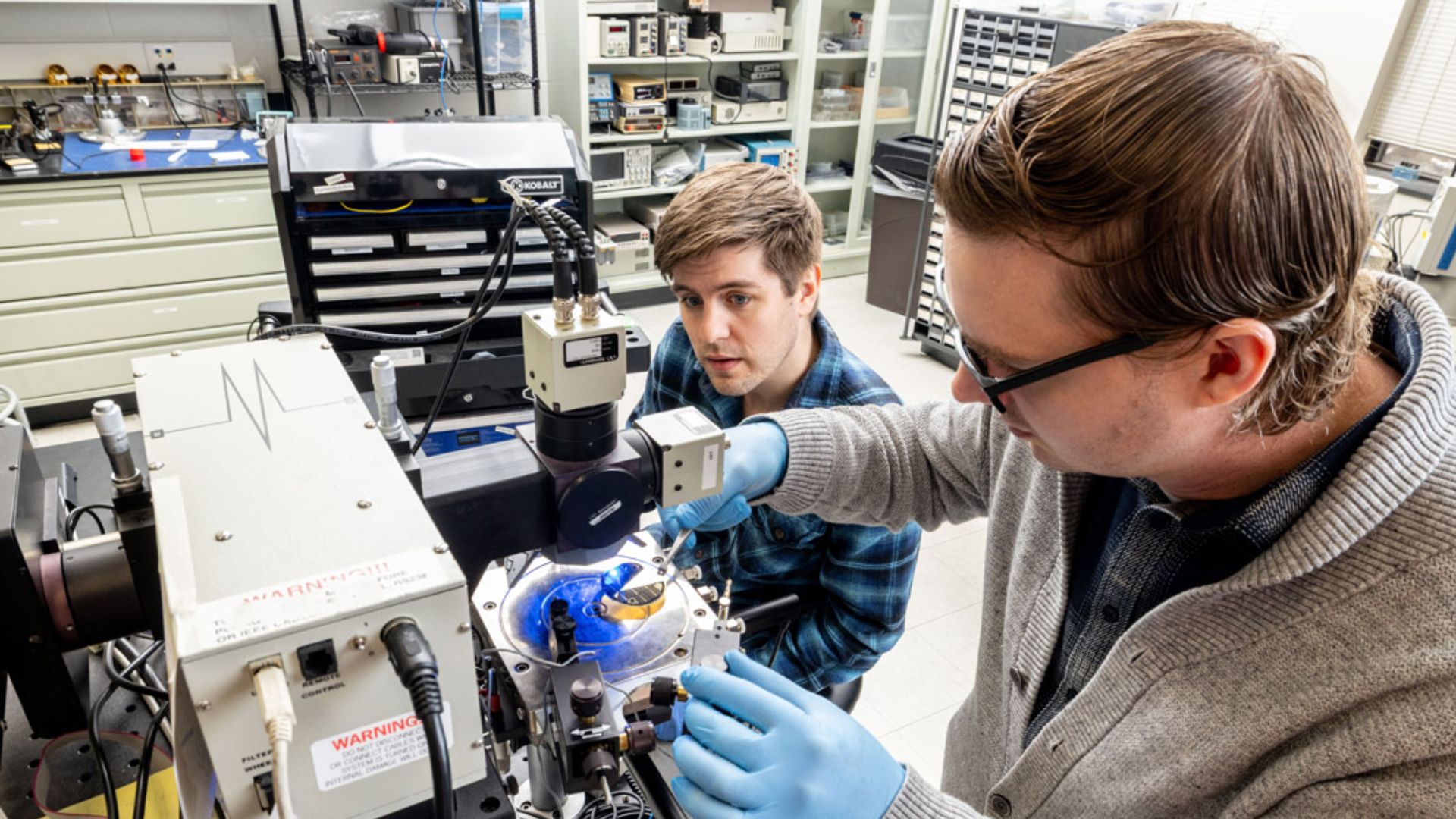
Rochester, New York – As the global race to strengthen semiconductor manufacturing accelerates, universities are under growing pressure to prepare graduates who can move quickly from the lab to the factory floor, research center, or design studio. At Rochester Institute of Technology, that challenge has sparked a new approach to doctoral education—one that blends deep technical focus with broad, real-world skills designed to meet the demands of a rapidly expanding U.S. semiconductor workforce.
Graduate students like Elijah Sacchitella understand just how competitive the field has become. For those pursuing advanced degrees in semiconductor-related disciplines, technical excellence alone is no longer enough. Employers increasingly seek scientists and engineers who can collaborate across disciplines, communicate complex ideas clearly, and manage projects that span multiple technologies. Recognizing this shift, RIT has launched CMOS+X, a new National Science Foundation Research Traineeship (NRT) program aimed at rethinking how future semiconductor leaders are trained.
The Convergent Graduate Program in CMOS+X Semiconductor Technologies is designed to supplement traditional doctoral research with professional and interdisciplinary development. While students continue to pursue specialized research in their chosen fields, they also receive structured training in areas that are often left out of conventional Ph.D. programs. These include scientific writing, strategic communication, interdisciplinary teamwork, and project management—skills that are increasingly essential in both industry and research environments.
Sacchitella, a doctoral student in microsystems engineering, is part of the first cohort to enter the CMOS+X program. Program flexibility allows trainees to step outside narrow research silos and engage with a wide range of semiconductor-related areas. These include semiconductor material innovation, micro- and nanoelectronics, optoelectronics and photonics, and integrated circuits, systems, and packaging. The goal is not to dilute expertise, but to give students a broader view of how different components of semiconductor technology intersect.
“We wanted CMOS+X to be something that is different from a traditional Ph. D. program in that we are embedding more interdisciplinary aspects into it and providing more professional training activities,” said Jing Zhang, principal investigator and director of the program.
As one of the NSF’s most competitive funding initiatives, the NRT program targets research areas of national importance and addresses critical workforce shortages. CMOS+X aligns directly with those priorities by focusing on semiconductor technologies, an area where demand for skilled professionals far exceeds supply. The program also complements RIT’s existing engineering and science graduate degrees, strengthening pathways already in place while expanding the scope of training.
Currently, seven doctoral students are funded directly through the program. They are joined by about a dozen additional graduate students from RIT’s colleges of science and engineering who participate in the coursework and professional development activities. Together, the group engages in multidisciplinary research training, tours RIT laboratories and chip fabrication facilities, and receives funding support to attend national and international professional conferences.
Beyond formal coursework, students meet regularly to discuss newly published research papers and emerging trends in semiconductor science. Seminars introduce topics such as strategic communication, project leadership, and career development, offering a structured space to build skills that are difficult to acquire through research alone.
For Sacchitella, those professional elements were a major draw. His research focuses on III-V semiconductor material growth and device design, particularly for space-based photovoltaic systems. His work explores methods to reuse substrates to reduce the cost of terrestrial photovoltaics, as well as the use of nanoscale structures, including quantum wells, to enhance performance in space environments. He is also researching devices that convert laser energy into electrical power—an area with applications ranging from space exploration to advanced power systems.
“This program can help build a lot of the soft skills that may not be thought about when you are in the trenches of scientific research,” said Sacchitella.
Faculty involved in the program see those skills as essential, not optional. Professor Seth Hubbard, Sacchitella’s adviser and co-director of the CMOS+X NRT program, believes the traditional Ph.D. model often limits students to a single research track without exposing them to the broader ecosystem of microelectronics.
“With typical Ph.D. research, you are into one topic with a set project and you pretty much work on that throughout your program. We try to offer these benefits and an educational climate where we are graduating Ph.D.’s with direct knowledge across all aspects of microelectronics materials and devices.”
At the heart of the program is CMOS—short for complementary metal-oxide semiconductors—the foundational technology behind modern integrated circuits. CMOS technology underpins everything from smartphones to satellites, making it a cornerstone of both academic research and industrial manufacturing. At RIT, CMOS is already a key specialty area within the engineering curriculum, closely aligned with industry processes and needs.
The timing of the CMOS+X launch reflects broader national priorities. As the United States works to reshore semiconductor manufacturing and reduce reliance on foreign supply chains, industry investment has surged. Major companies such as Intel and Micron are building large-scale manufacturing and research facilities across the country, creating an urgent need for skilled workers at every level.
“All semiconductor manufacturing plants need millions for the workforce to support operations, expertise from all levels—from technicians and engineers to scientists—to make it happen,” said Zhang, associate professor in RIT’s Kate Gleason College of Engineering. “Where are those people coming from? Our CMOS+X program is timely and very needed to support those fast-expanding semiconductor industries.”
By blending technical depth with interdisciplinary training and professional skill development, RIT’s CMOS+X program aims to prepare graduates who are not only experts in their fields, but also adaptable leaders ready to contribute to one of the most critical industries shaping the future of technology in the United States.


-
 Local News1 year ago
Monroe County announces legal proceedings against properties listed in official public notice of foreclosure
-

 Local News2 years ago
New ALDI store close to Rochester to begin construction in late 2025 or early 2026
-

 Local News1 year ago
County Executive Adam Bello and members of the county legislature celebrate exceptional young leaders and advocates at the 2025 Monroe County Youth Awards
-

 Local News1 year ago
The 2025 Public Market Food Truck Rodeo series will begin this Wednesday with live music by the Royal Bromleys