Local News
Penfield DPW announces full readiness as the winter weather season approaches with unpredictable conditions expected

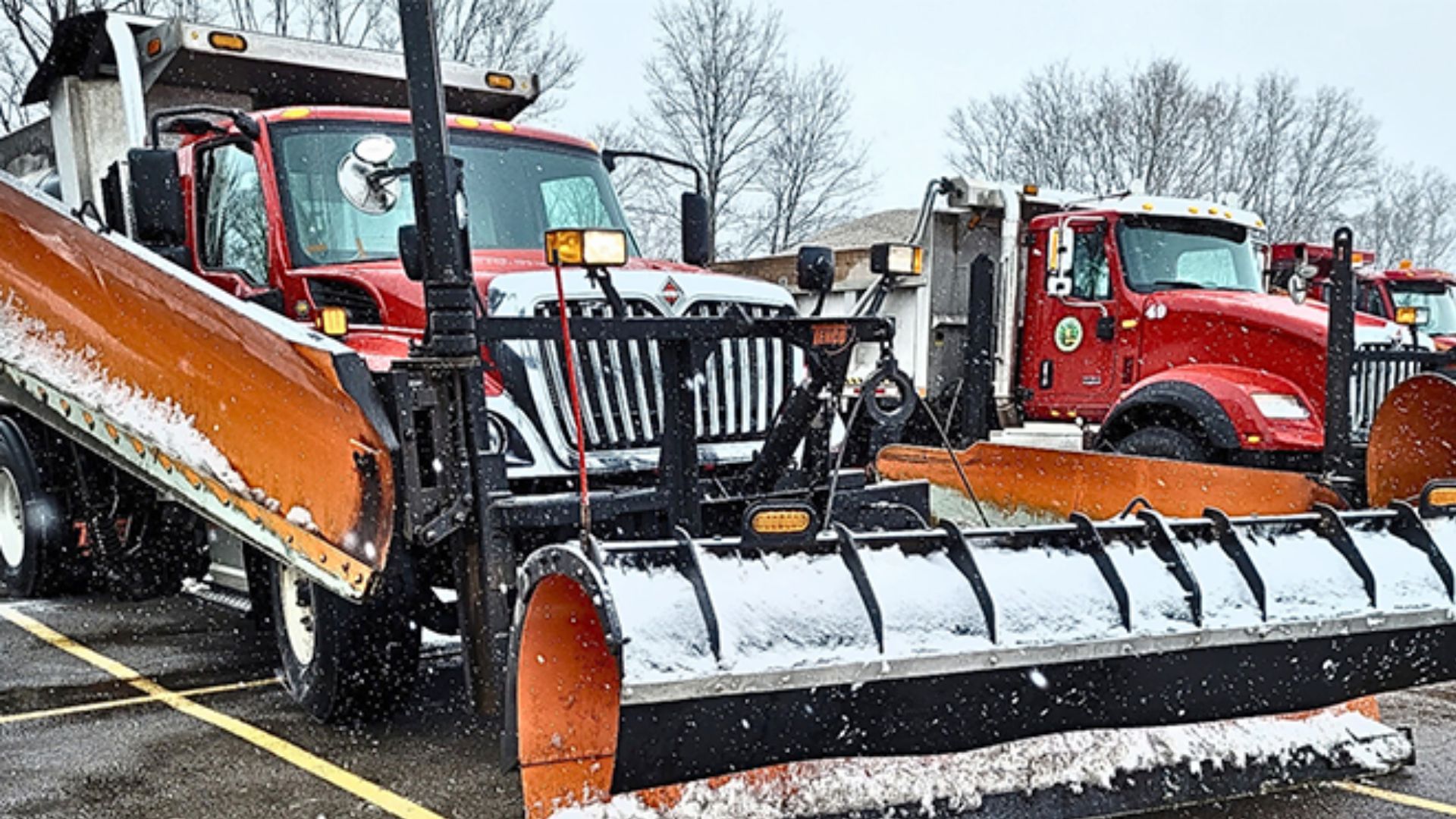
Penfield, New York – As the first cold snaps creep into upstate New York, the Penfield Department of Public Works has already moved decisively into full winter readiness mode, bracing for the long stretch of unpredictable weather that typically defines the season. From November through April, the department operates in a kind of controlled vigilance, adjusting equipment, staffing, and strategy to keep nearly 500 lane miles of roadway reliably passable whenever snow and ice decide to make an appearance.
In this annual shift to winter operations, the transition is not symbolic—it is structural and immediate. Winter parking rules take effect. Snow fences go up across key corridors. The salt barn is filled to capacity. Trucks that spent summer hauling materials or performing maintenance are transformed into snow-clearing machines, fitted with plows and calibrated salter systems. Meanwhile, dispatchers, who serve as the eyes and ears of the entire operation, begin their round-the-clock schedule, watching conditions at all hours in case the weather turns fast.
Penfield’s responsibility stretches across an expansive network: 290 lane miles of Town roads, plus another 200 lane miles belonging to Monroe County and New York State. To manage that footprint efficiently, the Town divides its service area into 18 plow routes for roads and four additional routes dedicated solely to sidewalks. Each corridor, from major highways to quiet residential streets, follows a carefully structured order of attention once snow begins to fall.
The Town’s plowing strategy starts with a constant stream of communication. Dispatchers provide ongoing reports to DPW foremen, who then determine what treatment methods are appropriate at any given moment. Those decisions hinge on a long list of factors—current weather, forecasts, air temperature, pavement temperature, and even the day of the week can dictate how fast crews need to move and which tools they’ll rely on.
Main thoroughfares are always the first priority. Roads such as Routes 441 and 250, as well as Browncroft Boulevard/Atlantic Avenue and Empire Boulevard, are cleared ahead of the smaller but still heavily traveled routes like Five Mile Line Road, Panorama Trail, Creek Street, and Plank Road. Neighborhood subdivisions come later, not out of neglect but because the primary roads are the spine of the region’s mobility and emergency response.
When conditions call for a full deployment, the Town launches an 18-truck operation covering all Town, County, and State roads. Under less severe circumstances, the DPW may initiate a 9-truck run, focusing only on the main Town arteries in addition to County and State routes. It typically takes about four hours to cycle through an entire plow route, though Mother Nature often dictates the pace.
Nighttime storms require a particularly coordinated response. If snow builds up overnight, operators are summoned between 2:30 a.m. and 3 a.m. to give themselves enough time to push through their routes before the first wave of morning commuters hits the road around 7:30 a.m. As the day goes on, additional operations occur as conditions change, with teams rotating as needed to keep surfaces manageable.
Salt application is done with precision and restraint. Crews focus on hills, curves, and intersections—spots where traction is most critical. Trucks are equipped with GPS-regulated salter controls to ensure consistent distribution, typically around 250 pounds per lane mile, an amount roughly equal to five five-gallon buckets. When the situation calls for it, sand is mixed in for added traction. On sidewalks, the Town relies on four tractors fitted with V-plows, clearing walkways whenever snow reaches about two inches, though salt is not used on pedestrian areas.
Town officials continue to stress the same message each year: cooperation from drivers makes a meaningful difference. Giving plows plenty of space, avoiding unnecessary travel during active storms, and respecting winter parking rules help crews work more safely and more effectively. As the DPW team has often noted, “please don’t crowd the plow and give crews room to work.”
With equipment staged, materials stocked, and personnel ready at a moment’s notice, Penfield enters the winter months prepared for whatever the season delivers—whether it’s a quick dusting, a week of ice, or the kind of prolonged snowfall that has long defined life in upstate New York.


-

 Local News1 year ago
Monroe County announces legal proceedings against properties listed in official public notice of foreclosure
-

 Local News2 years ago
New ALDI store close to Rochester to begin construction in late 2025 or early 2026
-

 Local News1 year ago
County Executive Adam Bello and members of the county legislature celebrate exceptional young leaders and advocates at the 2025 Monroe County Youth Awards
-

 Local News1 year ago
The 2025 Public Market Food Truck Rodeo series will begin this Wednesday with live music by the Royal Bromleys