Local News
RIT announces new clinical doctorate program in occupational therapy launching in 2026

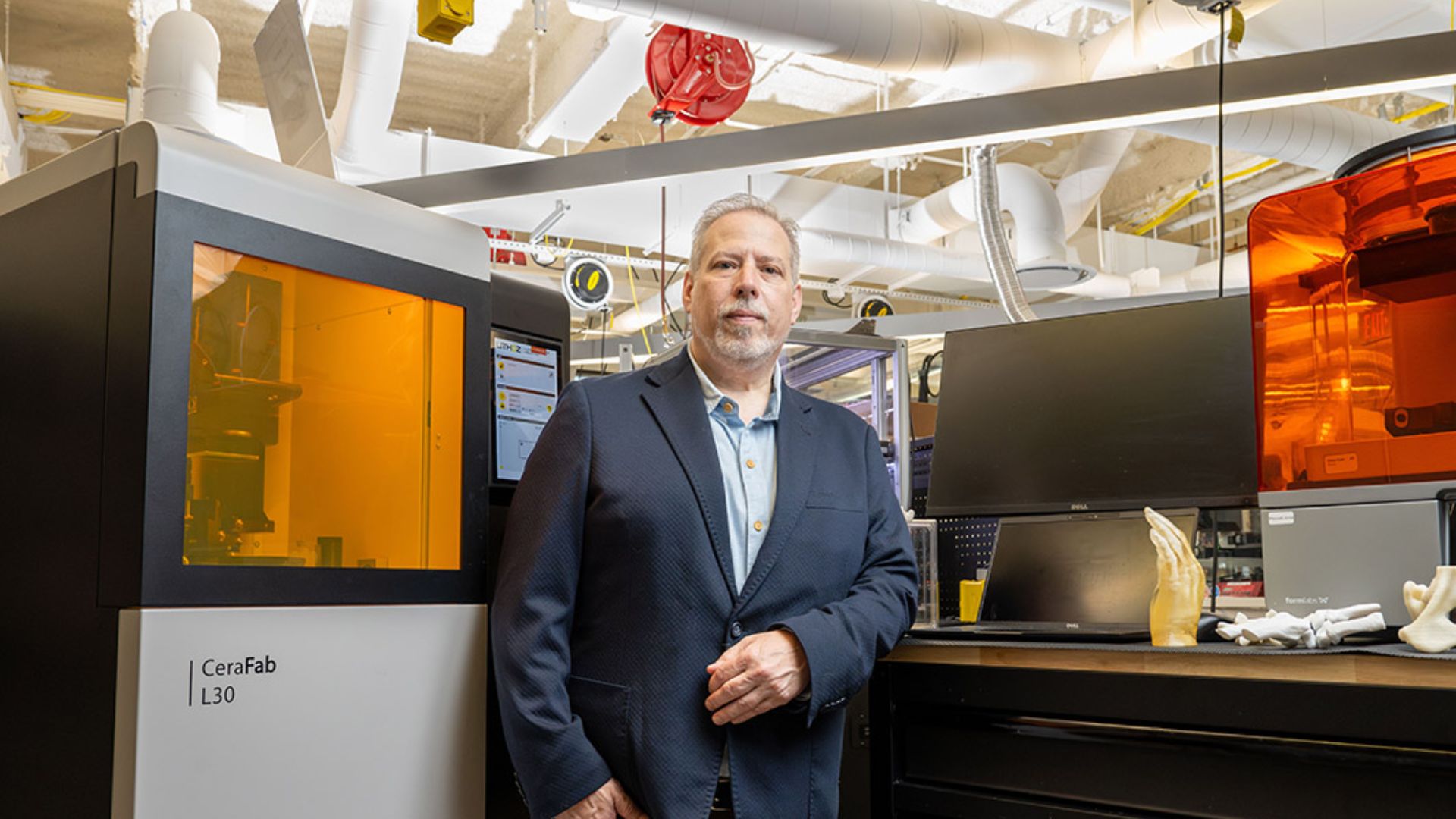
Rochester, New York – A new doctoral program at Rochester Institute of Technology is paving the way for a new generation of healthcare professionals who merge cutting-edge technology with compassionate, hands-on care. Starting in June 2026, RIT will offer its first-ever clinical doctorate — an entry-level occupational therapy doctorate (OTD) — aimed at preparing students to help individuals with disabilities or health challenges lead fuller, more functional lives.
The launch of this program marks a significant milestone for RIT, which is expanding its reach in the health sciences to meet growing workforce demands. Occupational therapy, a career that blends science, problem-solving, and human connection, is seeing a surge in need nationwide. According to the U.S. Bureau of Labor Statistics, employment of occupational therapists is projected to grow 11 percent through 2033, outpacing the average for all occupations. The median annual wage in the field currently stands at $98,340.
RIT’s OTD program will not only prepare students for this in-demand field but will also redefine how occupational therapy is taught. Students will engage in immersive learning environments that simulate real-world conditions and will collaborate with experts from engineering, design, and data science to shape new solutions for patients.
“Occupational therapy is about function, participation, and adaptation,” said Christopher Alterio, director of RIT’s occupational therapy doctoral program. “Occupational therapists work across a variety of different settings and diagnoses, helping people do the things they need and want to do in the context of their real lives.”
Housed within the Wegmans School of Health and Nutrition, the three-year doctorate will span nine consecutive semesters and include both required fieldwork and a final capstone project. The program has received approval from the Accreditation Council for Occupational Therapy Education and the New York State Education Department.
But what sets RIT’s program apart is its clear emphasis on innovation. Students will gain experience working in virtual and augmented reality environments, designing 3D-printed orthotics and prosthetics, and evaluating technologies that are still in the research phase.
“Our students will work in AR/VR environments and design custom orthotics and prosthetics in 3D-printing labs,” Alterio said. “They will learn how to evaluate emerging tools that are still being tested in research settings.”
Beyond the lab, students will benefit from RIT’s extensive campus resources, including makerspaces, research studios, and collaborations with local organizations. For example, Studio 930, RIT’s accessible design challenge, gives students the opportunity to solve real-world problems alongside engineers and designers. Meanwhile, partnerships with the Al Sigl Community of Agencies and the RIT-Rochester Regional Health Alliance offer practical experience in clinical and community settings.
“Healthcare workforce demands present an opportunity for RIT to make an impact beyond the region,” said Yong “Tai” Wang, dean of RIT’s College of Health Sciences and Technology. “Our OTD program will educate a new type of clinician who approaches patient-centered care with a technology mindset.”
This technology-forward mindset is central to the program’s identity. Students will be trained not just to use the latest tools but to evaluate and adapt them to individual patient needs. The idea is to create clinicians who are not only empathetic and skilled but also ready to innovate.
“We want to make it the norm in occupational therapy to work with people who are always advancing technology,” Alterio said. “I want to model a spirit of collaboration so we can bring the kinds of amazing ideas that are happening on campus into the field and directly to patients.”
The program also aims to address the evolving demographics of the profession. With many current occupational therapists nearing retirement, there is a growing need for younger professionals to bring new ideas and energy to the field. U.S. News & World Report recently ranked occupational therapy as the eighth-best healthcare career in 2025, underscoring its appeal and significance.
At RIT, students in the OTD program will be prepared to work in a variety of settings, including hospitals, outpatient clinics, schools, and rehabilitation centers. And thanks to their exposure to advanced technologies and collaborative projects, they will be equipped to handle both traditional therapy tasks and emerging roles in tech-integrated care.
The program’s blend of experiential learning, cutting-edge research, and real-world clinical application makes it a standout in the field of occupational therapy education. It reflects RIT’s broader vision to fuse technology, the arts, and science in ways that improve lives and communities.
Those interested in learning more about the program or applying can contact Christopher Alterio at [email protected]. Early inquiries are encouraged, as interest in the program is expected to be strong due to the growing demand in the healthcare sector.
As the healthcare landscape continues to shift, RIT’s OTD program offers a promising and timely opportunity — one that prepares students not just for jobs, but for leadership and impact in one of the most human-centered professions in medicine.


-

 Local News1 year ago
Monroe County announces legal proceedings against properties listed in official public notice of foreclosure
-

 Local News2 years ago
New ALDI store close to Rochester to begin construction in late 2025 or early 2026
-

 Local News1 year ago
County Executive Adam Bello and members of the county legislature celebrate exceptional young leaders and advocates at the 2025 Monroe County Youth Awards
-

 Local News1 year ago
The 2025 Public Market Food Truck Rodeo series will begin this Wednesday with live music by the Royal Bromleys