Local News
Attorney General James sues Secretary Kennedy over childhood vaccine changes she says could put children at risk

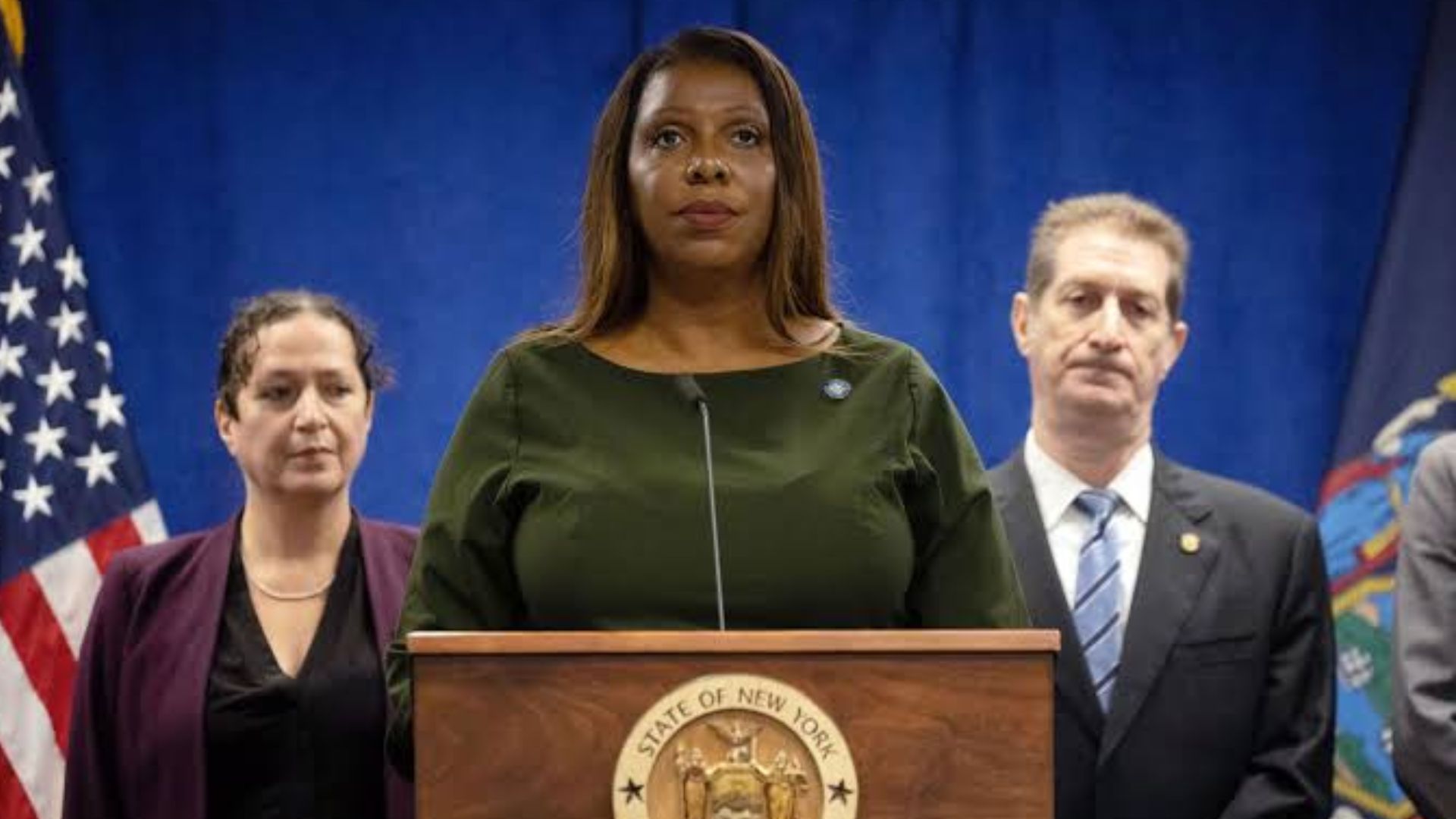
New York – New York Attorney General Letitia James has joined a multistate lawsuit against U.S. Health and Human Services Secretary Robert F. Kennedy Jr., challenging major changes to the federal childhood vaccination schedule and seeking to restore recommendations that had guided families and doctors for decades.
James and officials from 15 other states argue that the changes made under Kennedy abandoned long-established scientific evidence and removed important expert oversight from federal vaccine policy. The lawsuit also challenges Kennedy’s decision to dismiss all 17 voting members of the Centers for Disease Control and Prevention’s Advisory Committee on Immunization Practices, known as ACIP, and replace them with new appointees.
The legal challenge follows the CDC’s decision in January to issue a new childhood vaccination schedule that no longer recommends seven vaccines for every child. The affected vaccines include those providing protection against hepatitis B, influenza, respiratory syncytial virus, or RSV, and meningococcal disease.
“Every parent wants their child to grow up healthy and protected from preventable diseases,” said Attorney General James. “For decades, these vaccines have kept millions of children out of the hospital and saved countless lives. Families deserve guidance grounded in science, and these abrupt changes put children’s health at risk. I will keep fighting to protect our kids and make sure every family can trust the advice they get from their pediatrician.”
The lawsuit argues that the federal government changed its vaccine policy without properly considering decades of research, obtaining the required expert input or giving the public an appropriate opportunity to participate in the process.
Routine childhood vaccination has played a major role in reducing disease in the United States. Researchers estimate that vaccinations given to children born between 1994 and 2023 prevented approximately 508 million illnesses and 32 million hospitalizations. The same research estimates that more than 1.1 million deaths were prevented, while the overall savings to society reached approximately $2.7 trillion.
Read also: Long Island bridge dedicated in honor of fallen New York State Trooper James M. MacLarnon
The states challenging Kennedy point to his long history of skepticism toward vaccines and argue that his actions as HHS secretary have undermined confidence in vaccines that have been widely used to prevent serious illnesses.
One of the central issues in the lawsuit involves ACIP, the federal advisory panel that has helped shape U.S. vaccine policy for decades.
In June 2025, Kennedy dismissed all 17 members of the committee despite previously telling Congress that he would leave the panel in place. He then selected replacement members. According to the lawsuit, many of those appointees were vaccine skeptics, and the required vetting process was not followed.
The states also point to internal HHS emails that they say provide evidence of Kennedy’s plans for the committee. Before the replacement members had even taken their seats, Kennedy requested that the committee’s agenda include reconsidering the hepatitis B vaccine recommendation for healthy children.
That issue came before the newly formed panel in December 2025.
The committee voted to end the longstanding recommendation that every baby receive a hepatitis B vaccine dose at birth. The universal birth-dose recommendation had been in place since 1991. According to the information cited in the lawsuit, committee members acknowledged that there was no evidence showing that the birth dose caused harm.
The administration then moved further in changing federal vaccine policy.
Weeks after the hepatitis B decision, three federal officials who did not have a role in CDC vaccine policy sent a memo to then-acting CDC Director Jim O’Neill recommending that he implement Kennedy’s preferred vaccination schedule. The officials were the heads of the National Institutes of Health, the Centers for Medicare and Medicaid Services, and the Food and Drug Administration.
O’Neill approved the new schedule that same day. According to the lawsuit, he has no medical or scientific training, and the schedule was adopted without expert review, public notice or an opportunity for public comment.
The resulting changes were significant.
Vaccines protecting against rotavirus, meningococcal disease, hepatitis A, hepatitis B, influenza, COVID-19 and RSV were removed from the category of vaccines routinely recommended for every child.
Most were instead placed under a category known as “shared clinical decision-making.” Historically, that category had been used in limited circumstances where scientific evidence did not clearly support a universal recommendation.
The attorneys general argue that placing widely used childhood vaccines in that category creates additional uncertainty and makes access more difficult, particularly for families that do not regularly see a primary care doctor. More than 100 million Americans lack regular access to a primary care provider, according to the information cited by James’ office.
The lawsuit also points to recent disease statistics to illustrate what the states describe as potentially serious consequences for children.
During the 2024-25 influenza season, 289 children died from the flu. That was the highest number recorded outside the 2009 pandemic since pediatric flu deaths began being reported. Nearly half of the children who died had no underlying medical conditions.
Among the children whose vaccination status was known, 89 percent were not fully vaccinated against influenza.
RSV also presents a significant risk to young children. It is the leading cause of hospitalization among infants in the United States and sends as many as 80,000 young children to hospitals each year.
The lawsuit raises similar concerns about hepatitis B.
Researchers have estimated that delaying a child’s first hepatitis B vaccine dose by only two months could result in at least 1,400 additional childhood infections each year. Over time, those infections could contribute to nearly 300 cases of liver cancer and approximately 480 deaths related to hepatitis B.
Beyond the health concerns, James and the other states argue that the federal policy changes have created practical and financial problems for state governments.
For decades, states developed their vaccination systems around federal recommendations made with guidance from medical experts. Those recommendations have influenced school vaccination requirements, private insurance rules, Medicaid coverage and the authority of pharmacists to administer vaccines.
States must now respond to uncertainty created by the federal changes, according to the lawsuit.
New York has already taken legislative action. The state enacted two laws designed to prevent insurance coverage, school immunization requirements, Medicaid coverage and pharmacists’ vaccination authority from being dependent on the federal advisory committee that Kennedy restructured.
The coalition argues that Kennedy’s actions violate the federal Administrative Procedure Act. The states describe the changes as arbitrary and capricious and contend that they were carried out contrary to federal law.
They are asking the court for several remedies.
The coalition wants the new childhood vaccination schedule declared unlawful and overturned. It is also asking the court to invalidate Kennedy’s appointments to ACIP and reverse the committee’s decision ending the universal hepatitis B birth-dose recommendation.
The lawsuit brings together officials from states across the country in a coordinated challenge to the federal government’s new approach to childhood vaccination.
Joining James are the attorneys general of Arizona, California, Colorado, Connecticut, Delaware, Maine, Maryland, Michigan, Minnesota, New Jersey, New Mexico, Oregon, Rhode Island and Wisconsin. Pennsylvania Governor Josh Shapiro is also part of the coalition.
At the center of the case is a dispute over how federal childhood vaccine recommendations should be established and the role scientific experts should play in that process. For James and the other officials bringing the lawsuit, the goal is to overturn the recent changes and return the federal childhood vaccination schedule to the system of recommendations that existed before Kennedy’s actions.


-
 Local News1 year ago
Monroe County announces legal proceedings against properties listed in official public notice of foreclosure
-

 Local News2 years ago
New ALDI store close to Rochester to begin construction in late 2025 or early 2026
-

 Local News1 year ago
County Executive Adam Bello and members of the county legislature celebrate exceptional young leaders and advocates at the 2025 Monroe County Youth Awards
-

 Local News1 year ago
The 2025 Public Market Food Truck Rodeo series will begin this Wednesday with live music by the Royal Bromleys