Local News
RIT’s occupational therapy program combines advanced technology with patient-focused rehabilitation and care

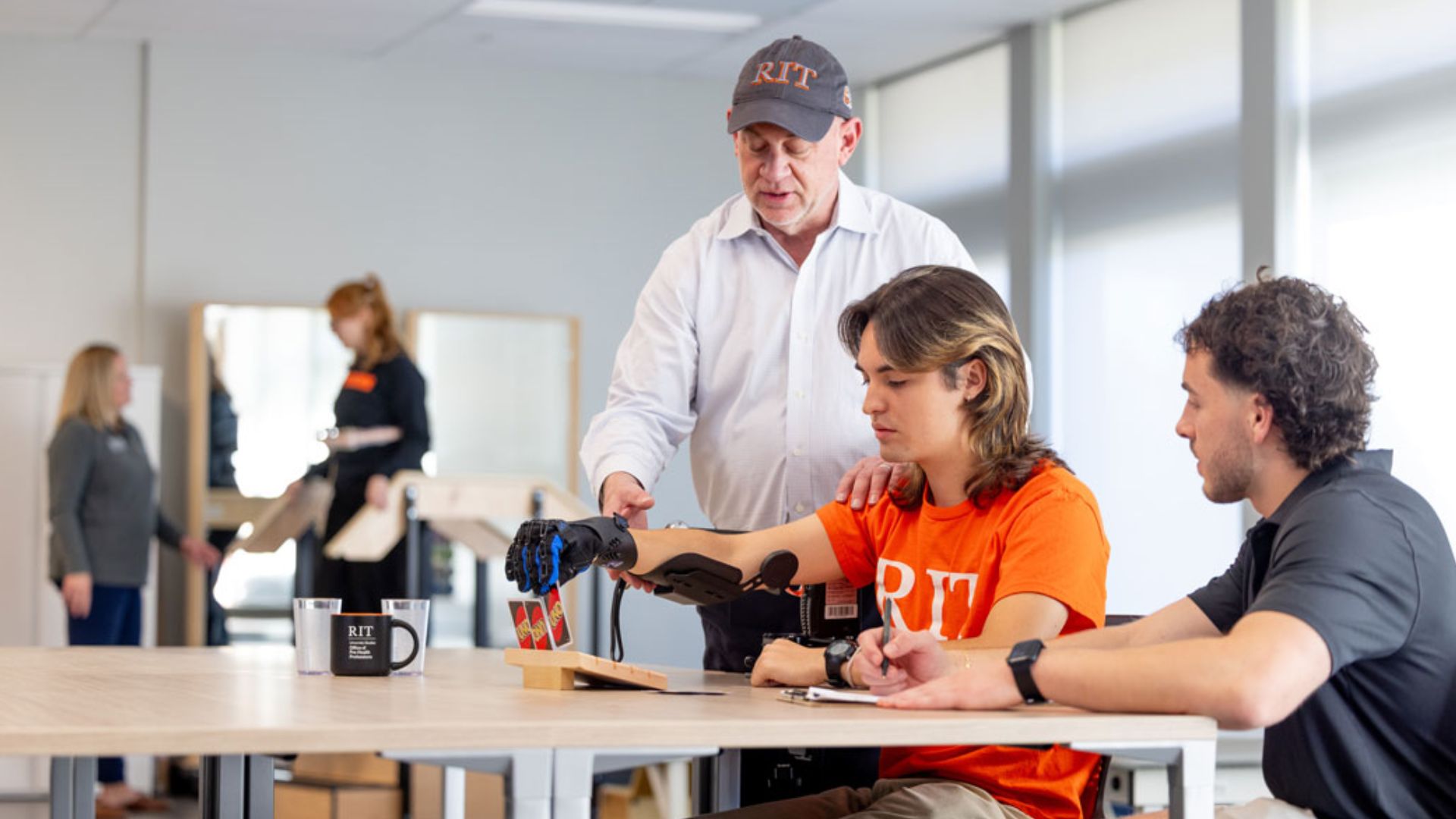
Rochester, New York – Rochester Institute of Technology is combining advanced technology with traditional rehabilitation methods in its new doctorate in occupational therapy program, giving students hands-on experience with tools that could shape how future therapists care for patients.
RIT’s entry-level clinical doctorate in occupational therapy, known as the OTD program, uses specialized laboratories where students can work with virtual and augmented reality, wearable devices, motion capture equipment, 3D printing and telehealth. The technology is meant to expand the options available to occupational therapists while keeping individual patient needs at the center of treatment.
Occupational therapy helps people with injuries, illnesses and disabilities develop or regain skills they need for daily life and greater independence. Traditional tools such as button hooks, extendable shoehorns and hand-molded orthotics remain useful. But new technology is creating additional ways for therapists to evaluate patients, develop treatment plans and provide rehabilitation.
“The unique value of occupational therapy at RIT is the university’s engineering, design, and innovation mindset,” said Christopher Alterio, RIT clinical professor and director of occupational therapy, the university’s first clinical doctoral program. “At RIT, we can apply technology, art, and design solutions and purposeful problem solving to human-centered care.”
Five specialized labs support the program
Students in the program have access to laboratories dedicated to five areas of occupational therapy.
Those areas include activities of daily living, clinical skills, fabrication, occupational performance and movement analysis, and pediatric occupational therapy.
The clinical skills laboratory includes a teletherapy room designed for remote rehabilitation. The fabrication lab operates as an occupational therapy makerspace, where students can create personalized assistive devices.
Other technology used throughout the program includes gamified therapy and augmented and virtual reality environments. Students can also gain experience with wearable technology and 3D-printed orthotics.
RIT’s existing academic strengths play an important role in the program. The university is nationally recognized for programs in engineering, bioengineering, computing and gaming. Those fields can be used in developing new occupational therapy interventions.
The program also draws on RIT’s art and design expertise, particularly as students work on patient-focused projects and capstone research.
Rather than treating technology as separate from patient care, the program is designed to bring the two together.
Students bring technology and personal interests into OT
The multidisciplinary nature of the program is reflected in the backgrounds of its students.
Adira Blumenthal of Silver Spring, Maryland, entered the OTD program after working as a computer software engineer developing assistive technology.
Her previous experience made her interested in working more directly with the people who depend on those devices. She is particularly interested in helping children who use assistive technologies to manage cognitive and neurological disorders.
That interest connects with both the pediatric occupational therapy lab and the fabrication lab.
The pediatric space gives students opportunities to develop clinical reasoning skills for working with children, while the makerspace allows them to design and build personalized assistive devices based on patient needs.
Another student, Joshua Luciano of Irondequoit, New York, came to the program with a background in kinesiology.
His interest in occupational therapy is also personal. Both of his grandfathers were diagnosed with Parkinson’s disease, and Luciano wants to specialize in preventative occupational therapy for people with neurological disorders.
“There are many neurological issues that respond to early intervention and early medication that could slow down their condition and prolong a good quality of life,” Luciano said.
Technology available in RIT’s occupational performance and movement analysis lab will allow Luciano and other students to examine how people move in considerable detail.
The laboratory includes high-end motion capture cameras and a force plate. Students can use those systems to collect information about movement and ground forces.
They can then combine those measurements with information about muscle activity and eye tracking gathered through wireless devices worn by patients.
By examining the information together, students can identify movement patterns and consider interventions that may help people dealing with illnesses or injuries.
“Technology enables our OT students to record and integrate these elements and measure how it fits together,” Alterio said. “Every decision is grounded in who the person is, what they need or want to do, and the contexts in which life happens.”
Patient needs remain at the center
Despite the program’s strong technological focus, RIT’s approach emphasizes that equipment and data are only useful when they address the needs of the person receiving care.
Students learn to observe a patient’s situation, determine an appropriate response and then carry out that plan.
RIT calls the approach its measure-design-make framework.
According to Alterio, the framework helps distinguish RIT’s occupational therapy program from approaches used at other universities.
The process can involve collecting detailed information through technology, designing an intervention based on what the information shows and then creating or implementing a solution.
That solution could involve assistive technology, a rehabilitation strategy or another method designed around a patient’s circumstances.
The emphasis remains on what the individual needs or wants to accomplish in everyday life.
Preparing students for a changing profession
RIT’s expansion into occupational therapy also comes as demand for professionals in the field is expected to grow.
Healthcare is the largest private employment sector in the United States, and the U.S. Bureau of Labor Statistics projects employment in occupational therapy to increase 15 percent by 2035. That rate is faster than the average growth expected across all occupations.
Career opportunities are not limited to hospitals and traditional rehabilitation clinics.
Occupational therapists work in schools, outpatient clinics, skilled nursing facilities and nursing homes. Their work can also include mental health management and early intervention for children who have developmental delays or disabilities or are at risk of developing them.
Occupational therapists may also work with companies that design assistive technologies, providing expertise about how products can meet the needs of patients.
That connection between healthcare and technology is one area RIT’s program is designed to address.
As new devices and systems enter healthcare, graduates will need more than experience with the technology available today. The program is also intended to teach them how to evaluate emerging innovations and determine whether they could be useful for patients.
Luciano believes that exposure to technology during his education will help distinguish RIT students as they enter the profession.
“It will set us apart.”
Blumenthal sees technology skills as important not only for using new tools but also for helping other healthcare professionals and patients understand them.
“It’s important to have OT practitioners who are comfortable with technology, keep up with developments, and educate other practitioners and patients about the technology.”
Through its five specialized laboratories and multidisciplinary curriculum, RIT’s occupational therapy doctorate is bringing together rehabilitation, technology, design and patient-centered care.
Students are learning how to use sophisticated tools, from motion capture systems and wearable sensors to virtual reality and 3D printing. At the same time, the program emphasizes that the purpose of those technologies remains straightforward — finding practical ways to help people participate more fully and independently in their everyday lives.


-

 Local News1 year ago
Monroe County announces legal proceedings against properties listed in official public notice of foreclosure
-

 Local News2 years ago
New ALDI store close to Rochester to begin construction in late 2025 or early 2026
-

 Local News1 year ago
County Executive Adam Bello and members of the county legislature celebrate exceptional young leaders and advocates at the 2025 Monroe County Youth Awards
-

 Local News1 year ago
The 2025 Public Market Food Truck Rodeo series will begin this Wednesday with live music by the Royal Bromleys