Local News
RIT Research Computing gains international recognition as new TIGRIS supercomputer ranks among the world’s fastest systems

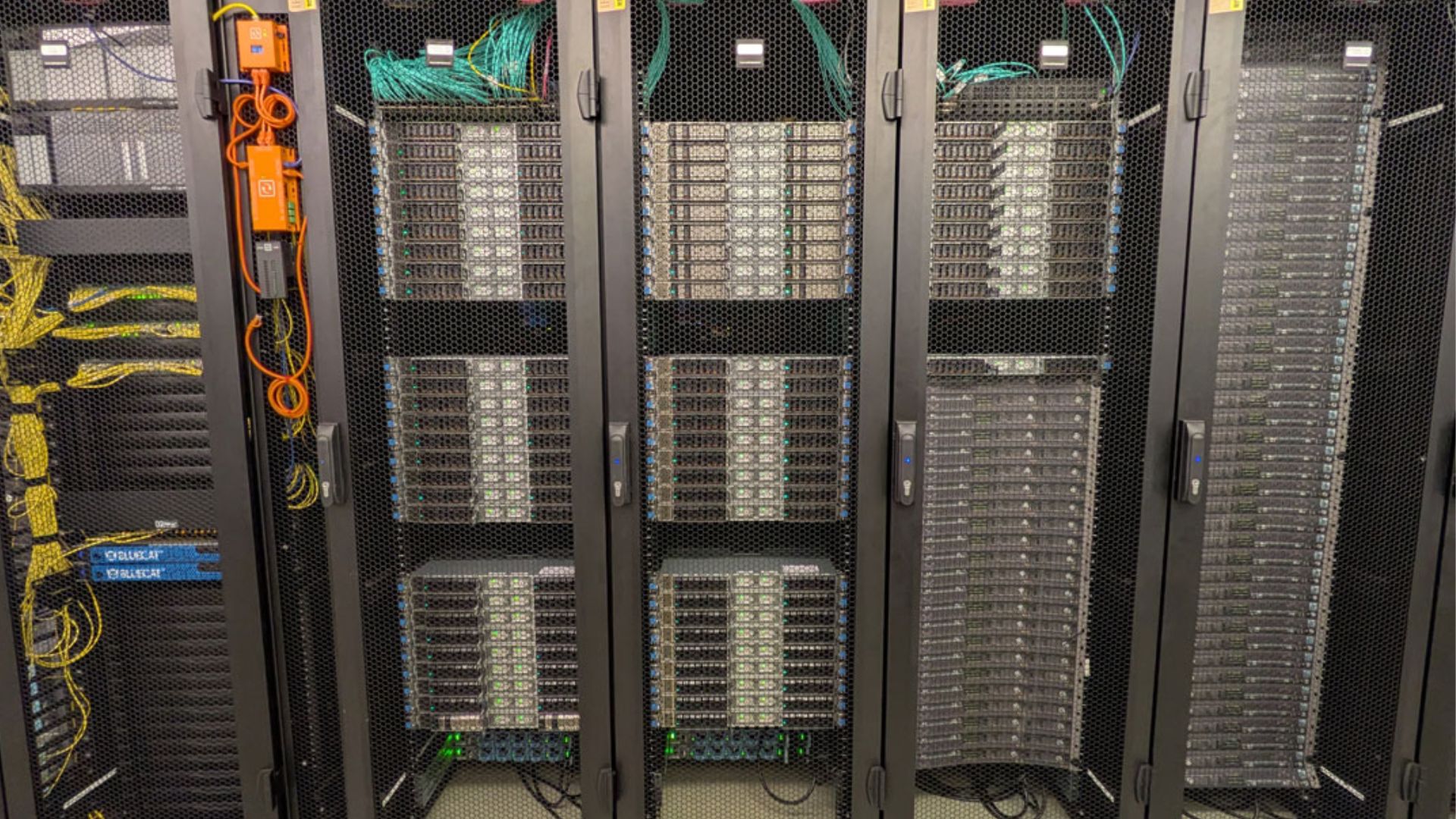
Rochester, New York – Rochester Institute of Technology is expanding the computing power available to its researchers with a new high-performance computing system that has earned recognition on two international rankings of supercomputers.
Known as TIGRIS, the new computing cluster is now ranked among the world’s fastest and most energy-efficient systems. It appears at No. 302 on the TOP500 list, which ranks the world’s fastest supercomputers. TIGRIS also ranks No. 18 among systems operated by academic institutions in the United States.
The system has also received a strong position on the Green500 list, which focuses on energy efficiency. TIGRIS is ranked No. 82 worldwide and No. 15 among U.S. academic institutions on that list.
For RIT, however, the new rankings are only part of the story. The university’s Research Computing team says the larger goal is to give faculty members, students and research groups more computing power without requiring each team to purchase and maintain its own specialized equipment.
TIGRIS was launched this summer as the newest high-performance computing cluster supporting research across the university. Compared with SPORC, RIT’s previous system, TIGRIS provides three times the central processing unit performance and seven times the graphics processing unit performance.
The difference is already being felt by researchers. Computing jobs that previously waited an average of six hours before processing on SPORC can now begin in about 18 minutes on TIGRIS. For research projects that require large amounts of computing power, that change can make a major difference in how quickly researchers can move forward.
“Our goal was to provide a resource that allows researchers to focus on their discoveries rather than spending time managing hardware and software,” said Matangi Buch, executive director of Research Computing. “TIGRIS allows researchers to get faster results, opening up new possibilities for research across RIT.”
High-performance computing is used at RIT for projects that can be too complicated or demanding for conventional computers. Researchers work with large amounts of information and simulations that can require significant processing power.
Among the university’s research areas are studies of supermassive black hole mergers, biological systems and large genomic datasets. Other researchers use simulations at the atomic level to examine materials that could be used in next-generation fuel cells.
The increased capacity provided by TIGRIS gives those researchers the opportunity to work with larger and more complex projects. Faster processing can also reduce the time between running a simulation and examining its results, allowing researchers to adjust their work and conduct additional analysis sooner.
The system is also designed to support collaboration. Because the computing infrastructure is shared, research teams from different colleges, centers and institutes can use the same university-supported resource.
For researchers working with large datasets, shared computing and storage can be particularly useful. Stefan Schulze, an assistant professor in RIT’s School of Life Sciences, said the university’s computing resources have become an important part of his research.
“Research Computing has been an invaluable resource for our research,” said Stefan Schulze, assistant professor in RIT’s School of Life Sciences. “Access to university-supported computing and shared data storage allows us to work with large datasets and gives multiple students the ability to access and process them efficiently.”
TIGRIS was developed through collaboration with Nvidia, Supermicro and Chilldyne. One of its notable features is its liquid-cooling technology, which helps the system handle its computing workload while keeping energy use under control.
That cooling approach is part of the reason the system has been recognized on the Green500. The ranking evaluates supercomputers based on their energy efficiency, adding another measure of performance beyond raw computing speed.
The new cluster builds on years of work by RIT Research Computing. The organization provides much more than computing hardware. Its services include high-performance computing, research data storage, software support, training, workflow optimization, assistance with grant proposals and other forms of research support.
According to Research Computing, the organization has supported more than 830 scholarly works since 2016. Over the past decade, its resources have also supported hundreds of faculty members, more than 1,600 students and millions of computing jobs.
That scale reflects how computing has become an important part of research in fields that might once have relied less heavily on advanced computer systems. Today, researchers across different disciplines can use simulations, large datasets and computational models to investigate questions that would otherwise be difficult to study.
TIGRIS adds another layer to that university-wide infrastructure. By increasing processing capacity and cutting waiting times, the system gives researchers more time to concentrate on their projects rather than waiting for computing resources to become available.
The project also reflects RIT’s broader effort to build a research environment where specialized technology can be shared. Instead of limiting advanced computing to a small number of research groups, the university provides access across its colleges and research organizations.
Researchers and students interested in using TIGRIS or accessing RIT’s other Research Computing services can find information through the university’s Research Computing program. The available resources include project requests, user guides, resource-allocation tools, training opportunities, events and consultation services.
With its new cluster now appearing on both the TOP500 and Green500 lists, RIT’s computing infrastructure has gained international attention while becoming a practical resource for research taking place across the university. The faster system gives researchers additional room to tackle larger datasets, more detailed simulations and increasingly demanding scientific questions.


-

 Local News1 year ago
Monroe County announces legal proceedings against properties listed in official public notice of foreclosure
-

 Local News2 years ago
New ALDI store close to Rochester to begin construction in late 2025 or early 2026
-

 Local News1 year ago
County Executive Adam Bello and members of the county legislature celebrate exceptional young leaders and advocates at the 2025 Monroe County Youth Awards
-

 Local News1 year ago
The 2025 Public Market Food Truck Rodeo series will begin this Wednesday with live music by the Royal Bromleys