Local News
RIT researchers advance prosthetic technology with new materials, smart sensors and 3D bioprinting innovations designed to improve function and comfort

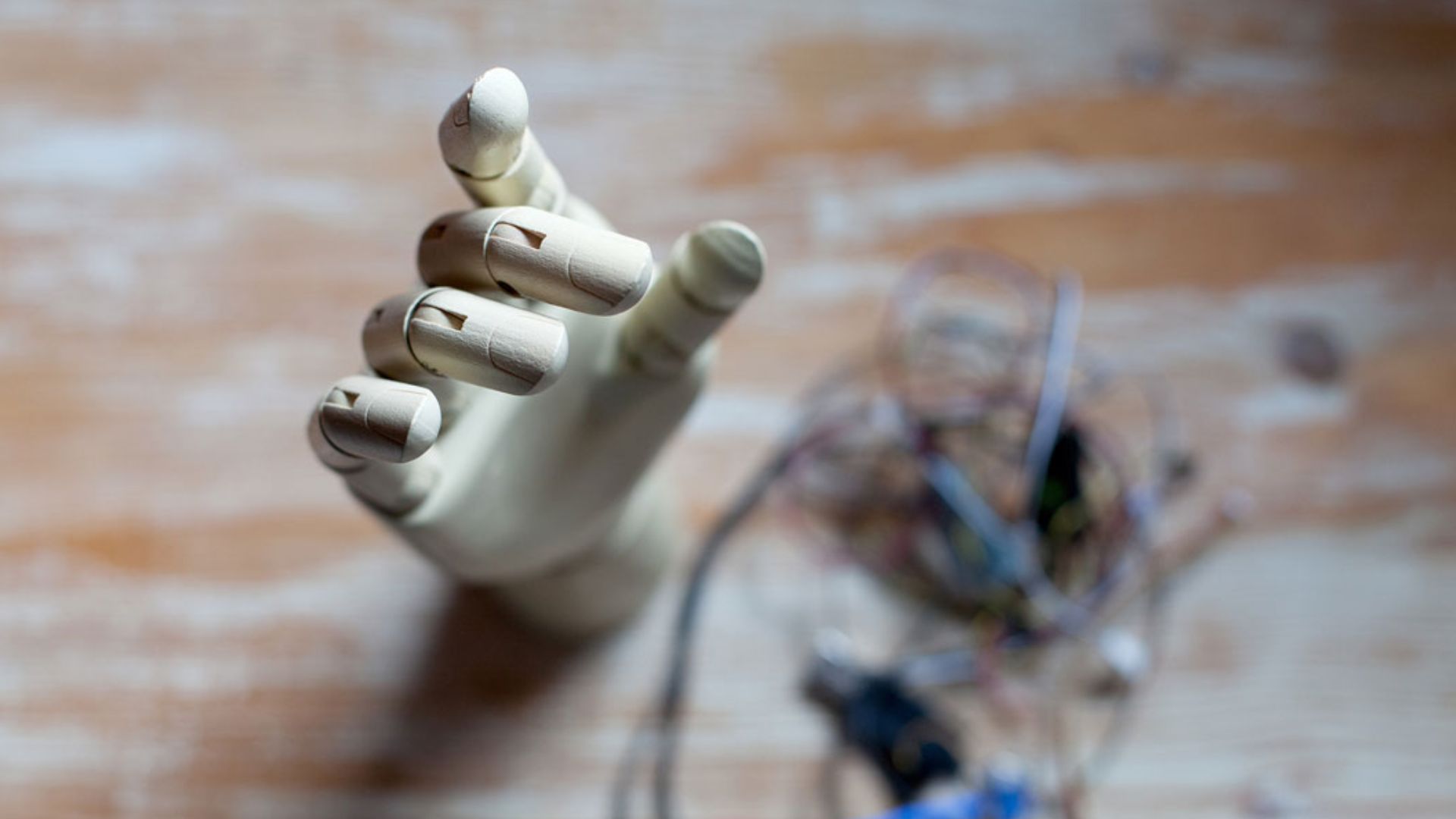
Rochester, New York – Researchers at Rochester Institute of Technology are taking a new approach to prosthetic finger design, combining advanced materials, sensors, mechanical engineering and 3D bioprinting in one system. The goal is straightforward but ambitious: create prosthetic devices that can more closely reproduce the flexibility, strength and touch-related functions of a human finger.
The research brings together faculty members from RIT’s campuses in Rochester and Dubai. Rather than developing individual parts of a prosthetic separately, the team combined several technologies that are often studied on their own. The result is a customizable prototype that uses different materials and manufacturing techniques to address some of the long-standing challenges in prosthetic design.
Human fingers are remarkably complicated. They contain multiple bones and are covered by sensitive skin, allowing people to perform movements that range from simple pointing to carefully lifting an object. Reproducing those abilities in a prosthetic device requires more than creating a mechanical structure that can move.
The RIT researchers focused on four major areas of development: hybrid materials, electromechanical systems, mechanical properties and 3D bioprinting. Each member of the team brought a different area of expertise, allowing the researchers to build a more complete system than would likely have been possible through a single discipline.
Ahasan Habib, an assistant professor of mechanical and mechatronics engineering technology in RIT’s College of Engineering Technology, said customization is one of the biggest needs in modern prosthetics.
“One of the greatest needs in prosthetics is the ability to produce patient-specific devices that closely match an individual’s anatomy, mechanical properties, and functional requirements,” said Habib. “Traditional manufacturing methods often have limitations in producing complex, customized structures. Our approach has the potential to improve comfort, performance, accessibility, and ultimately the quality of life for prosthetic users.”
Habib worked with Krittika Goyal and Jun Han Bae, both assistant professors in RIT’s College of Engineering Technology, along with Salman Pervaiz, an RIT Dubai engineering professor and director of materials and advanced manufacturing research.
Their findings were published in the Spring 2026 issue of the Journal of Manufacturing and Materials Processing.
One of the central elements of the project was the use of hybrid materials. The researchers worked with a biodegradable thermoplastic and a heat-resistant silicone, optimizing the materials for properties needed in a prosthetic structure. The materials were selected and developed with flexibility, strength and biocompatibility in mind.
That combination is important because prosthetic devices need to withstand physical use while remaining flexible enough to perform useful movements. A material that is strong but too rigid would not provide the same type of movement needed for a finger. At the same time, a device that is highly flexible but lacks strength could have difficulty handling everyday tasks.
The researchers also developed advanced 3D-printing methods for working with the hybrid materials. Their approach improved extrusion and printing performance while creating more opportunities to customize the final product.
Customization could become particularly important for prosthetic users because no two patients have exactly the same anatomy or functional needs. A device designed around an individual’s requirements could potentially provide a better fit than a standardized design.
Another major part of the research involved sensors. The team created what it describes as “smart” sensors using the new materials and piezoelectric principles. Certain materials can generate electrical properties when exposed to mechanical pressure or stimulation, and the researchers used that behavior to help the prosthetic recognize tactile input.
In practical terms, the technology is intended to give the device a better sense of touch. A prosthetic that can detect tactile stimulation has the potential to respond differently depending on how it interacts with an object, rather than functioning only as a simple mechanical gripping tool.
Mechanical properties were also integrated into the overall design to support more natural use. The researchers were therefore not treating materials, printing, sensing and movement as separate problems. Instead, the project connects them as parts of one prosthetic system.
That approach addresses several issues that have challenged prosthetic development. Research groups have previously explored additive manufacturing and sensor technologies, but separately developed components do not always work together effectively. Concerns can include mechanical durability, the fit between a person’s limb and the prosthetic, and inconsistencies in 3D-printing quality.
The RIT team sought to bridge some of those gaps with a customizable and potentially affordable prototype. The researchers also outlined a development process that moves from material selection through 3D-printing functions while checking that the resulting structures maintain both strength and tactile capabilities.
The work comes as demand for prosthetic limbs continues to grow. More than 185,000 amputations occur each year in the United States, while more than 1 million limb amputations take place globally each year, according to figures cited by ProMedical East and the Amputee Coalition.
With that need comes pressure to develop prosthetics that are not only functional but also accessible in terms of cost. Advanced technology can improve performance, but if a device is too expensive or difficult to manufacture, its practical reach can be limited.
The RIT researchers believe their approach could provide a foundation for further development and eventual commercialization. The prototype is not presented as a finished replacement for every existing prosthetic device. Instead, it represents a way to combine several technologies into a single customizable platform.
Salman Pervaiz said the future of prosthetics will require both multi-material manufacturing and smarter systems capable of doing more than simply gripping.
“As we talk about the future of prosthetics, there are two components that need to be involved. The first was to bring together multi-material printing, so it’s not like the whole prosthetic should be printed with one material. The second was to make it smart, so it can be used not only for gripping but other functions,” said Pervaiz. “Capability-wise, we are there. We all have very good capabilities in each of our labs. I also think that we all share the same DNA as an RIT family of researchers.”
The collaboration between researchers in Rochester and Dubai highlights the value of bringing different engineering specialties together around a common problem. Materials scientists, manufacturing researchers and engineers can each solve part of the challenge, but combining those contributions can open the door to more complete designs.
For RIT, the prosthetics project is also part of a broader research effort aimed at applying technology to practical problems. The university’s research enterprise focuses on advancing knowledge, addressing complex challenges and creating impact across disciplines.
During the past year, RIT received $105 million for faculty and student research, including total research funding as well as National Science Foundation awards and CAREER Award submissions.
The prosthetics research fits into that wider mission by connecting advanced manufacturing with human needs. By combining flexible and durable materials, customizable 3D printing, tactile sensors and mechanical engineering, the researchers are working toward prosthetic devices that could eventually feel and function more naturally.
The next steps will determine how far the prototype can move toward real-world use. But the researchers’ work demonstrates a clear shift in prosthetic design: instead of relying on one material or one technology, future devices may depend on several systems working together, with customization and sensing built into the structure from the beginning.


-

 Local News1 year ago
Monroe County announces legal proceedings against properties listed in official public notice of foreclosure
-

 Local News2 years ago
New ALDI store close to Rochester to begin construction in late 2025 or early 2026
-

 Local News1 year ago
County Executive Adam Bello and members of the county legislature celebrate exceptional young leaders and advocates at the 2025 Monroe County Youth Awards
-

 Local News1 year ago
The 2025 Public Market Food Truck Rodeo series will begin this Wednesday with live music by the Royal Bromleys