Local News
RIT professor expands Great Lakes microplastics research into Georgian Bay

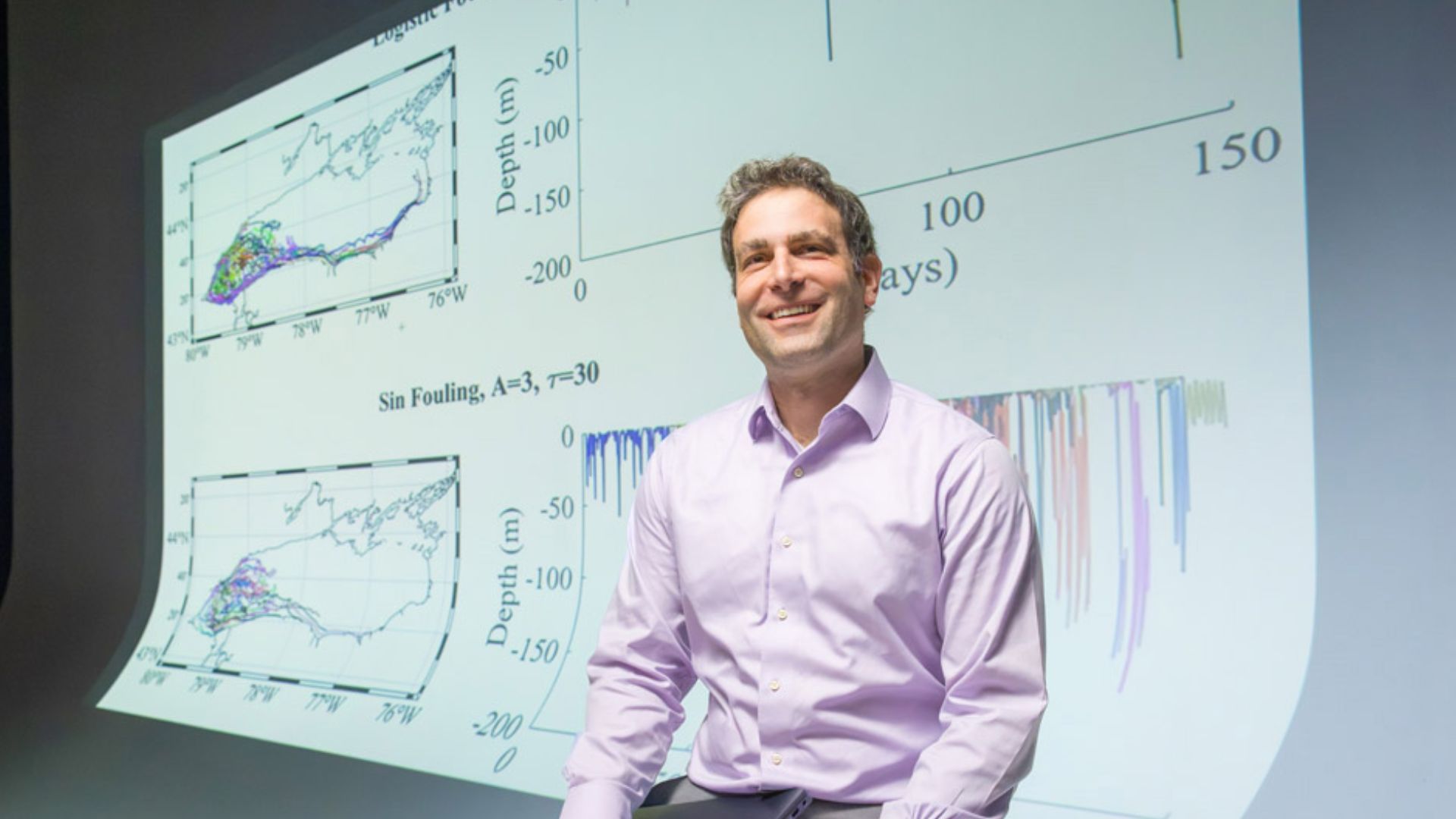
Rochester, New York – Microplastic pollution in the Great Lakes is once again at the center of a major scientific effort, as a Rochester Institute of Technology researcher expands years of work into a new region of Canada. The latest project will focus on Georgian Bay, part of Lake Huron, where researchers hope to better understand how tiny plastic particles move through the water and what risks they pose to the ecosystem.
RIT Professor Matthew Hoffman is joining a collaborative research team led by scientists from the University of Michigan to investigate the spread and behavior of microplastics throughout Georgian Bay. The initiative is one of five U.S.-based research projects recently announced by Georgian Bay Forever, a Canadian nonprofit organization dedicated to conserving, protecting, and restoring the bay’s aquatic environment. The work is being supported through funding from an anonymous foundation.
The research builds on Hoffman’s extensive experience studying microplastics in Lake Ontario, where he has spent years developing mathematical models that track how these tiny plastic fragments travel through freshwater systems. Rather than starting from scratch, the new project allows the team to adapt proven techniques and apply them to another important part of the Great Lakes.
“The cool part about this project is that a lot of the methods that I’ll be using are basically what we’re doing as part of the Lake Ontario Center for Microplastics,” said Hoffman.
Microplastics, which are defined as plastic particles measuring less than five millimeters in size, are created as larger plastic products gradually break apart. Everyday items such as food packaging, plastic bottles, bottle caps, shopping bags, drinking straws, and cigarette butts all contribute to the growing presence of these microscopic pollutants. Once they enter lakes and rivers, the particles can persist in the environment and potentially affect aquatic life.
Read also: Attorney General James challenges EPA rollback of climate protections in federal court
Hoffman’s involvement in microplastics research stretches back more than a decade. Over that time, he has led interdisciplinary studies that have attracted both federal and state funding, helping establish a strong research program at RIT focused on understanding the movement and environmental impacts of plastic pollution in freshwater ecosystems.
The partnership behind the Georgian Bay project came together through an unexpected meeting. Last December, Hoffman traveled to Ann Arbor, Michigan, to present a seminar at the Cooperative Institute for Great Lakes Research. During the visit, he met Melissa Duhaime, the project’s principal investigator. The two scientists realized they had independently been considering applying for the same funding opportunity. Instead of competing, they decided to combine their expertise and submit a joint proposal.
Fieldwork for the project began this summer. Duhaime is collecting water and sediment samples from locations throughout Georgian Bay while examining the particles’ size, shape, and polymer composition. Those measurements will provide the detailed information Hoffman needs to build computer models capable of estimating how microplastics move across the bay and how concentrations may vary from one area to another.
Using those models, the research team hopes to predict not only where microplastics accumulate but also how different particle sizes are distributed across the region. The findings are expected to support future ecological risk assessments and provide valuable information for scientists and environmental organizations working to protect the bay.
Read also: Governor Hochul defends New York’s AI data center strategy in Wall Street Journal letter
“I’m able to take a lot of the same skills and hopefully a lot of the same codes being used for Lake Ontario and apply it to a different domain,” added Hoffman. “It will be exciting to compare and to have this in two different regions.”
The Georgian Bay project also reflects the growing reach of Hoffman’s work beyond Lake Ontario. His research has increasingly expanded across the Great Lakes, and he has previously collaborated on scientific studies in Canada through the pELAstic Project at the IISD Experimental Lakes Area. That experience provides additional insight into freshwater ecosystems and strengthens international partnerships focused on tackling plastic pollution.
As scientists continue to uncover the widespread presence of microplastics in lakes around the world, projects like this one aim to provide a clearer picture of how these pollutants behave in large freshwater environments. By combining field observations with advanced mathematical modeling, the researchers hope to generate information that can guide future conservation efforts and help safeguard one of North America’s most significant freshwater regions.


-
 Local News2 years ago
Monroe County announces legal proceedings against properties listed in official public notice of foreclosure
-

 Local News2 years ago
New ALDI store close to Rochester to begin construction in late 2025 or early 2026
-

 Local News2 years ago
County Executive Adam Bello and members of the county legislature celebrate exceptional young leaders and advocates at the 2025 Monroe County Youth Awards
-

 Local News1 year ago
The 2025 Public Market Food Truck Rodeo series will begin this Wednesday with live music by the Royal Bromleys