Local News
Governor Hochul announces 23 transformational downtown revitalization projects across the Finger Lakes under DRI and NY Forward programs to boost housing, business growth, and community development

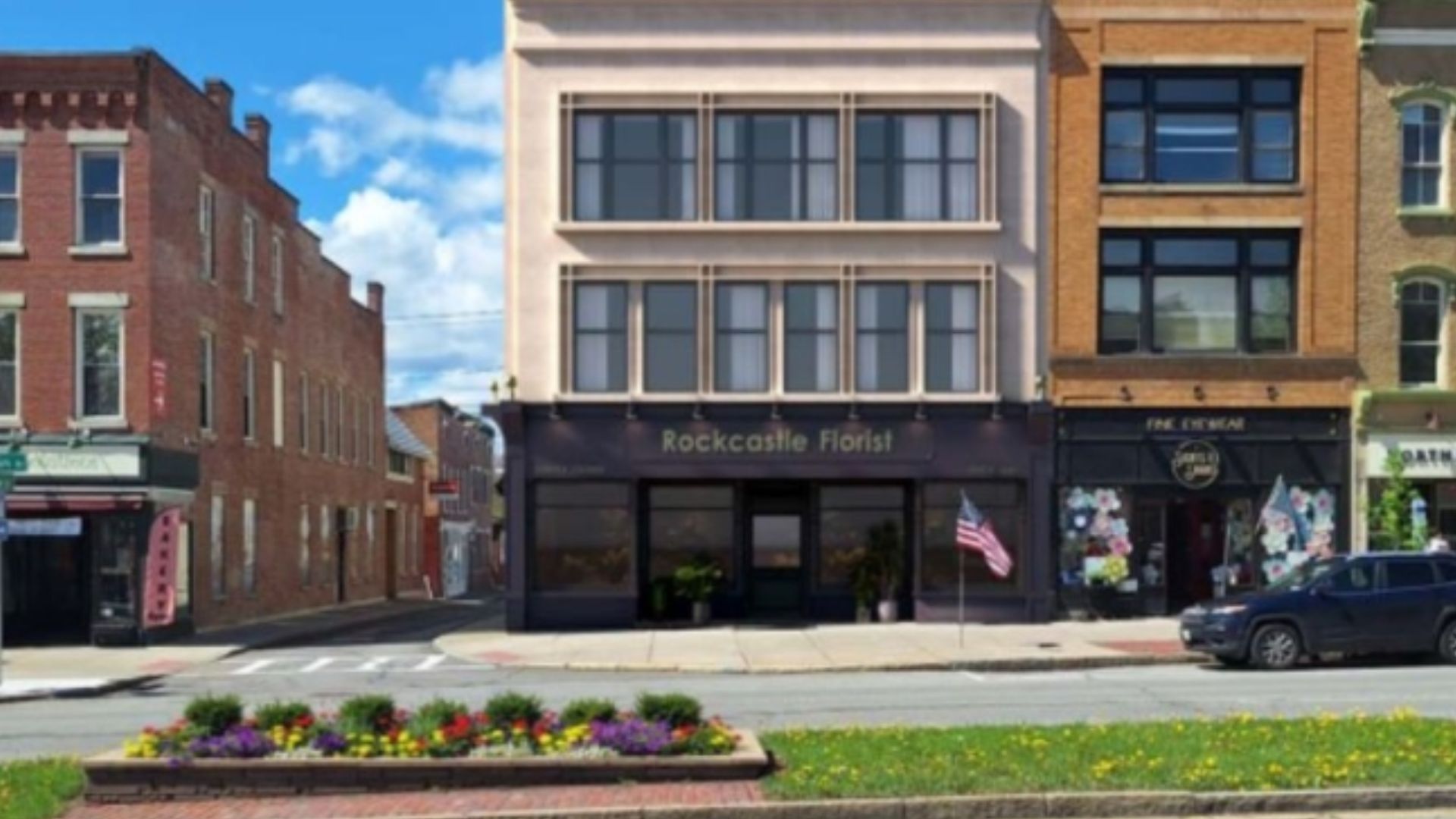
New York – New York State is moving forward with one of its largest regional revitalization pushes in recent years, announcing 23 transformational projects across three Finger Lakes communities under the Downtown Revitalization Initiative (DRI) and NY Forward programs. Governor Kathy Hochul made the announcement today, highlighting investments aimed at reshaping downtowns, expanding housing, and strengthening local economies in Canandaigua, Brockport, and Phelps.
The funding package, totaling roughly $18.7 million across the three communities, is expected to support long-term redevelopment plans designed locally and refined through strategic planning processes. Officials say the projects are not isolated upgrades but interconnected efforts meant to change how residents live, work, and move through their downtown areas.
At the center of the announcement is a shared theme that has been repeated across state economic development programs in recent years — downtowns are no longer just commercial corridors. They are being reimagined as residential hubs, cultural spaces, and engines of community identity.
Governor Hochul emphasized that vision while connecting the effort to broader statewide priorities.
“When I think about my hometown in Buffalo, I think about everything that brought my community together,” Governor Hochul said. “New Yorkers have pride in where they’re from, and the heart of their neighborhoods should be lively, expressive and bold — that’s what we bring forward when we invest in change. The Downtown Revitalization Initiative and NY Forward programs continue to unlock opportunities across the state, and the Finger Lakes are going to see tremendous growth from these transformational projects.”
Her remarks reflect a continuing focus on place-based investment strategies that have become a signature of the DRI and NY Forward programs since their launch. Rather than distributing small, isolated grants, the state is concentrating funding into coordinated packages meant to generate visible change within defined downtown boundaries.
Officials say each community first developed a Strategic Implementation Plan, or SIP, which lays out a vision for redevelopment based on local input. These plans are shaped through Local Planning Committees that include municipal leaders, business owners, residents, and regional stakeholders. With support from consultants and state agencies, these committees identify priority projects with the greatest potential impact.
The result is a curated list of developments that blend housing, infrastructure, public space improvements, and cultural investment — all intended to reinforce each downtown’s identity while expanding economic opportunity.
Canandaigua at the center of Finger Lakes growth
In the City of Canandaigua, which received $9.7 million in funding under the DRI program, the state is backing 10 major projects aimed at strengthening the downtown core and preparing the area for anticipated growth linked to the semiconductor industry and broader regional expansion.
Officials describe Canandaigua’s downtown as both a residential and recreational hub, with Main Street serving as a focal point for businesses, housing, and community life. The city’s long-term vision includes a stronger mix of retail, residential units, arts spaces, and public gathering areas.
One of the most notable investments is a $600,000 Small Project Grant Fund designed to support ongoing revitalization efforts. The fund will help finance smaller upgrades such as façade improvements, public art installations, and new business ventures, creating a flexible tool for continuous downtown improvement.
Housing development plays a major role in the Canandaigua plan. Multiple projects focus on converting underused or historic buildings into residential units. For example, 100 South Main Street will undergo a $1.248 million renovation to create new apartments and improve its exterior appearance. Similarly, 88-92 South Main Street will see upper-floor redevelopment into residential housing, expanding downtown population density.
Another major residential project at 143 South Main Street will reactivate the building’s second floor, turning it into new apartments while preserving its historic character. Officials say these efforts are aimed at increasing downtown residency, which in turn supports local businesses and strengthens economic activity after business hours.
Public space improvement is another core focus. A $1.144 million investment will enhance Central on Main, a popular community gathering space, improving its design and usability. Officials say the upgrade is intended to reflect its growing popularity and encourage year-round use.
Transportation and pedestrian accessibility are also being addressed. Phoenix Street will be redesigned as a pedestrian-friendly corridor with outdoor dining potential, while Coach Street will be transformed into an improved east-west connector linking Main Street with surrounding commercial areas.
Additional projects include expanding Peacemaker Brewing Company to accommodate more visitors and live music events, creating a creativity hub at 97 South Main Street, and preserving City Hall through structural repairs and restoration work.
Each project is designed to reinforce downtown Canandaigua as a mixed-use district where residential life, business activity, and cultural events intersect.
Brockport focuses on accessibility, housing, and canalfront growth
In the Village of Brockport, located along the Erie Canal, six projects totaling $4.5 million will focus on improving accessibility, strengthening housing supply, and enhancing public spaces.
Brockport’s downtown is known for its historic character and its role as both a college town and a regional gathering place. Officials say the NY Forward program aims to build on that identity while making the area more attractive for tourism and long-term residential growth.
A key investment is the $1.412 million Clinton Street Streetscape project, which will improve pedestrian safety and enhance the visual character of one of the village’s main corridors. The goal is to better connect Clinton Street with Main Street while making the area more walkable and inviting.
Housing development is again a central theme. At 41 Clark Street, a $820,000 project will transform a blighted property into new townhomes, expanding housing options in the downtown area. Another major initiative will convert vacant land at 60-90 Clinton Street into canal-front workforce housing, supported by a $1.5 million investment.
Officials say this waterfront development is particularly significant because it activates underused space while adding residential density near key transportation and recreational corridors.
Public amenities are also part of the plan. The Brockport Welcome Center will be upgraded with accessible outdoor seating to better serve events and community gatherings. Meanwhile, the village fire station will receive modernized bay doors to improve both functionality and downtown aesthetics.
A $345,000 Small Project Grant Fund will also support property improvements, signage upgrades, and public art, giving local businesses more flexibility to invest in their surroundings.
Phelps invests in downtown identity and community spaces
In the Village of Phelps, seven NY Forward projects totaling $4.5 million will focus heavily on downtown beautification, community facilities, and adaptive reuse of historic buildings.
Phelps, a smaller but historically significant community, is using its funding to enhance walkability and strengthen its identity as a connected, accessible downtown with parks, cultural spaces, and community venues.
A $750,000 investment will upgrade Crooked Bridge Park with an ADA-accessible walking trail, a three-season pavilion, and improved access to Flint Creek. Officials say the goal is to make the park a year-round destination for recreation and events.
Housing and hospitality are also part of the plan. The historic Phelps Hotel will receive $975,000 to restore its dining areas, bar, and banquet facilities while adding a rooftop terrace. The project is intended to re-establish the hotel as a downtown anchor.
Another major redevelopment includes transforming the Phelps Community Center cafeteria into a multi-purpose space featuring a teaching kitchen, flexible event space, and outdoor plaza, supported by $1.35 million in funding.
Smaller but targeted investments include upgrades to Smokin’ Tails Distillery for expanded event space, improvements to streetscapes along Main and Church Streets, and activation of 114 Main Street with ADA access upgrades and a new studio apartment on the third floor.
Officials say these projects collectively aim to create a more walkable, visually appealing downtown where residents and visitors can easily move between destinations.
Housing policy and statewide impact
State officials emphasized that all three communities participating in this funding round are certified under Governor Hochul’s Pro-Housing Communities Program. That certification is required to access DRI and NY Forward funding and signals that municipalities are actively working to expand housing supply.
More than 410 communities across New York have now earned this designation, including Canandaigua, Brockport, and Phelps.
The broader strategy links downtown revitalization directly with housing development. State officials note that DRI and NY Forward projects have already supported more than 5,000 housing units statewide, with a significant portion classified as affordable or workforce housing.
The programs have also contributed to childcare infrastructure investments, public parks, cultural spaces, and public art installations, reflecting a wider approach to community development that goes beyond traditional economic incentives.
New York Secretary of State Walter T. Mosley said, “The Finger Lakes is flourishing into a place filled with so much community pride and endless potential, and these latest investments build on that strong foundation to support a new generation of growth and opportunity. Through the DRI and NY Forward, we are empowering local leaders to advance projects that enhance downtown living, support small businesses, and create inviting public spaces. Each project reflects the unique identity of these downtowns while contributing to a more connected and economically vibrant region. We are proud to support these communities and help move the Finger Lakes forward in their revitalization efforts!”
Empire State Development President Hope Knight also underscored the long-term goal of turning downtowns into engines of growth that support both residents and visitors. Housing, infrastructure, and public space improvements, she said, are key to making that vision work in practice.
Homes and Community Renewal Commissioner RuthAnne Visnauskas highlighted the link between revitalization and housing affordability, noting that expanding supply is central to long-term economic stability. Investments in walkability, housing diversity, and community spaces are intended to make these downtowns more livable and resilient.
Regional leaders echoed that sentiment. Finger Lakes Regional Economic Development Council Co-Chairs Bob Duffy and Dr. DeAnna R. Burt-Nanna described the 23 projects as community-driven investments that will strengthen the region’s identity while encouraging future growth.
Local officials in Canandaigua and Phelps also expressed gratitude for the funding, saying the projects will help accelerate development plans already underway and attract new residents, businesses, and visitors.
A broader strategy of long-term transformation
The Downtown Revitalization Initiative and NY Forward program represent a long-term planning approach that began in 2016. Since then, the DRI alone has awarded approximately $1 billion to more than 100 communities statewide, with additional funding rounds planned in future budgets.
NY Forward, launched in 2022, expands that model to smaller and rural communities, ensuring that towns outside major urban centers can also access targeted revitalization funding.
State officials say the combination of both programs is designed to ensure that growth is not concentrated in only a few large cities but spread across regions, allowing smaller communities to compete for investment, talent, and tourism.
As construction timelines begin and planning transitions into execution, the Finger Lakes region now enters a new phase — one where ideas on paper begin to take physical shape in brick, wood, parks, streetscapes, and restored historic buildings.
For Canandaigua, Brockport, and Phelps, the next few years will determine how quickly these visions become visible reality.


-
 Local News2 years ago
Monroe County announces legal proceedings against properties listed in official public notice of foreclosure
-

 Local News2 years ago
New ALDI store close to Rochester to begin construction in late 2025 or early 2026
-

 Local News1 year ago
County Executive Adam Bello and members of the county legislature celebrate exceptional young leaders and advocates at the 2025 Monroe County Youth Awards
-

 Local News1 year ago
The 2025 Public Market Food Truck Rodeo series will begin this Wednesday with live music by the Royal Bromleys