Local News
RIT joins forces with the U.S. Army to expand STEM education and strengthen the nation’s future workforce

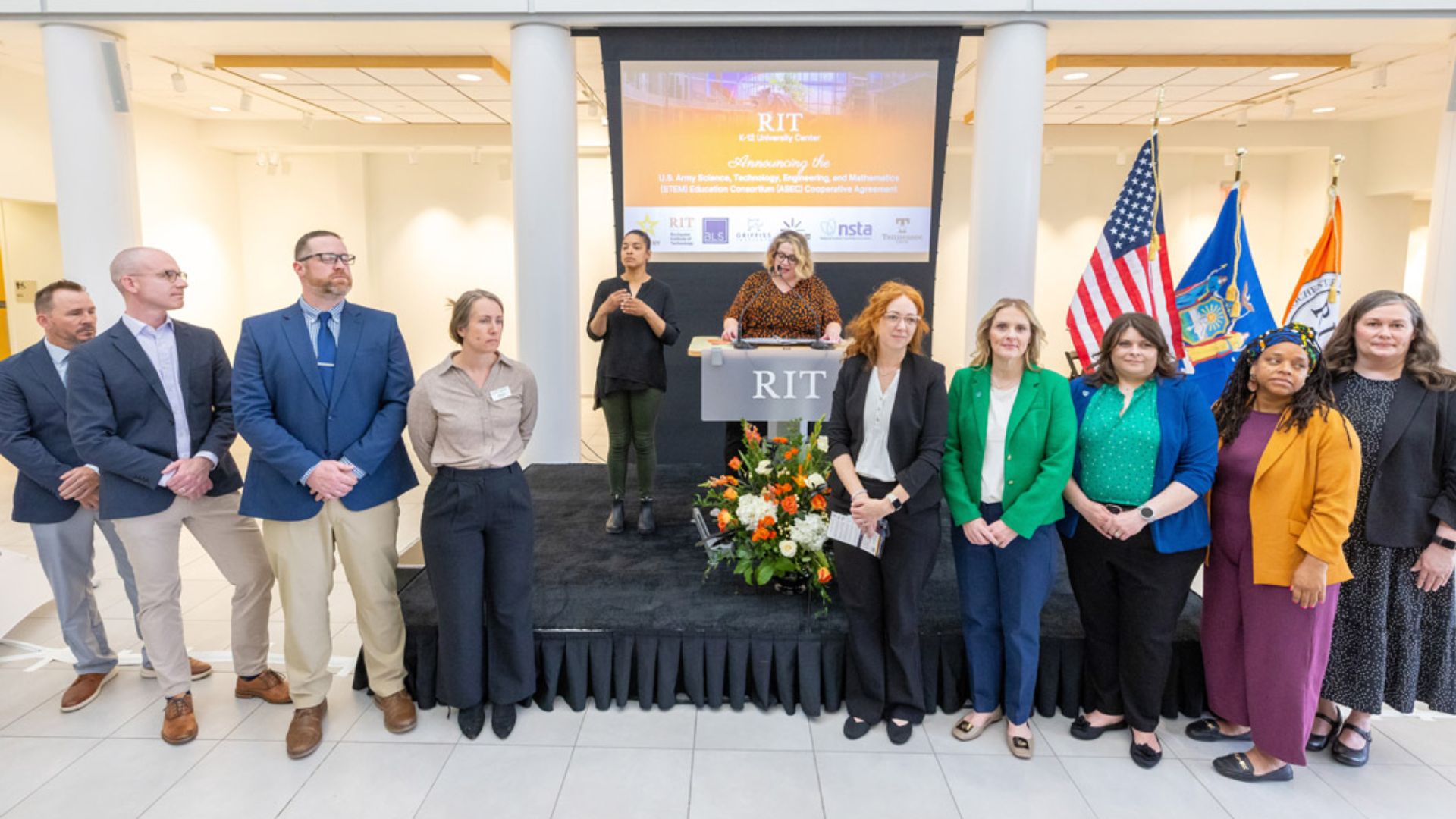
Rochester, New York – Rochester Institute of Technology is stepping into a major national leadership role after being selected by the U.S. Department of the Army to head a sweeping effort aimed at strengthening the country’s future science and technology workforce.
The university recently received a premier cooperative agreement through Army STEM, a program focused on science, technology, engineering and mathematics education. The award places RIT at the center of the newly established Army STEM Education Consortium, known as ASEC, a large-scale collaboration designed to expand STEM opportunities for students and educators across the United States.
The initiative reflects growing national concern over the need for a stronger pipeline of scientists, engineers and technology professionals capable of supporting both economic growth and national security priorities in the decades ahead.
Under the agreement, RIT will oversee a nationwide network of academic institutions, nonprofits, private organizations and government partners working together to deliver STEM education and workforce development programs. The effort will stretch across nearly every stage of learning, beginning with elementary school students and continuing through postdoctoral research.
University leaders say the mission goes beyond classroom instruction. The consortium plans to create hands-on learning experiences, mentorship opportunities, internships, competitions and teacher training programs designed to keep students engaged in STEM fields for the long term.
“The future of STEM education and workforce development is rapidly evolving,” said Donna Burnette, executive director of RIT’s K-12 University Center and ASEC chair and principal investigator. “To remain effective and impactful, Army STEM must be flexible, adaptive, and innovative and anticipate the needs of the future workforce and the mission it supports.”
Officials involved with the project believe early exposure to STEM education can have lasting effects on students’ career paths. ASEC intends to build what leaders describe as a connected ecosystem where students can continue advancing through different levels of engagement as they grow academically and professionally.
That approach could allow young participants who first enter STEM programs in elementary or middle school to later return as mentors, researchers, educators or industry professionals, helping strengthen the broader national network over time.
RIT President Bill Sanders said the broad scale of the initiative is one of its defining strengths. Rather than focusing narrowly on one career track, the consortium aims to expose students to a wide range of possibilities within science and technology fields.
“Through this consortium, RIT will coordinate a nationwide network of partners to deliver STEM education and workforce development programs that reach students and educators from elementary school through postdoctoral study,” Sanders said. “This is not about steering students toward a single career, but about opening doors to exploration, preparation, and possibility.”
The consortium itself brings together organizations with expertise spanning education, communications, analytics and workforce development. Alongside RIT, participating partners include Blake Learning Solutions, Griffiss Institute, ICF Incorporated, National Science Teaching Association and Tennessee Technological University.
Each partner is expected to contribute specialized capabilities to the project, ranging from educator engagement and strategic communication to research support and data analysis.
Burnette said the collaborative structure is one of the reasons the consortium has the potential to make a lasting impact nationwide.
“Together, we have assembled a remarkable group of organizations, each bringing deep expertise, unique capabilities, and a shared commitment to preparing the next generation of scientists, engineers, and innovators who will contribute to the Army’s mission.”
The agreement is being administered through the U.S. Army Combat Capabilities Development Command on behalf of the assistant secretary of the Army for Acquisition, Logistics, and Technology.
Army officials say the long-term goal is not simply filling jobs, but building a sustainable workforce capable of adapting to rapid technological change and increasingly complex global challenges.
Emerging technologies such as artificial intelligence, advanced robotics, cybersecurity systems and autonomous platforms are transforming both civilian industries and defense operations. Leaders behind the consortium believe the country’s ability to remain competitive will depend heavily on preparing students early and supporting them throughout their educational journeys.
“The Army STEM Education Consortium (ASEC) is a vital investment in our nation’s scientific and innovative future,” said Brian Leftridge, STEM program manager and ASEC cooperative agreement manager for U.S. Army DEVCOM. “By cultivating a diverse STEM talent pipeline from early education through postgraduate research, ASEC builds the expert workforce required for tomorrow’s research and development. This sustainable talent pool equips the Army and the nation to master emerging technologies and solve the world’s most complex technical challenges.”
For RIT, the agreement also reinforces the university’s growing reputation as a national leader in STEM-focused education and applied research. By coordinating efforts across multiple sectors and educational levels, university officials hope the consortium will create opportunities reaching communities far beyond traditional college campuses.
As the program begins taking shape, leaders say its success will ultimately depend on sustained collaboration, innovation and the ability to inspire students long before they enter the workforce.


-

 Local News1 year ago
Monroe County announces legal proceedings against properties listed in official public notice of foreclosure
-

 Local News2 years ago
New ALDI store close to Rochester to begin construction in late 2025 or early 2026
-

 Local News1 year ago
County Executive Adam Bello and members of the county legislature celebrate exceptional young leaders and advocates at the 2025 Monroe County Youth Awards
-

 Local News1 year ago
The 2025 Public Market Food Truck Rodeo series will begin this Wednesday with live music by the Royal Bromleys