Local News
NTID student Blake Culley discovers a meaningful career path in Deaf education after an unexpected professional journey

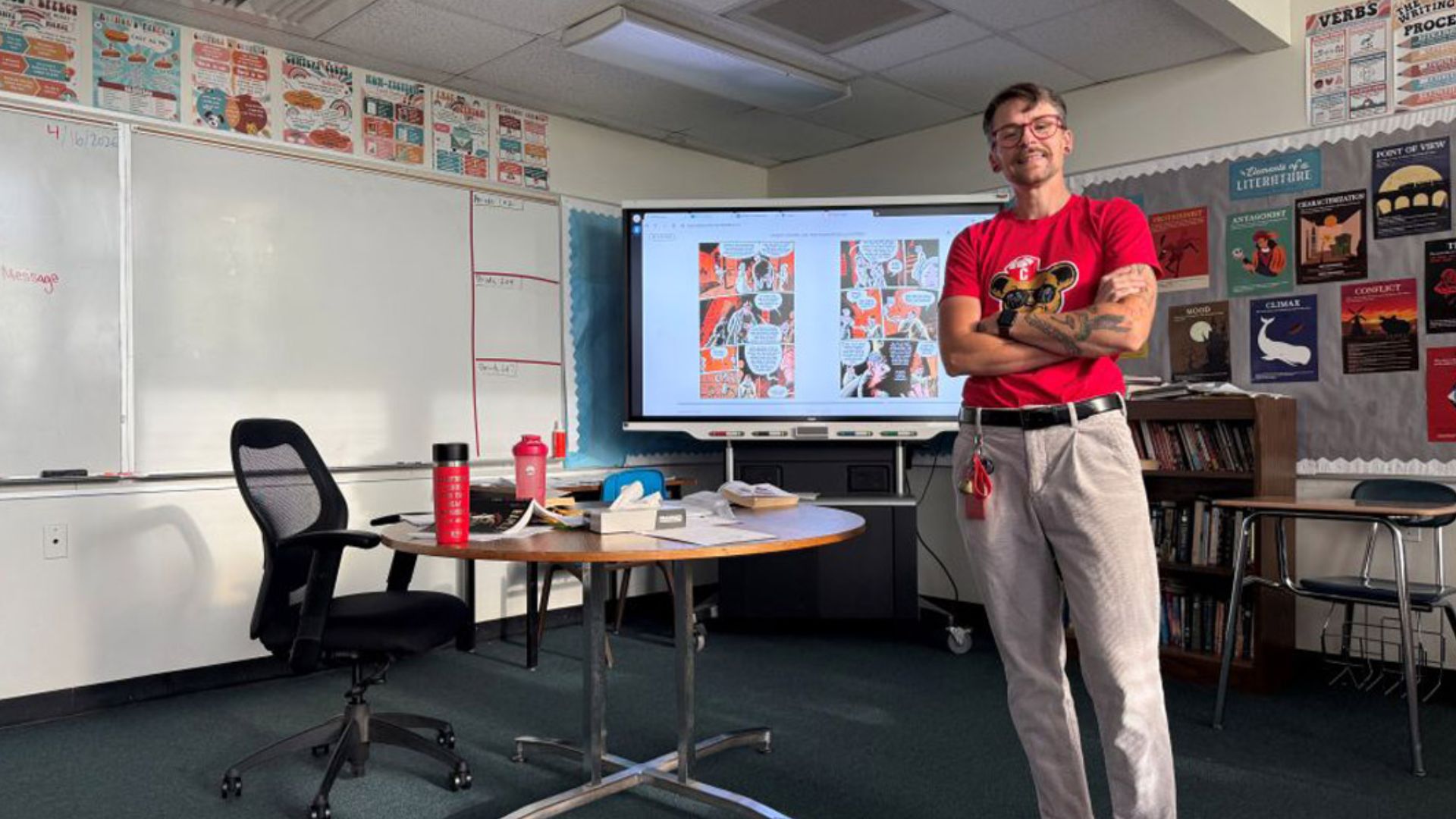
Rochester, New York – The path to a meaningful career is rarely a straight line, and for Blake Culley, that journey has been filled with unexpected turns, quiet realizations, and one defining moment that changed everything. What began as a career rooted in psychology has gradually evolved into a calling in education—specifically, Deaf education—where Culley now feels a deep sense of purpose.
This May, Culley will graduate with a master’s degree in Deaf education from the Rochester Institute of Technology’s National Technical Institute for the Deaf (NTID). But the story behind that milestone stretches far beyond the classroom. It is a story shaped by experience, reflection, and a willingness to pivot when something no longer feels quite right.
Originally from Ventura, California, Culley first pursued a degree in psychology at Gallaudet University, pairing it with a minor in criminal justice. That academic foundation led to a five-year career as a school psychologist in Washington, D.C., where Culley worked closely with students and educators. It was a role that offered insight—but also raised questions.
“I saw how hard teachers worked for their students’ successes,” Culley said. “When I was working with teachers and students for evaluations, I often realized I did not fully understand the teachers’ perspectives because I had never been in their role.”
That realization lingered. And when Culley eventually moved back to California, circumstances nudged them even closer to a new direction. With no immediate openings in school psychology in Riverside, Culley made what seemed like a temporary decision: to become a substitute teacher.
What followed was anything but temporary.
“To this day, being a substitute teacher has been one of my favorite jobs,” Culley said. “I loved connecting with the students and other teachers.”
That connection—simple, human, and immediate—became the turning point. Standing at the front of a classroom, even as a substitute, brought a sense of clarity that had been missing before. It didn’t take long for Culley to transition into a long-term substitute role, further reinforcing the idea that teaching was not just an option, but the right path forward.
Determined to build the skills needed to make a lasting impact, Culley began searching for graduate programs that specialized in Deaf education. The search led to NTID, a place known for preparing educators to work effectively with deaf and hard-of-hearing students.
“I was told that RIT had a really good credential program for teaching deaf and hard-of-hearing students,” Culley said. “I wanted to make sure I applied to a program that created highly qualified teachers, and NTID’s Deaf education program was it.”
At NTID, Culley immersed themselves in both theory and practice. The program offered more than just coursework—it provided tools that could be used immediately in real classrooms. From exploring different teaching strategies to understanding the nuances of bilingual education in American Sign Language (ASL) and English, Culley began to shape a teaching philosophy grounded in accessibility and engagement.
One particularly creative aspect of the training involved producing ASL-based video content. These videos, Culley believes, will become a powerful way to connect with future students, making lessons more dynamic and easier to understand.
Now completing a student-teaching internship at the California School for the Deaf in Riverside, Culley is already looking ahead. The goal is clear: to continue teaching there as a bilingual language arts instructor at the high school level. It’s a role that blends language, culture, and connection—elements that Culley has come to value deeply.
Yet for Culley, teaching is not simply about delivering lessons or meeting curriculum standards. It is something far more personal.
“My favorite part about being in the classroom is connecting with my students,” Culley said. “They learn from me and I learn from them.”
That sense of mutual growth lies at the heart of Culley’s journey. It is what transformed uncertainty into direction, and what continues to drive a career that, while unexpected, now feels exactly right.


-
 Local News2 years ago
Monroe County announces legal proceedings against properties listed in official public notice of foreclosure
-

 Local News2 years ago
New ALDI store close to Rochester to begin construction in late 2025 or early 2026
-

 Local News2 years ago
County Executive Adam Bello and members of the county legislature celebrate exceptional young leaders and advocates at the 2025 Monroe County Youth Awards
-

 Local News1 year ago
The 2025 Public Market Food Truck Rodeo series will begin this Wednesday with live music by the Royal Bromleys