Local News
Vignelli Center for Design Studies archives showcased in Italy through major international exhibition celebrating design legacy

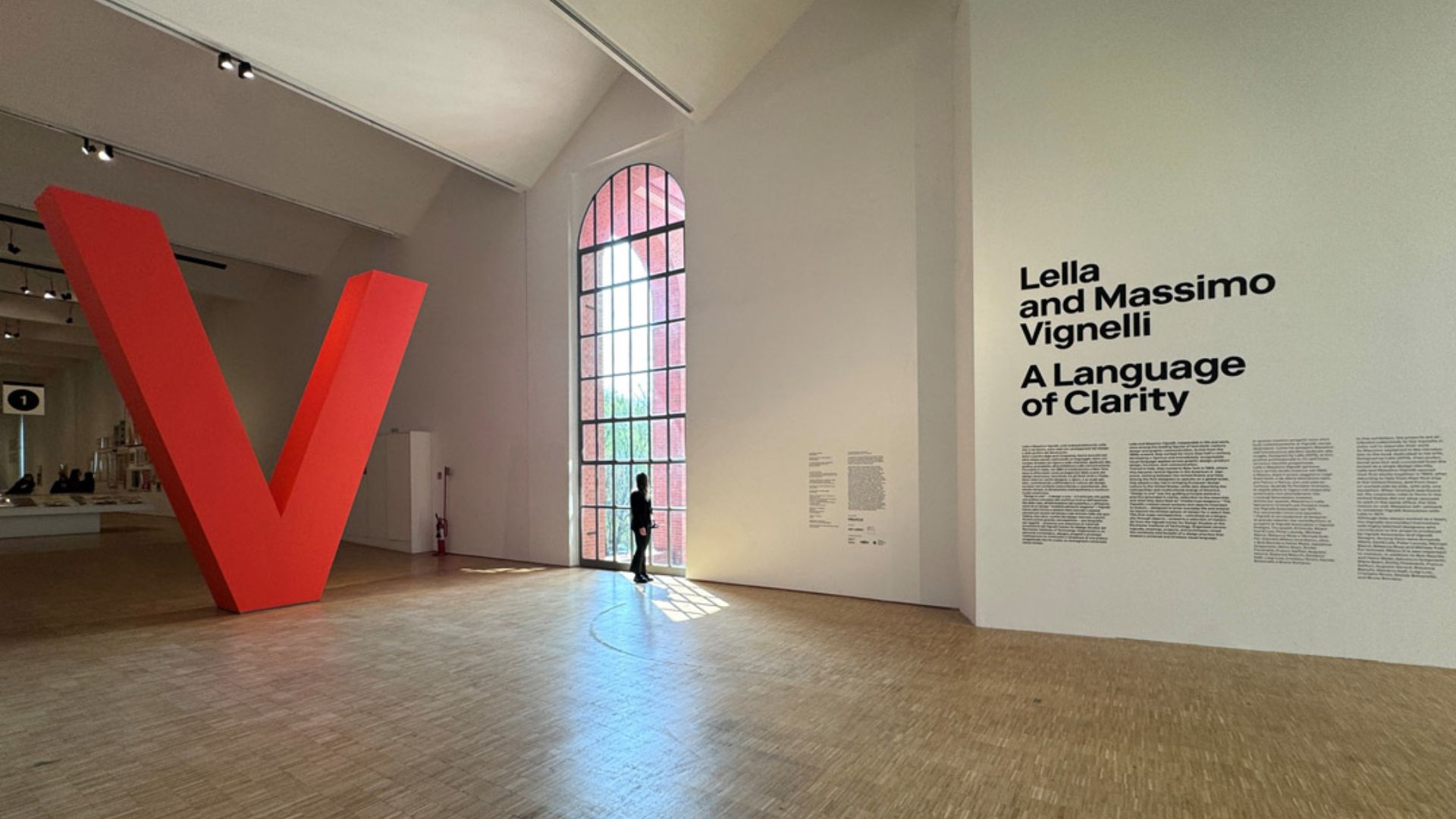
Rochester, New York – In the heart of Triennale di Milano, a powerful tribute to two of the most influential figures in modern design has taken shape, drawing attention from across the global creative community. The exhibition, titled “Lella and Massimo Vignelli: A Language of Clarity,” stands as the first major retrospective dedicated to the enduring legacy of Lella Vignelli and Massimo Vignelli—a duo whose work reshaped visual communication and product design across continents.
Running in Milan through September 6, the exhibition offers far more than a simple display of objects. It unfolds as a narrative—quiet yet deeply expressive—about clarity, discipline, and a design philosophy that resisted trends in favor of timeless structure. Visitors move through carefully curated spaces that reveal how the Vignellis translated their interpretation of Swiss rationalism into a language that felt both universal and deeply personal.
Often described as ambassadors of Italian design in the United States, the Vignellis built a career that bridged cultures and industries. Their work extended from corporate identity systems to furniture and everyday objects, each piece reflecting a belief that good design should be simple, functional, and enduring. That philosophy echoes throughout the Milan exhibition, where the arrangement of materials mirrors the precision and restraint that defined their approach.
Yet behind the scenes of this international showcase lies a significant academic connection. Before their passing, the Vignellis formed a lasting relationship with the Rochester Institute of Technology, specifically its College of Art and Design. Inspired by a shared commitment to education, they entrusted their personal archives to the institution—a decision that ultimately led to the creation of the Vignelli Center for Design Studies.
Those archives now play a central role in the Milan exhibition. Over the past two years, the Vignelli Center team worked closely with the Triennale museum to help shape the retrospective. Under the stewardship of archivist Jennifer Whitlock, a substantial number of original materials—drawings, prototypes, and documents—were loaned for display, bringing authenticity and depth to the exhibition’s narrative.
For Josh Owen, director of the Vignelli Center, the moment represents both a milestone and a continuation.
“Sixteen years into the Vignelli Center for Design Studies integration into the landscape of RIT, thousands of students have been exposed to its value. The center is not simply a repository of the Vignelli’s work, it is a living laboratory where object lessons are taught every day,” said Owen.
His words point to a broader idea—that the archive is not static. It breathes through the students who study it, reinterpret it, and carry its lessons forward.
“When all of us who knew the Vignellis are gone, the Vignelli diaspora of the future will emanate from the beacon of the Vignelli Center at RIT.”
That future was visible, in part, during the exhibition’s opening celebrations. Among the invited guests were five RIT students studying abroad, each given the opportunity to experience the event firsthand. For them, the exhibition was not just an academic reference—it was something immediate and alive.
Aiden Spicer, a third-year industrial design student and member of the Vignelli Center Student Club, had been studying in Copenhagen when he learned about the opening. Without hesitation, he made the journey to Milan, driven by curiosity and a desire to connect with the global design community.
“While we were there, we wanted to talk to as many people as possible and hear their stories,” said Spicer, from Springfield, Va. “What I found most amazing was, even years after the Vignellis have passed, the impact of their work still resonates with so many. People were coming from everywhere to pay their respects and see this exhibition.”
For Spicer, the experience extended beyond the exhibition walls. He encountered leading figures in the field, including Jasper Morrison, one of the exhibition’s designers, as well as members of the Vignelli family. These moments of connection transformed the visit into something deeply personal—an entry point into a network of ideas, influences, and shared respect.
A similar sense of discovery shaped the experience of Jaydon Thompson, another third-year student who attended the opening. For Thompson, the trip underscored a key difference between observing design from afar and engaging with it directly.
“I feel like being there physically is different than looking at an Instagram post from Design Milk or at a design magazine. When you get to meet and talk to people, what you gain from those personal interactions is priceless. It opens you up to the world,” said Thompson, from Brooklyn, N.Y.
Studying abroad in Copenhagen alongside Spicer, Thompson described the trip as both inspiring and grounding. The two students, close friends, shared not only the exhibition experience but also a growing sense of possibility—an awareness that design is as much about relationships as it is about objects.
“When you make these connections, you’re able to do things that are greater than what you can do on your own. I’m excited to see what I can do and what doors are opened for me just by being at this exhibit and absorbing ideas from the work, and I want to share that with my RIT design family,” Thompson said.
Their time in Milan did not end with the exhibition. In a spontaneous moment that felt almost symbolic, the pair decided to visit the Achille Castiglioni Foundation, a space dedicated to another giant of Italian design. Acting on a recommendation, they simply knocked on the door and introduced themselves as students.
What followed was an unexpected opportunity—a personal tour led by Giovanna Castiglioni, granddaughter of Achille Castiglioni. For Spicer, the experience blurred the line between history and the present.
“Getting a tour of the studio felt like living in a history class. Being able to see where the Castiglioni brothers worked and hearing about their process felt very similar to being at the Vignelli exhibition. I felt more connected to them,” said Spicer. “It was a super insightful part of the trip that I didn’t know would happen when I arrived.”
Back at the Triennale, the exhibition continues to draw visitors from around the world, each bringing their own perspective to the work of Lella and Massimo Vignelli. Curated by Francesca Picchi in collaboration with Marco Sammicheli and the design studio Studio Mut, and shaped visually by the Jasper Morrison Office for Design with David Saik, the exhibition reflects a collective effort to honor a legacy without diminishing its clarity.
In many ways, that clarity remains the exhibition’s quiet centerpiece. It is found not only in the objects on display but in the connections they continue to inspire—in classrooms, studios, and unexpected encounters across the world. Through the Vignelli Center archives and the voices of a new generation, the language of clarity endures, speaking just as powerfully today as it did decades ago.


-

 Local News2 years ago
Monroe County announces legal proceedings against properties listed in official public notice of foreclosure
-

 Local News2 years ago
New ALDI store close to Rochester to begin construction in late 2025 or early 2026
-

 Local News2 years ago
County Executive Adam Bello and members of the county legislature celebrate exceptional young leaders and advocates at the 2025 Monroe County Youth Awards
-
 Local News1 year ago
The 2025 Public Market Food Truck Rodeo series will begin this Wednesday with live music by the Royal Bromleys