Local News
RIT students teach Tai Chi to older adults while gaining valuable hands on experience in community health research

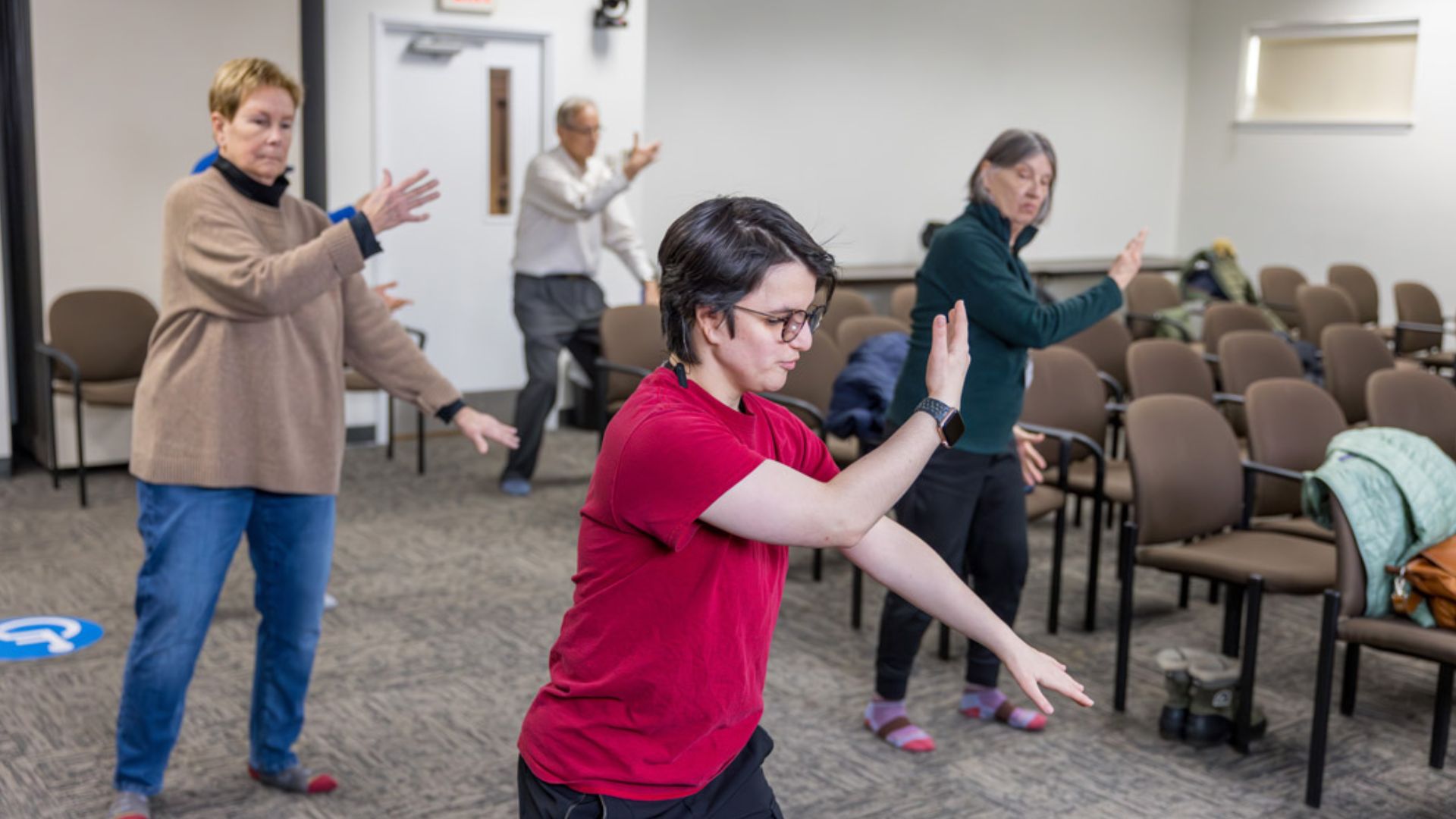
Rochester, New York – In quiet community rooms filled with slow, deliberate movement, a unique partnership is taking shape between university students and older residents. What might look at first like a gentle exercise class is actually part of a broader research effort—one designed to improve health, ease pain, and create meaningful connections between generations.
Students from the Rochester Institute of Technology are leading Tai Chi classes for older adults in the local community, turning traditional martial arts into an opportunity for both learning and scientific study. The project focuses on understanding how regular Tai Chi practice can influence physical health, mental well-being, and overall quality of life among older participants.
For the students involved, the experience goes far beyond the classroom. It offers a rare chance to work directly with community members while also participating in research that could shape future health programs.
The initiative is guided by Yong “Tai” Wang, dean of RIT’s College of Health Sciences and Technology. Under his direction, a team of students studies and teaches Tai Chi Ten Forms, commonly referred to as TC10. The students are not just learners—they take on active roles as instructors, guiding participants through each movement while also tracking their progress over time.
Classes are held twice a week at two locations: the Henrietta Senior Center and the Osher Lifelong Learning Institute, which serves as RIT’s hub for continuing education. Each session lasts about an hour and follows a structured sequence of Tai Chi movements. These forms, which flow from one to the next like carefully choreographed dance steps, emphasize slow motion, steady breathing, and mindful awareness of the body.
Participants learn to move gently but intentionally, focusing on balance and coordination. Over time, these simple movements can strengthen muscles, improve stability, and promote relaxation.
Originally, the research project focused only on teaching the ten forms included in the TC10 program. However, something unexpected happened as the weeks went on—interest from participants began to grow. Seniors attending the sessions became increasingly enthusiastic and curious about learning more.
Because of that enthusiasm, the program expanded. Students began teaching the full 24 forms that make up the internationally recognized Tai Chi standard, giving participants a deeper and more complete experience with the practice.
For Colin Hutton, a fourth-year exercise science major from Fairport, New York, the results have already been encouraging. As the student team leader and a certified personal trainer, Hutton has spent months observing how the participants respond to the practice.
“I think because Tai Chi is slow and you repeat motions, it gets better and better each time you do it,” Hutton said. “The biggest improvement I’ve seen is with people’s balance being better, and especially with the elderly population, it’s a huge one,” Hutton said.
Improved balance is particularly important for older adults, as falls are one of the most common causes of injury among seniors. Even small gains in stability can make a major difference in everyday life.
To better understand the health effects of the program, the student researchers collect a range of data. Before and during the program, they measure participants’ blood pressure and blood oxygen levels. They also evaluate range of motion and balance through simple physical tests.
In addition, participants complete surveys that explore their health habits and medication use. One of the key questions researchers hope to answer is whether regular Tai Chi practice can reduce chronic pain and possibly decrease reliance on medications, including opioid painkillers.
Hutton, who is overseeing the program’s post-testing phase, says the team is especially interested in whether participants report changes in pain levels or medication use after several months of classes.
For the students, the research aspect is only part of the experience. Teaching the classes has also helped them develop important communication and leadership skills.
Ren Anderson, a second-year exercise science major and RIT Honors student from Ellenville, New York, joined the project during its early stages and quickly discovered that teaching movement requires a different kind of explanation.
“I’ve learned how to explain body movements in a way that the average person can understand, how to catch mistakes and point them out in the right way, and how to instruct for a full hour and not make it boring,” said Anderson.
Those skills—clear communication, patience, and adaptability—are often difficult to learn in traditional academic settings. The Tai Chi project provides a practical environment where students must adjust their teaching style to meet the needs of their audience.
The program is supported by funding from the Monroe County Department of Human Services. Under the leadership of mental health director Dr. April Aycock, the department provided a combined $40,000 grant to help support the research team and its community outreach efforts.
The project began during the fall semester and proved successful enough that it has continued into the spring.
For Wang, the initiative reflects a broader mission within RIT’s health sciences programs.
“As a college dedicated to health sciences and technology, we see it as our responsibility not only to prepare future healthcare professionals but also to promote community health and well-being,” Wang said. “By engaging with the community, we contribute directly to the public good.”
Wang brings deep expertise to the project. A Tai Chi master, he has spent years studying how the practice can benefit different populations. His previous research has examined the effects of Tai Chi among elderly individuals, disabled veterans who use wheelchairs, and people living with Parkinson’s disease.
For this project, Wang personally trained the RIT students who now lead the community classes. Many were recruited from his college, while others first encountered Tai Chi through a wellness course he teaches at the university.
One of those students is Camden Doyle, a second-year game design and development major from Alexandria, Virginia. Doyle originally discovered Tai Chi in Wang’s Wellness class and decided to continue exploring the practice after the course ended.
Interestingly, Doyle approaches the project from a perspective shaped by game design. Understanding how people interact with experiences—what designers call user experience—is a key part of developing video games.
“It has been really interesting seeing how Dean Wang and the other research assistants teach the class and how I am learning to teach it.”
Another student involved in the research is Caitlin Morrison, a fourth-year biotechnology and molecular sciences major from Norwell, Massachusetts. Morrison had previously worked in an RIT laboratory conducting environmental and microbiological research, but the Tai Chi project offered something very different.
Instead of working only with lab samples or data sets, Morrison now interacts directly with people whose lives could be influenced by the research.
“I have always had an interest in human-centered medical research, and this required me to learn a whole new skill set,” Morrison said. “It’s allowed me to see the direct impact scientific research can have on people’s daily lives.”
Looking ahead, the Tai Chi research program is expected to continue at least through the end of 2026. Wang hopes the classes will remain active at both community locations, possibly with the help of additional instructors.
“Our student Tai Chi instructors, along with a possible visiting scholar and Tai Chi Instructor from China, may continue leading Tai Chi classes at both intervention sites.”
Meanwhile, Wang and Hutton are preparing to share the results of the research with the broader scientific community. The team hopes to present their findings at the American College of Sports Medicine conference scheduled for May 26–29 in Salt Lake City, Utah.
For now, however, the most meaningful outcomes may be happening quietly inside those community rooms—where students guide seniors through slow, flowing movements, and where health research takes the shape of steady breathing, careful balance, and shared learning between generations.


-

 Local News1 year ago
New ALDI store close to Rochester to begin construction in late 2025 or early 2026
-

 Local News11 months ago
County Executive Adam Bello and members of the county legislature celebrate exceptional young leaders and advocates at the 2025 Monroe County Youth Awards
-

 Local News1 year ago
Rochester Lilac Festival announces exciting 127th edition headliners
-

 Local News11 months ago
The 2025 Public Market Food Truck Rodeo series will begin this Wednesday with live music by the Royal Bromleys