Local News
Scientists using the James Webb Space Telescope reveal new details about how dark matter shapes the universe

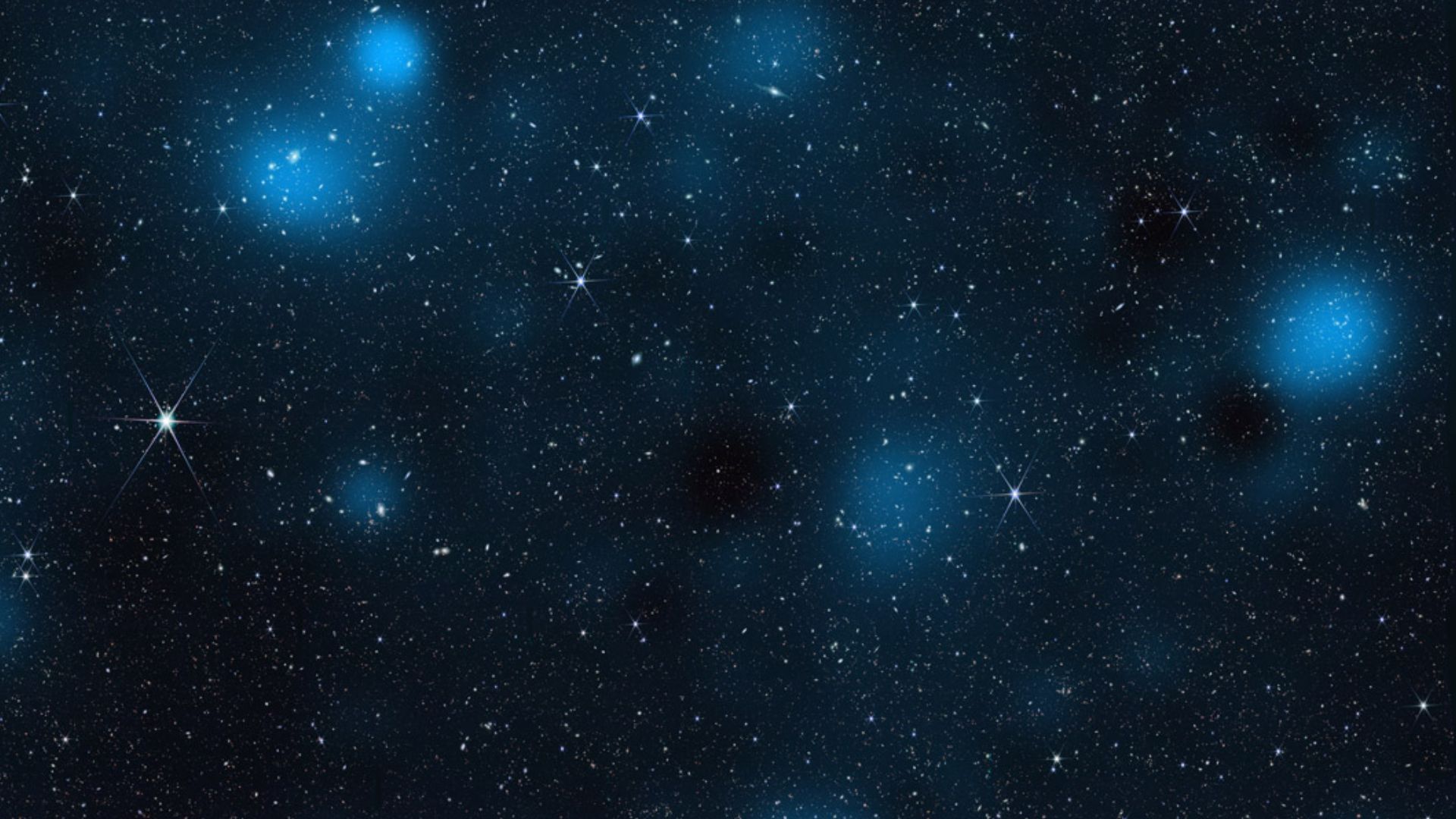
Rochester, New York – Scientists have taken a major step toward understanding one of the universe’s greatest mysteries by producing one of the most detailed maps of dark matter ever created. Using data from NASA’s James Webb Space Telescope, researchers have traced how this invisible substance weaves through the cosmos, shaping galaxies and influencing the very structure of the universe on the largest scales.
The new research, published in Nature Astronomy, focuses on dark matter’s role within massive galaxy clusters that span millions of light-years. Although dark matter cannot be seen directly, its gravitational pull leaves clear fingerprints on the visible universe. By carefully studying how light from distant galaxies bends and shifts as it passes through space, scientists can infer where dark matter is concentrated and how it behaves.
Jeyhan Kartaltepe, an associate professor in the School of Physics and Astronomy and director of the Laboratory for Multiwavelength Astrophysics, is a co-author of the study. The findings build on years of earlier work, offering stronger confirmation and sharper detail about how dark matter has guided the growth of cosmic structures over billions of years.
“The exquisite resolution and sensitivity of JWST have enabled us to create the most detailed map of dark matter in our universe to date,” said Kartaltepe, principal investigator of the COSMOS-Web survey. “COSMOS-Web is the largest area JWST survey to date and thus this is the largest dark matter map that has been created at this resolution.”
The map covers a patch of sky roughly 2.5 times larger than the full moon. While that may sound small, it represents an enormous volume of space filled with galaxies at different stages of cosmic history. This region has been intensely studied by an international group of scientists through the Cosmic Evolution Survey, known as COSMOS. Over the years, at least 15 ground- and space-based telescopes have observed this same area, each adding a new layer of information.
The goal of the COSMOS-Web project is to carefully measure where ordinary matter, such as stars and gas, is located and then compare it to the distribution of dark matter. The first dark matter map of this region was created in 2007 using data from NASA’s Hubble Space Telescope. While groundbreaking at the time, that earlier map lacked the clarity and depth now made possible by Webb.
JWST spent about 255 hours observing the COSMOS field, collecting an extraordinary amount of data. The telescope identified nearly 800,000 galaxies, many of which had never been detected before. The new map includes roughly ten times more galaxies than maps made with ground-based observatories and about twice as many as those captured by Hubble. This increased detail allowed scientists to see smaller clumps of dark matter and sharper features within regions already known to contain it.
These newly revealed clumps are important because they help scientists test theories about how dark matter behaves. According to current understanding, when the universe was young, both regular matter and dark matter were spread thinly through space. Over time, dark matter began to gather into dense regions first. Its strong gravitational pull then drew ordinary matter toward those same areas.
As gas and dust collected within these dark matter structures, stars and galaxies began to form. In this way, dark matter acted as a cosmic scaffold, determining where galaxies would appear and how they would be arranged across the universe. Without dark matter, scientists believe galaxies would have formed much later, if at all.
Dark matter’s influence may also help explain why planets like Earth exist. The earliest generations of stars formed within dark matter-rich regions and played a crucial role in creating heavier elements. Those stars transformed simple elements such as hydrogen and helium into carbon, oxygen, iron, and other building blocks needed for planets and life. By jump-starting star formation early, dark matter effectively gave the universe more time to produce complex worlds.
“Dark matter, how it behaves, and what it is made out of, is one of the biggest unsolved mysteries in astrophysics. Maps like this provide important clues about its nature,” said Kartaltepe.”
The new map does not solve the mystery of what dark matter is made of, but it provides powerful evidence about how it moves and interacts with visible matter. Each improvement in resolution helps narrow the range of possible explanations, guiding future experiments and observations.
Researchers say this work demonstrates the unique power of the James Webb Space Telescope. While Webb is best known for its stunning images of distant galaxies and star-forming regions, studies like this show its value as a tool for probing invisible forces that shape the universe.
The full study is available through Nature Astronomy, with additional details released by NASA’s Jet Propulsion Laboratory. As scientists continue to analyze the COSMOS-Web data, they expect even more insights into how dark matter has quietly guided the evolution of the universe from its earliest moments to the present day.


-

 Local News1 year ago
New ALDI store close to Rochester to begin construction in late 2025 or early 2026
-

 Local News11 months ago
County Executive Adam Bello and members of the county legislature celebrate exceptional young leaders and advocates at the 2025 Monroe County Youth Awards
-

 Local News1 year ago
Rochester Lilac Festival announces exciting 127th edition headliners
-

 Local News11 months ago
The 2025 Public Market Food Truck Rodeo series will begin this Wednesday with live music by the Royal Bromleys