State
Lauren Ghazal emerges as a leading advocate for the health and well-being of young adult cancer survivors

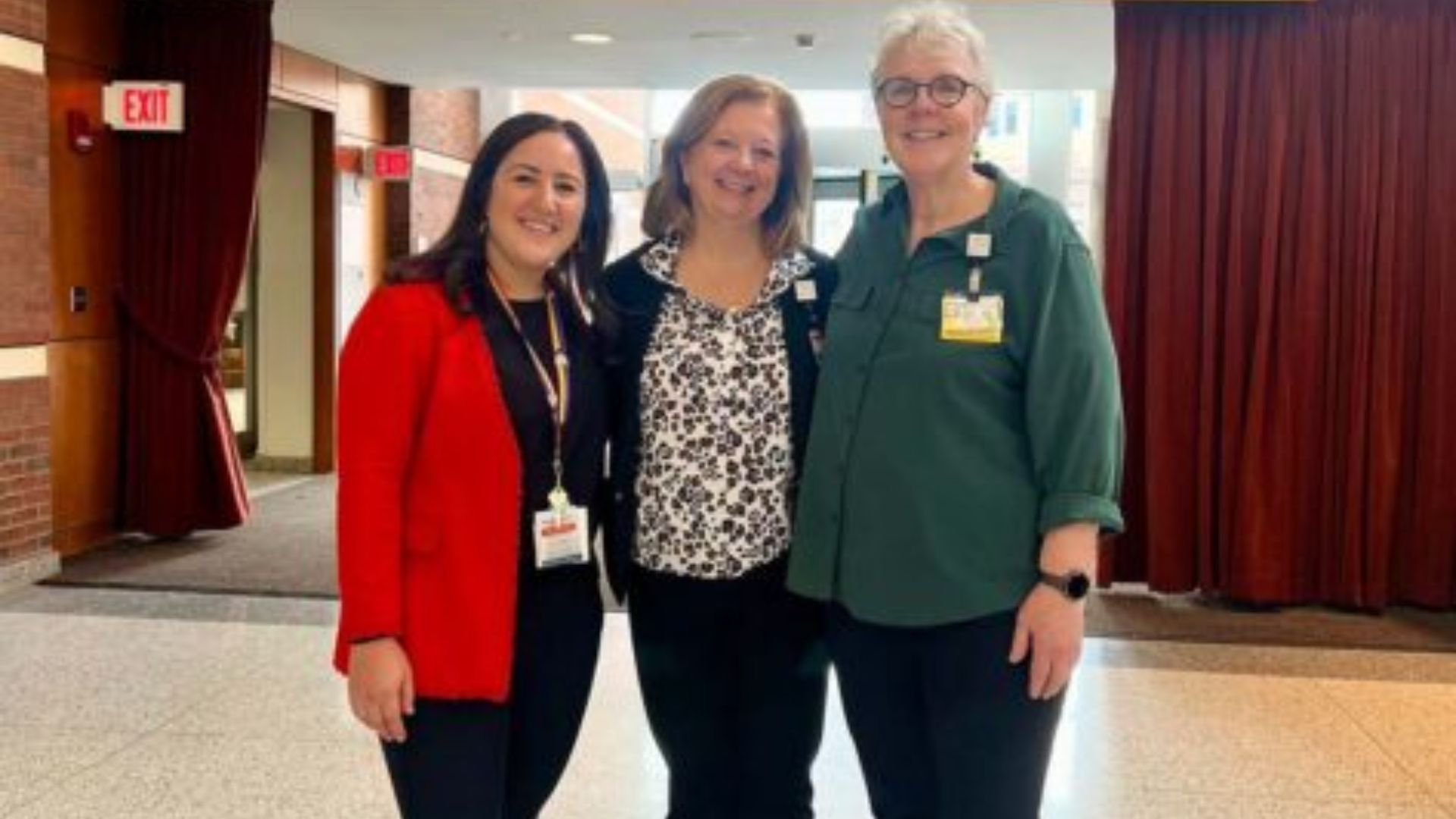
New York – When Lauren Ghazal entered her 20s, she imagined a future that looked much like that of any ambitious young professional in New York City—days spent working as a nurse practitioner, nights dedicated to pursuing her PhD, and a sense of steady progress toward the life she had planned. What she did not imagine was how quickly that future would be shaken by a diagnosis that would alter nearly every assumption she had about young adulthood. Today, seven years into remission, Ghazal stands not only as a survivor but as one of the rising advocates for adolescent and young adult (AYA) cancer survivors, a group she now fights for with the precision of a researcher and the empathy of someone who has walked that uncertain road herself.
The turning point came on an ordinary day at work, the kind filled with routines she knew well. As she demonstrated a lymph node exam to a student shadowing her, her fingers brushed over a small, troubling node above her collarbone. The sensation was immediate and unnerving. “Immediately, I thought back to my advanced health assessment class in my NP program, where we learned that supraclavicular nodes are pretty much always abnormal, and they always require a follow up,” she says. Trusting her clinical instincts, she reached out to her primary care provider and soon found herself confronting a Stage 2 Hodgkin’s lymphoma diagnosis.
Undergoing treatment forced her to face a wave of questions she had never expected to confront so young. “During adolescence and young adulthood, you don’t expect such an external shock to your health and financial well-being,” Ghazal explains. “How does one recover when you are in this period where you’re just trying to survive, you don’t understand the healthcare system or your insurance, and you may not understand how much it’s going to cost you?” These questions did not fade as she moved through chemotherapy and the long, emotionally heavy months that followed. Instead, they deepened. Gradually, they became a map of the road she would eventually follow as a researcher.
For many in the AYA community—those roughly ages 15 through 39—cancer arrives at a life moment defined by transitions. People in this age range often fall between two categories: too old for pediatric care yet too young for the atmosphere of older adult oncology clinics. That disconnect can leave survivors feeling misplaced, unseen, and unsure where they belong. “We may be treated in pediatric cancer centers or in adult cancer centers, so when we go in for treatments, we’re very old for the population or we’re very, very young,” Ghazal says. This sense of limbo has long complicated both the emotional and medical experiences of AYA patients.
Before modern AYA research gained momentum in the late 1990s and early 2000s, this age group lagged significantly behind younger children and older adults in representation, survival outcomes, and participation in clinical trials. The field has since grown, but gaps remain—particularly in understanding the financial hardships cancer imposes on young adults who are only beginning to establish independence. When Ghazal began reading emerging studies in this area, she recognized pieces of her own story woven throughout the data. These insights helped her realize that her personal experience, combined with her clinical background and training in economics, placed her in a unique position to advance the field.
“The biggest thing about my story is that I really leaned into when life happens, approaching it with all of the tools and skills that you’ve built up to that point,” she adds. For her, leaning in meant shifting away from her original PhD research plan, which had focused on global nursing workforce issues. Instead, she began steering her career toward addressing the unanswered questions that shaped her survivorship: How do young adults cope financially after a cancer diagnosis? What barriers keep them from receiving supportive care? How can healthcare systems adapt to fit the needs of a generation caught between two treatment worlds?
Today, as an associate member of the Wilmot Cancer Institute’s Cancer Prevention and Control group, Ghazal is at the center of several studies that explore the long-term financial and quality-of-life impacts experienced by AYA survivors. Her work focuses on designing evidence-based interventions that could reduce financial toxicity, strengthen mental health support, and help survivors navigate the complex decisions that follow cancer treatment. Her mission, while serious, remains grounded in a very human sense of honesty. “I want to make cancer essentially suck less,” she says with a laugh. “I want to make lives better through research and implementing evidence-based and supportive care interventions. And I can do that here, in collaboration with the School of Nursing and with our newly NCI-designated cancer center across the street, and with phenomenal mentors.”
Her path to the University of Rochester began somewhat unexpectedly after a chance encounter with colleague Meghan Underhill during the Oncology Nursing Society’s Capitol Hill Days. Underhill, a nurse practitioner at Wilmot and a School of Nursing researcher, spoke about the close-knit community of scholars across the university and the advantages of having a comprehensive cancer center steps away. Encouraged by this vision, Ghazal applied for a junior faculty role. After completing a postdoctoral fellowship in cancer care delivery research at the University of Michigan, she formally joined the Rochester faculty in 2023.
Her arrival marked more than a career move. It became the start of a deeper connection to a community that values supportive mentorship, strong scientific partnerships, and a shared goal of improving survivors’ lives. “It’s a very close-knit community that is doing impactful research to improve the lives of all cancer survivors and their families,” she says. “Rochester is a hidden gem that has some incredibly powerful, really compassionate players.”
Along the way, curiosity has guided nearly every shift in her career. She encourages her students to embrace that same instinct—to ask difficult questions, even if the answers require years of work. “Don’t be afraid to ask big questions that may scare you because you know that there’s a lot of work at the other end to be able to answer them,” she says. “And find great mentors who continue to allow you to ask those big questions.” Her own path reflects this advice deeply. Before becoming a nurse, Ghazal earned a bachelor’s degree in economics and once considered becoming a lawyer. It took a career change and an accelerated nursing program for her to discover how both her analytical and caregiving strengths could fit together.
“That uniqueness and individuality is what sets everyone apart, and that’s what has shaped me and helped me thrive in this environment,” she says.
In the end, Ghazal’s impact reaches far beyond her published research. She brings a level of authenticity that resonates with survivors who want to feel understood rather than studied. Her lived experience—combined with her academic drive—allows her to stand not just as an advocate but as a reminder of what survival can inspire: new questions, new careers, and new communities built around understanding what young adults need when cancer interrupts everything they thought they knew.
Her work is a testament to the possibility that even in the most disorienting chapters of life, purpose can surface in unexpected ways. And for countless young adults facing similar diagnoses, Ghazal’s voice adds something long overdue—visibility, validation, and hope that their stories matter.


-

 Local News1 year ago
New ALDI store close to Rochester to begin construction in late 2025 or early 2026
-

 Local News11 months ago
County Executive Adam Bello and members of the county legislature celebrate exceptional young leaders and advocates at the 2025 Monroe County Youth Awards
-

 Local News1 year ago
Rochester Lilac Festival announces exciting 127th edition headliners
-

 Local News11 months ago
The 2025 Public Market Food Truck Rodeo series will begin this Wednesday with live music by the Royal Bromleys